Tell us about the job
Takes about a minute. No obligation.
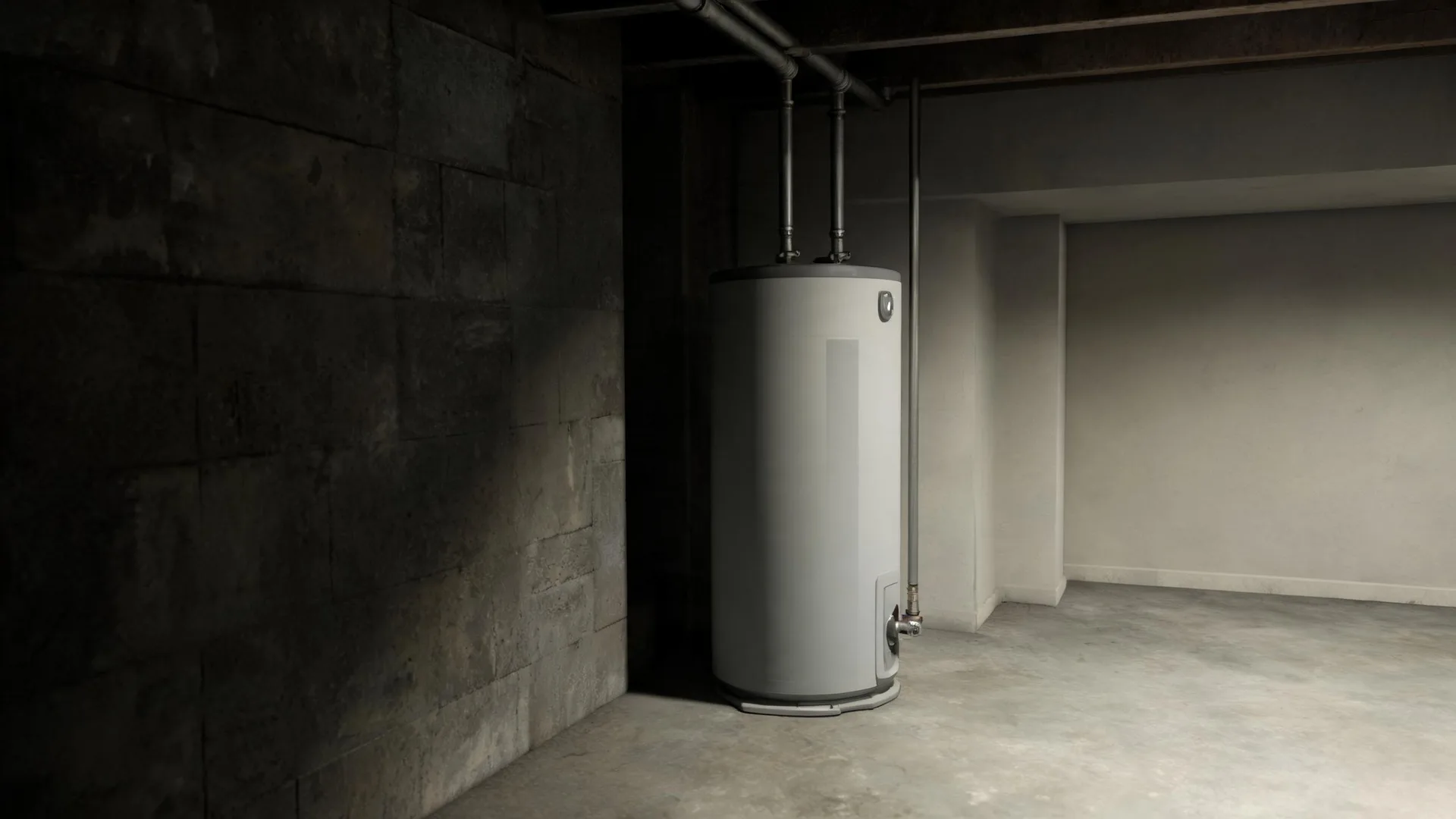
Gas-fired water heaters cycle their burners and igniters every time the tank calls for heat, and in a county where that fuel dominates home heating, the equipment runs hard. Utility gas heats more occupied homes in Glacier County, Montana than any other fuel, at 42.9% (2020-2024 ACS 5-year). A contractor diagnosing a failing unit here looks at the burner orifice, the thermocouple, and the igniter before anything else, because those parts absorb the wear from years of daily cycling. Sediment in the tank and a corroded anode rod follow closely behind.
Parts availability is where many water heater repairs in Glacier County either get solved quickly or stall out for days. Half the homes in Glacier County, Montana were built in 1974 or earlier (2020-2024 ACS 5-year). Housing of that vintage was plumbed around equipment that has since been discontinued, and the valves, anode fittings, and pressure relief components it takes are not always on a supplier's current shelf. A contractor opening a unit here checks compatibility before ordering, because a part that looks standard can turn out to be specific to a product line that no longer exists.
The Parts of a Water Heater a Contractor Checks First
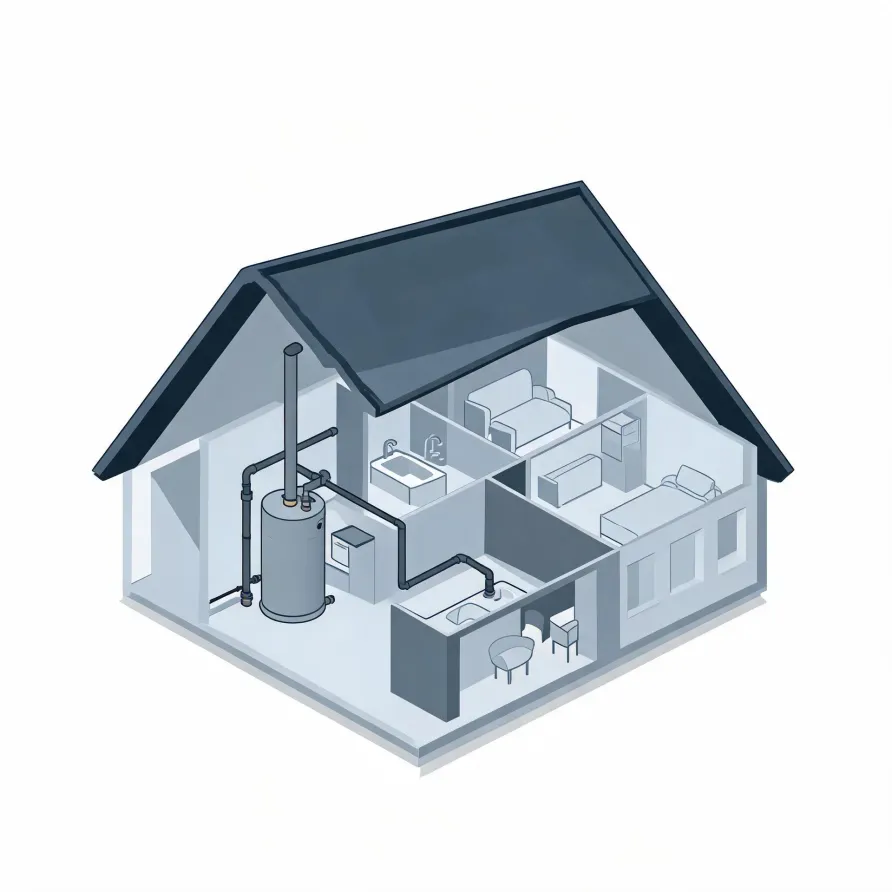
The tank is the piece a homeowner notices first, sitting in a utility room, basement, or closet and holding a supply of heated water ready for use. Attached to it are the heating elements or burner assembly, which are the parts a contractor goes to when the water runs cold or takes too long to recover.
The anode rod runs inside the tank and slows corrosion from the inside out. The temperature and pressure relief valve mounts on the tank's side and opens if either reading climbs too high. The inlet and outlet connections, along with the thermostat and any ignition components, round out what a contractor works through during a repair call.
The drawing shows a general layout, and a licensed contractor determines what applies to the specific unit and installation in your home.
Find a contractor in Glacier CountyGlacier County, by the numbers
250 severe weather events were recorded in Glacier County, Montana between 2015 and 2024.
NOAA National Centers for Environmental Information, Storm Events Database, bulk CSV export, events 2015-01-01 through 2024-12-31.Half the homes in Glacier County, Montana were built in 1974 or earlier (2020-2024 ACS 5-year).
U.S. Census Bureau, 2020-2024 American Community Survey 5-Year EstimatesGlacier County, Montana holds 5,350 housing units (2020-2024 ACS 5-year).
U.S. Census Bureau, 2020-2024 American Community Survey 5-Year EstimatesOwners occupy 63.7% of the occupied homes in Glacier County, Montana (2020-2024 ACS 5-year).
U.S. Census Bureau, 2020-2024 American Community Survey 5-Year EstimatesWeather Stress on Water Heaters in Glacier County
Extreme weather puts a direct load on water heaters: hard freezes, pressure swings, and power surges all push equipment closer to failure. How much of that load a unit carries depends on what the local climate actually delivers, which is why the data below is specific to this area.
250 severe weather events, 2016–2024. Source: NOAA National Centers for Environmental Information, Storm Events Database.