Water heater leaking in Billings, MT

Find a pro near me

A puddle under your water heater in a Billings house is not something to watch and wait on. Water on the floor means a tank that is failing, a loose fitting, or a valve that has given out, and none of those get better on their own. Left alone, it can mean a ruined floor or soaked drywall by the time anyone notices. Yellowstone County winters are hard on this equipment, and a leak now, in the cold, is not a thing to put off until it is convenient. You do not have to track down who is licensed, who answers the phone, or who has time this week. Send the details on your water heater and your address, and you get matched with a contractor who takes it from there, one who covers Billings and the area around it. Once that form is in, the search is no longer something you have to carry.

A leak at the water heater usually comes from one of a few places. The tank itself can rust through from the inside and once that starts, it only gets worse, and that water has to come out somewhere. A fitting or union at the top of the tank can work loose over time and weep at the threads. The temperature and pressure relief valve can let go if pressure inside the tank climbs too high, and that often shows up as water dripping from a pipe on the side of the tank. The drain valve near the bottom can also fail or simply not be seated tight. If the water is coming from underneath the tank itself rather than a pipe or valve, that almost always means the tank is rusted through and needs to be replaced, not repaired. Cold Montana winters push well water heaters harder for months at a stretch, and a tank already weakened by age or sediment is more likely to fail under that strain. Either way, a leaking tank needs a look before it gets worse.

How old is the water heater leaking in your house?

  • 2.37 people per household on average

    Yellowstone County households average 2.37 people, so most homes here run a water heater sized for a family, not a single tank built for one or two.

  • Half the homes here were built by 1982

    Half the homes in Yellowstone County were built in 1982 or earlier. If yours is one of them, the water heater has likely been replaced at least once already.

  • 67.9% of homes heat with gas

    Gas heats 67.9% of homes in this county, more than any other fuel, so most of the leaks here start at a gas-fired tank, not an electric one.

ACS 2020-2024

The leak is from the tank itself

If the water is coming from the tank body, not a fitting or valve, the tank is rusted through from the inside and that does not get patched. Once the steel has given way, water will keep finding its way out, and the only fix is a new water heater. Draining it and watching it for a few days just delays the point where it fails for good. A tank that has reached this point will keep leaking worse, not better, and waiting usually means dealing with it later anyway, after more water has gotten onto the floor or into the wall behind it.


The leak is from a fitting or valve

A loose fitting, a bad union, or a worn out pressure relief valve can all leak while the tank itself is still sound. These are parts that get replaced or tightened without replacing the whole water heater, and a licensed plumber can tell the difference by where the water is actually coming from. The tank holding pressure fine everywhere else is a good sign. It does not mean ignore it, since a valve that is failing will keep dripping and a loose fitting can work its way looser, but it is a smaller job than a full replacement and it is worth finding out which one you have before assuming the worst.

A smiling man with dark curly hair in a dark green henley shirt sits on a light sofa in a living room with large windows, a lamp, shelving, a stone fireplace, and a bowl of popcorn in the foreground.
A smiling man in a dark long-sleeved henley shirt sits on a beige sofa in a living room, with a bowl of popcorn and a remote on the table in the foreground and shelves, a lamp, and a doorway behind him.
A smiling man with graying hair and stubble in a blue henley shirt sits on a gray sofa with cushions in a living room, with a bowl of popcorn on a wooden table in the foreground.
A smiling man in a dark green long-sleeve shirt reclines on a sofa in a dimly lit living room, with a bowl of popcorn on a side table in the foreground and a bookshelf, lamp, and houseplant behind him.

Half the homes here were built before 1980

A water heater that old has outlived its working life by a wide margin. If yours came with an older house, a leak at the tank means replacement, not a patch.

Get my match

2.37 people per household

Most tanks in Yellowstone County are sized to keep up with a full household, not a single person. A leaking tank that size needs a straight swap, sized the same way.

Get my match
A woman stands in the open doorway of a white stucco house holding the dark door, facing a man in a black cap and shirt seen from behind in the blurred foreground, with a potted flowering plant beside the entry.

A leak doesn't wait for a convenient day

Water finds the path of least resistance, and in most houses that means out from under the tank, across the floor, and toward whatever is nearby. A closet full of stored boxes. Drywall that wicks it up the wall. A finished space below if the heater sits upstairs or in an upper level of the house. The longer it sits, the more it touches.

You don't have to figure out on your own whether this is a fitting you could tighten or a tank that's done. Send in what you're seeing and a contractor who works on water heaters in the Billings area will follow up with you directly. That's one less thing to sort out tonight.

Interior corner of a dining room with a round wooden table, a ceramic vase holding olive branches, a dark spindle-back chair near a curtained window, and a sideboard with a lamp against beige walls.
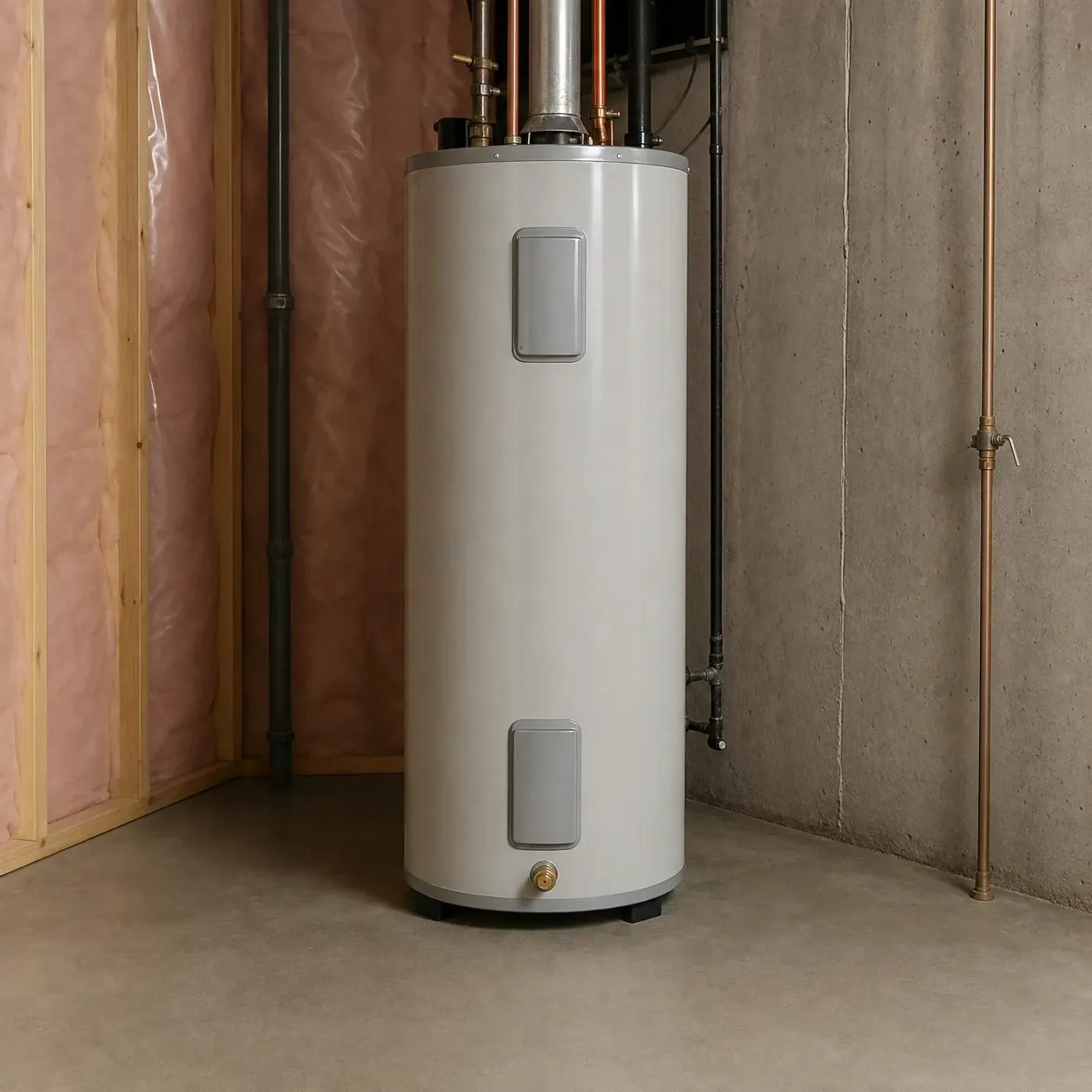
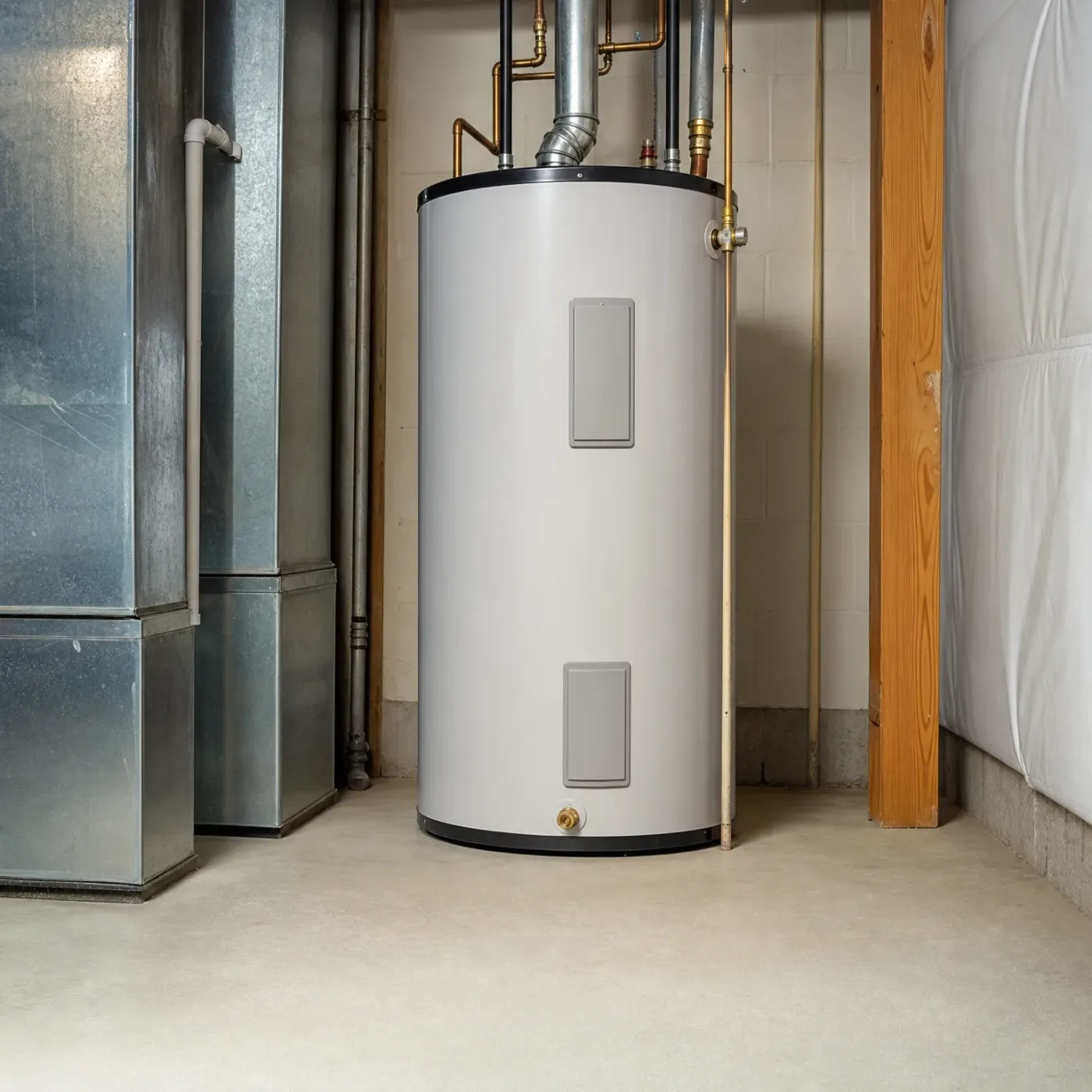
A white cylindrical water heater with two access panels and a brass drain valve stands on a concrete floor in a basement corner, beside a pink-insulated stud wall and a concrete wall with copper and black pipes.

This is what a sound tank looks like

Dry connections, no rust on the fittings, no staining on the floor beneath it. The copper and black iron pipes run clean overhead, and the insulation behind the wall panel stays dry. Nothing here needs your attention yet.

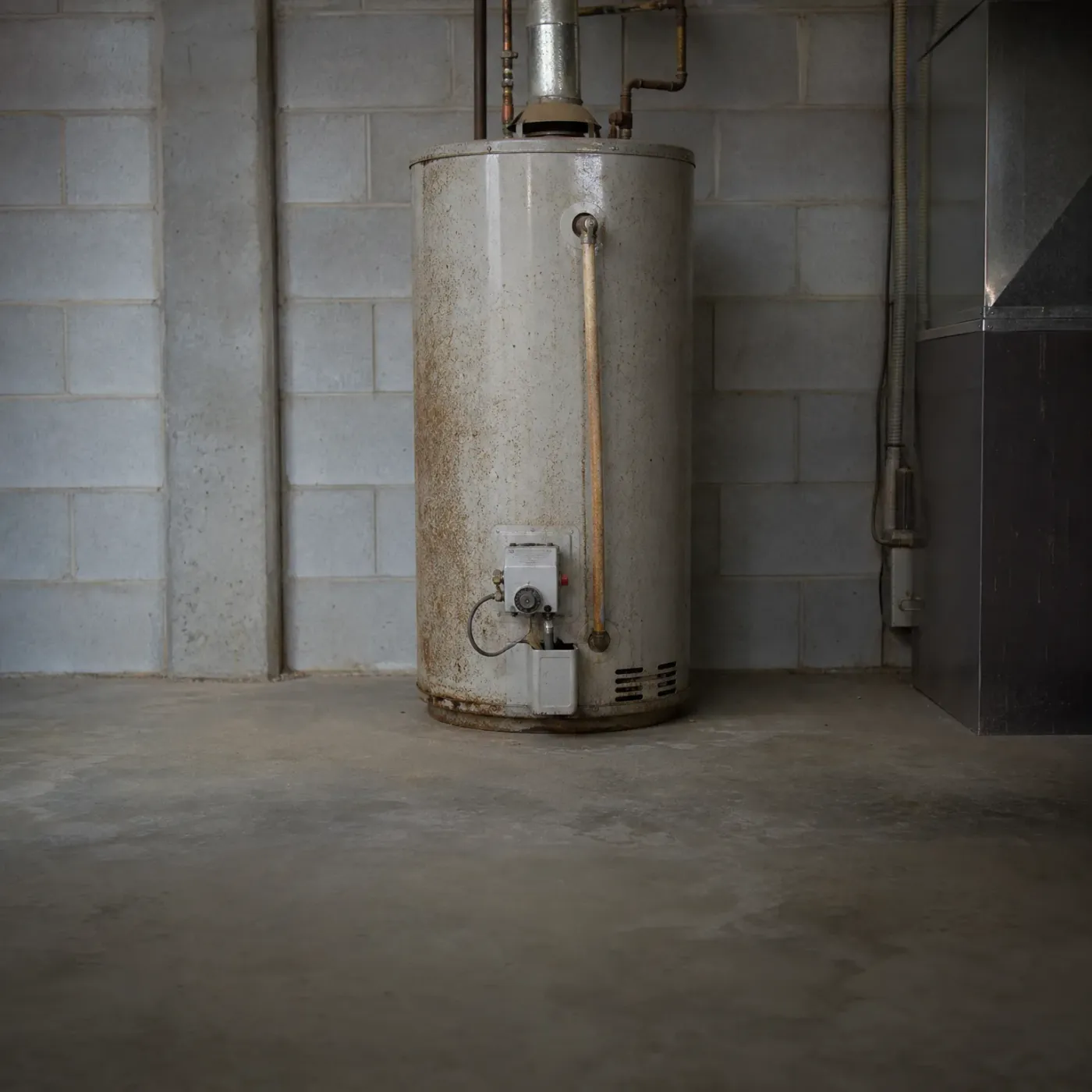
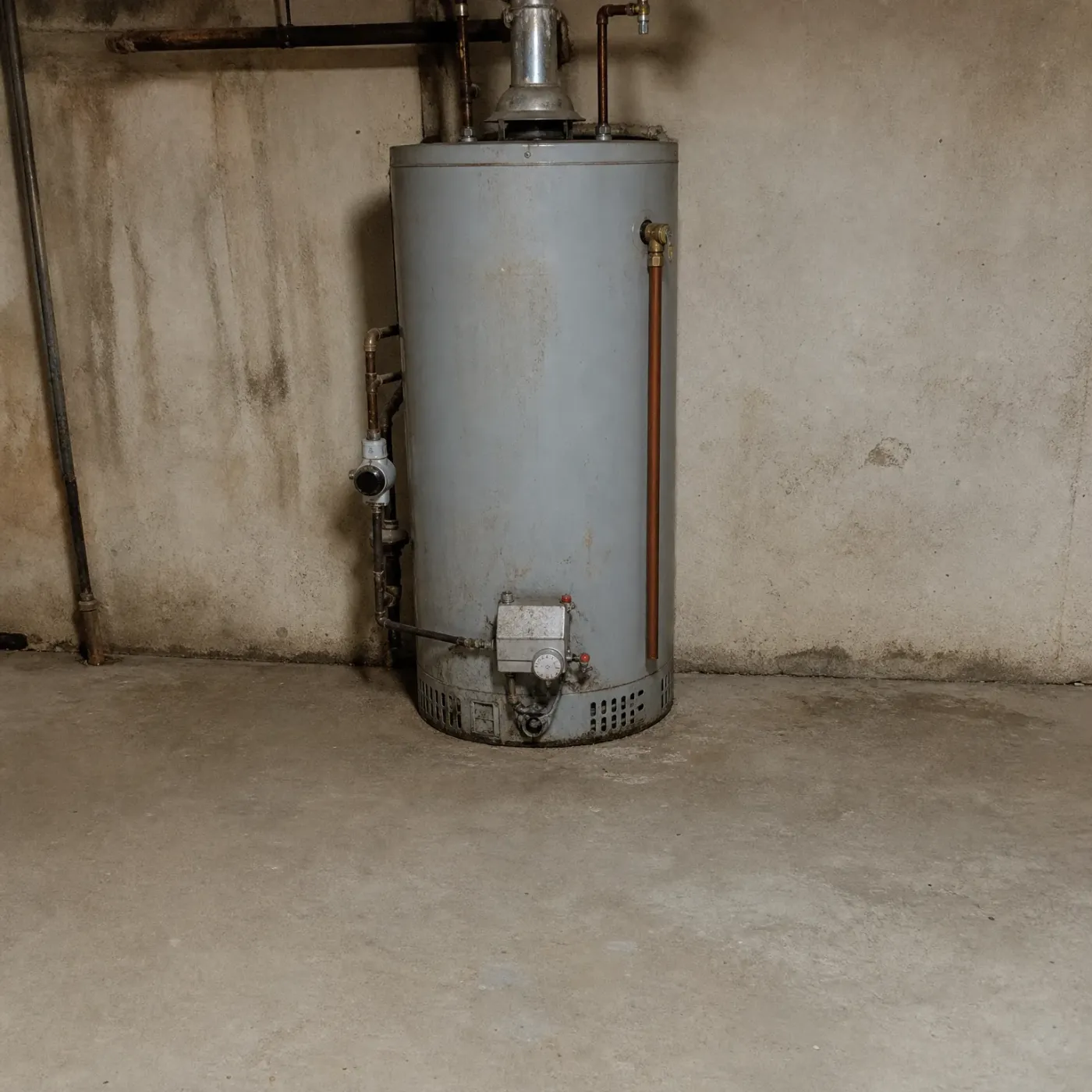
A rusted gas water heater with a flue pipe stands against a concrete block wall on a bare concrete floor, next to a dark metal duct or furnace cabinet at right.

This is what a failing tank looks like

Rust has worked its way across the whole tank, not just one spot, and it sits directly on concrete with no pan to catch what comes out. Galvanized pipe like this is old enough that the tank almost always is too. By the time rust shows like this on the outside, the inside is further along.

What's that puddle actually telling you?

Check the floor around the base first. A damp ring, a stain on the carpet or wood, or water pooling in the drain pan means it's already leaking, not about to. Look at the fittings on top of the tank for drips or mineral crust, and check the pressure relief valve on the side for water trailing down from it. If the tank itself is wet or rusted along a seam, that's different from a loose fitting, and it changes what happens next. A closet or utility room nearby can take on water before you notice, and if the heater sits on a floor above living space, that water goes through the ceiling below it. A damp smell or soft flooring near the tank means it's been going on longer than today.

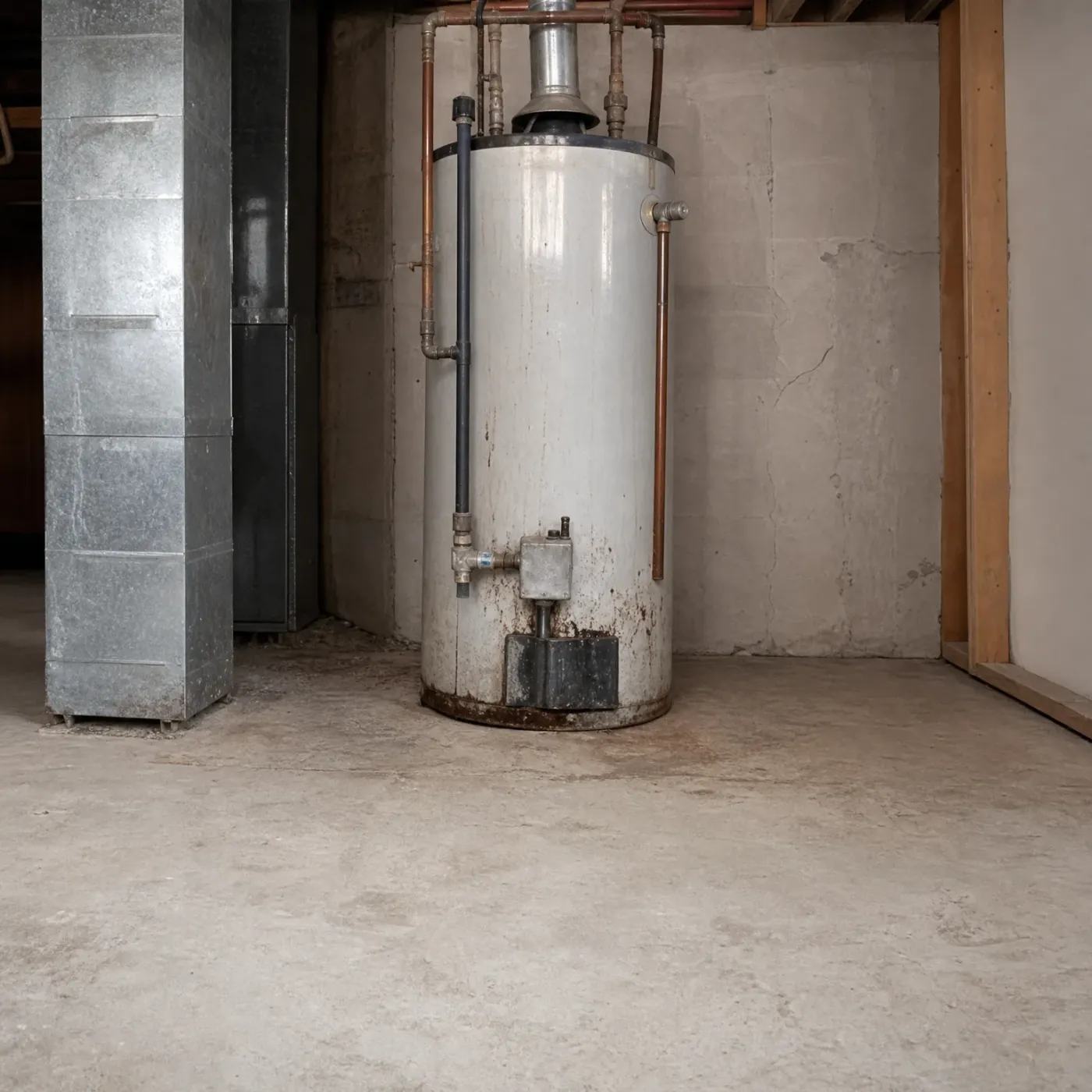
An old rusting cylindrical gas water heater with copper and steel pipes and a flue stands against a concrete basement wall beside metal ductwork on a bare concrete floor.
Before you get your water heater repair
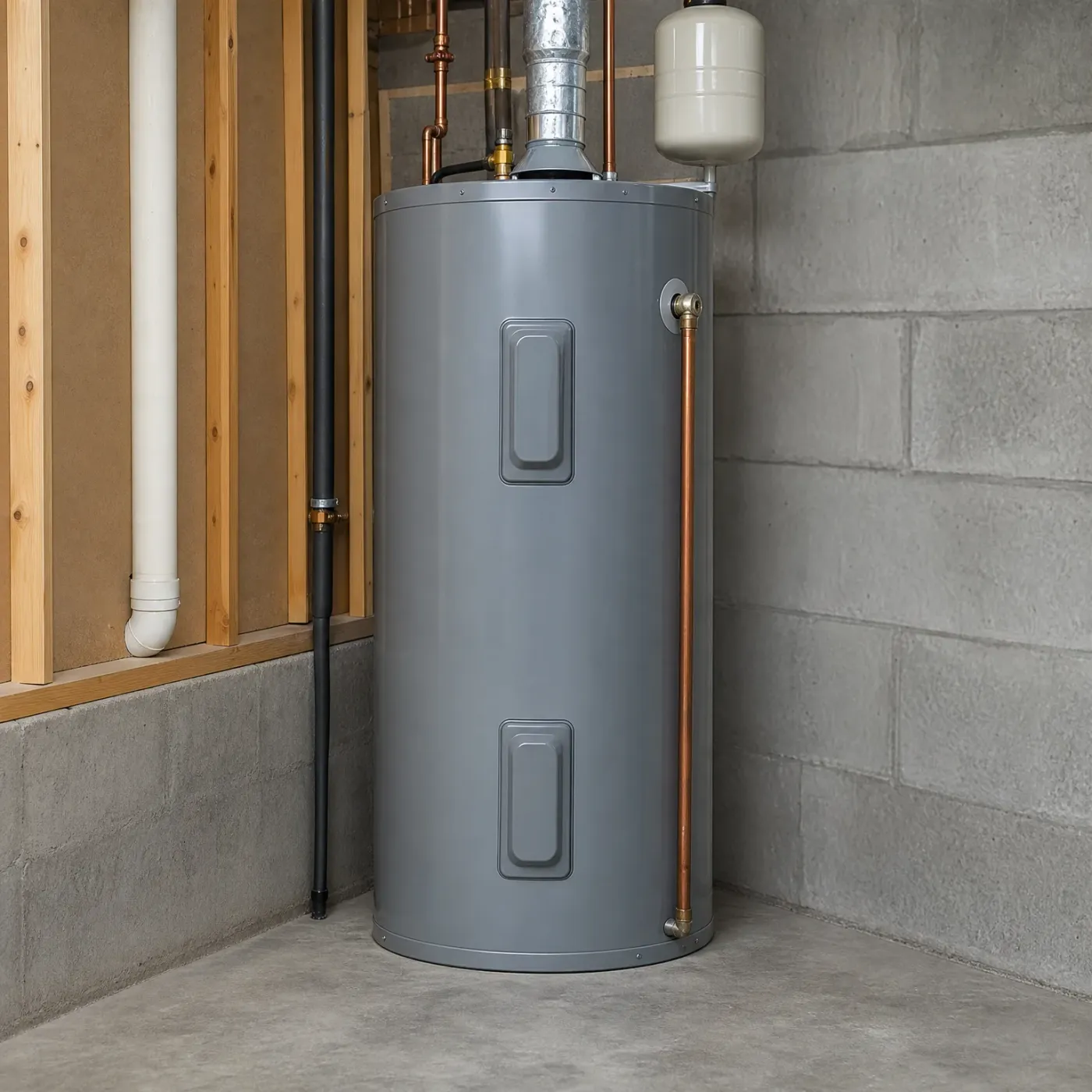
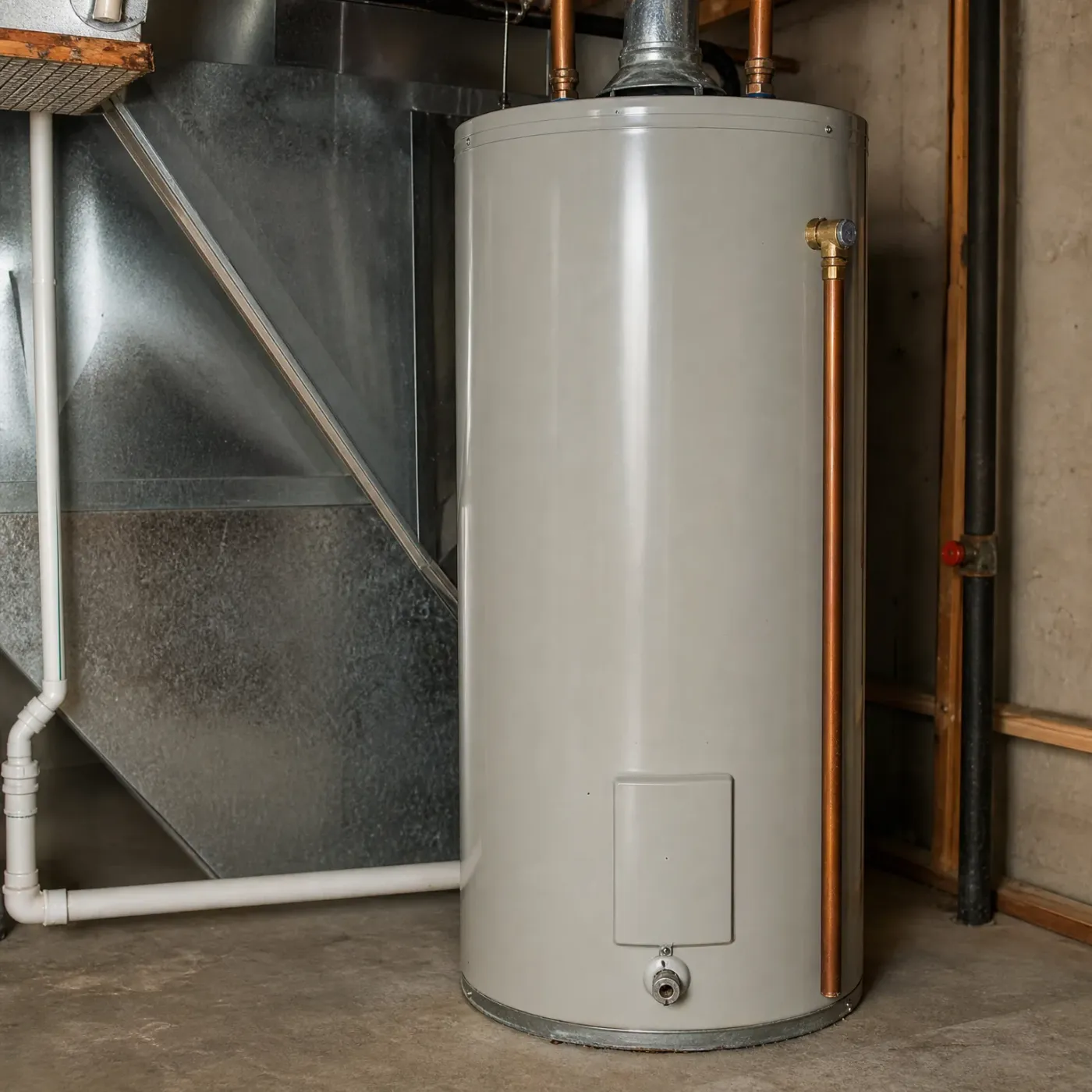
A gray cylindrical water heater with copper piping and an expansion tank stands in a basement corner beside a concrete block wall and exposed wood framing.
After you get your water heater repair
A beige cylindrical water heater with copper pipes and a brass valve stands on a concrete floor in a basement beside galvanized ductwork, white PVC piping, and a black vertical pipe along a concrete wall.

Find a water heater repair pro in Yellowstone County

Send the request today and stop worrying about who to call.

Your request goes to a Yellowstone County pro who takes water heater jobs.

Request a pro

It costs nothing to send, and you don't have to hire anyone.

Fix the leak, or replace the tank

Repair

  • A leak at a fitting or valve can be fixed without replacing the tank, as long as the tank body itself is dry.
  • A contractor can pressure test the connections and tighten or replace a single part instead of the whole unit.
  • If the tank is still within its working life and the steel hasn't rusted through, repair keeps the rest of the system in place.
  • Repair costs less upfront and takes less time than a full swap, since there's no new tank to size and install.
  • A newer water heater with a bad valve or loose union is usually a repair case, not a replacement one.
  • Fixing the leaking part now means you keep the tank you already have, including any warranty still on it.

Replace

  • If water is coming from the tank body itself, the steel has rusted through from the inside and no part fixes that.
  • A tank that came with a house built before 1980 has already outlived its working life, leak or not.
  • Replacement means a new tank sized for your household, which matters in Yellowstone County where most homes run a family-sized unit.
  • Once a tank starts leaking from rust, the hole only gets larger, so repair just delays the same outcome.
  • A new tank means new fittings, a new valve, and no guesswork about what else might fail next.
  • If the leak has already reached the floor or a nearby wall, replacement stops the same damage from happening again.
  1. Water enters the tank cold through the dip tube first.

  2. The burner or element heats water inside the steel tank.

  3. Hot water rises and exits through the outlet at the top.

  4. Pressure and heat cause the tank's glass lining to crack over years.

Power here costs 14.42 cents per kilowatt-hour

At 14.42 cents per kilowatt-hour, running an electric water heater here costs about what most of the country pays. That's not the problem. A leaking tank doesn't raise your bill, it ruins your floor, and a replacement unit will carry that same rate whether it's tank or tankless.

EIA-861 2025

A dim bathroom corner with a glass-enclosed tiled shower containing a rain showerhead and wall niche, a gray towel on a rail beside a bright window, and a large plain wall in shadow at left.

It's a Tuesday morning and you've got twenty minutes before you need to leave. You turn the shower on and step back to let it warm up, but the glass doesn't fog and the water never climbs past lukewarm. No steam on the mirror. The towel's still folded dry on the rail where you left it last night. You bend down and check under the tank in the closet down the hall, and the floor around the base is wet, a ring soaked into the carpet edge. The water heater's not keeping up and it's leaking at the same time. You shut the shower off, grab a towel for the floor instead, and start figuring out who you're calling before work.

A white cylindrical water heater with two access panels stands on a concrete floor in a basement corner, beside galvanized ductwork, copper and metal pipes, a wooden post, and a concrete block wall.
Fittings dry, no rust at the connections, no staining on the floor below it.
An older gray cylindrical gas water heater with copper and steel piping and a flue, standing on a concrete floor against a stained concrete wall.
This one is past saving. Scale at the gas control, rust creeping down from the relief valve, a flue vent that has seen better days.

What the leak tells you

  • Water on the floor under the tank means something has already failed, not something about to.
  • A leak at a fitting or valve can often be repaired, but a leak from the tank body means replacement.
  • Half the water heaters in homes here are old enough that a tank leak is the more likely outcome.
  • A contractor can pressure test the connections to tell you which one you actually have.
  • Leaving it alone doesn't slow it down, and the floor, drywall or anything stored nearby pays for the wait.
  • Knowing which leak you have decides the whole next step, and that's a quick check, not a guess.

A water heater doesn't leak for no reason, and the fix depends entirely on where the water is coming from. A fitting or valve can usually be tightened or swapped without touching the tank. A leak from the tank body itself means the steel has rusted through from the inside, and no amount of tightening changes that. That difference is the whole decision, and it's not something you can tell by looking at a puddle on the floor. A contractor pressure tests the connections to find out which one you're dealing with, and that test is quick, not a drawn-out diagnosis.

Age matters here. Half the water heaters in homes around Billings are old enough that a tank failure is the more likely answer than a loose fitting. If yours came with an older house, that history is worth mentioning when you describe the leak, because it points toward what the contractor should expect to find.

Waiting doesn't buy you anything. The water that's already on your floor keeps going, into the drywall, into whatever's stored nearby, every day the tank sits there leaking. None of that gets better by itself. Once you know which kind of leak it is, the next step is clear, either a repair to the fitting or valve, or a replacement tank. Getting that answer is the part that's quick. Living with the puddle while you wait to find out is the part that costs you.

A woman in a dark knit turtleneck sweater reclines on a couch under a cream knit blanket, looking down at an open book, with a lit table lamp and framed pictures behind her.
A smiling middle-aged man in a dark green sweater sits at a candlelit table with wine glasses and a plate of greens in a dimly lit interior.

Water Heater Repair

A water heater pro near you

After this form, you can stop searching for a water heater pro.

A black smartphone standing upright against a plain light gray background, its screen filled with solid green.
Step 1 of 3: Equipment