Profile view of a bearded man wearing a black baseball cap and a dark gray T-shirt against a plain light background.

Why your water heater is slow to recover in Montana

Step 1 of 3: Equipment

Why is my water heater taking so long to heat up again?

You run the hot water out faster than it used to, or you notice the next shower feels lukewarm until the tank has had time to catch up. In Montana, with gas water heaters common in most homes, a slow recovery usually points to something specific going on with the burner or the tank, not just an old unit finally wearing out.

A weak burner or a buildup of sediment is slowing the tank's recovery

A gas water heater heats by running a flame under the tank, and anything that keeps that flame from burning at full strength stretches out recovery time. A dirty burner, a failing thermocouple, or sediment settled on the bottom of the tank all get between the flame and the water it needs to heat. Sediment is common in gas tanks after they've been in service a while, since it builds a layer that acts like insulation between the burner and the water above it. In Montana, with power cheap and most homes on gas, the water heater itself is almost always the cause rather than the gas supply or the electric ignition system. Left alone, the burner works harder for the same result, and recovery time keeps getting longer.

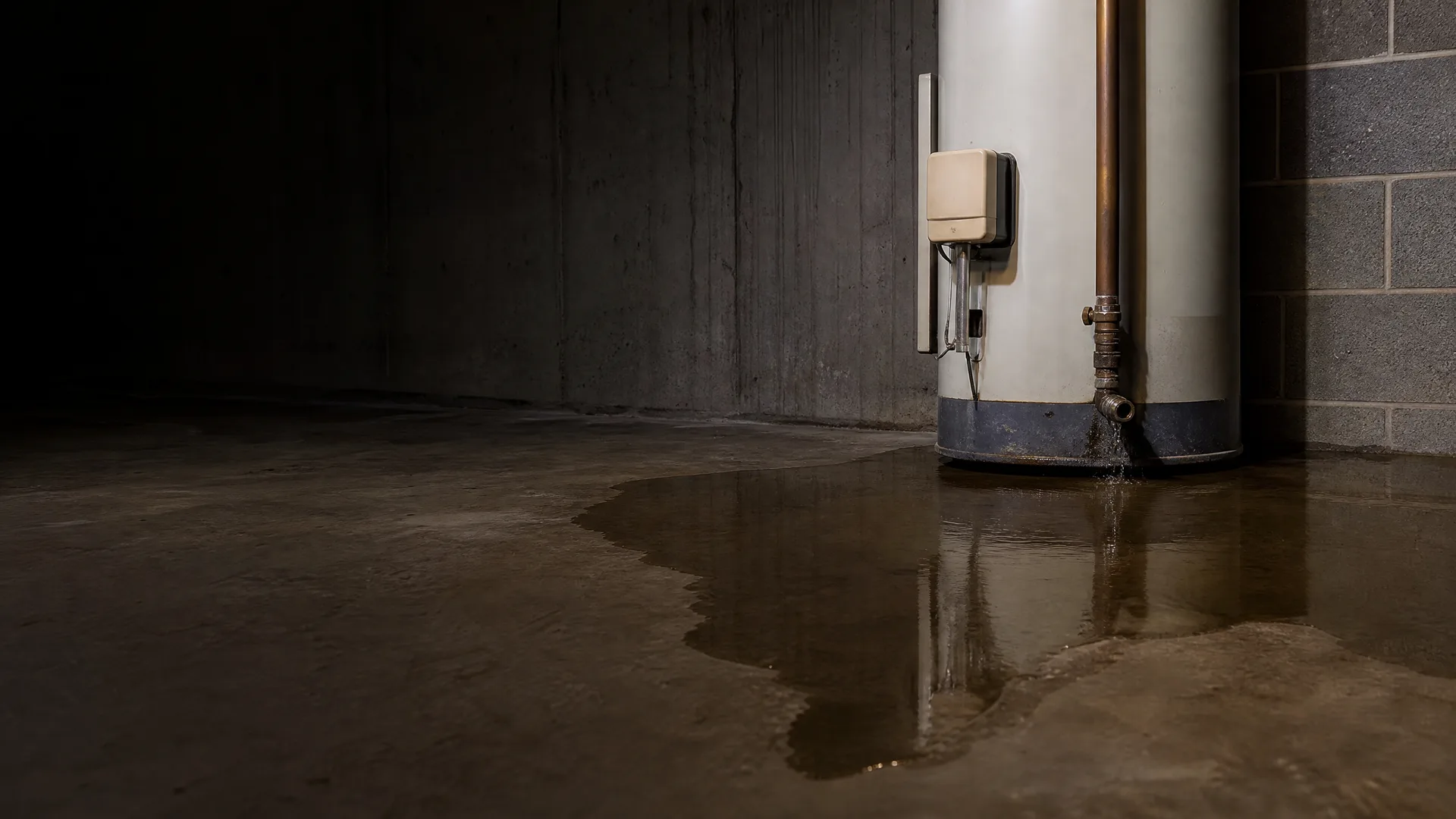
A water heater tank with copper piping and a drain valve stands against a concrete and block wall in a dim basement, with a large puddle of water spreading across the floor.

Saturday morning, and you've got a load of towels going while the kids take back to back showers before a basketball game. By the third shower, the water's gone lukewarm, then cold. You head down to the basement to check the gas water heater, and that's when you see it: a thin ring of water spreading out from the base of the tank, catching the light from the small window above the workbench. You crouch down and touch it. Not condensation. It's coming from somewhere low on the tank itself. The burner kicks on while you're standing there, and you can hear it working, but the puddle is still growing, a little wider than it was a minute ago.

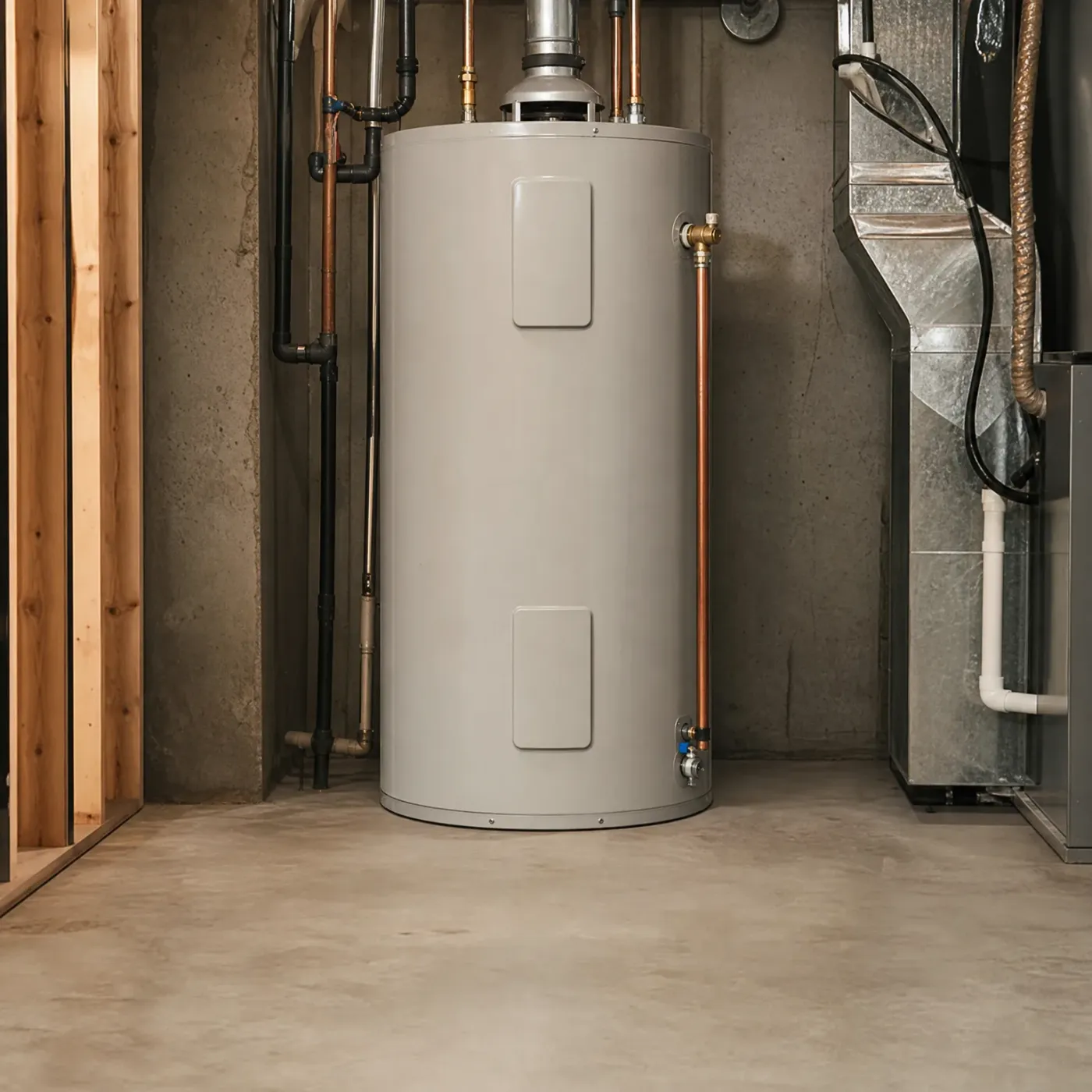
A gray cylindrical water heater standing on a concrete floor in a basement corner, with copper pipes and a metal duct running overhead along bare concrete walls.
A working gas water heater recovers fast because the burner underneath the tank gets full gas pressure and a clear flue to vent through.
A white cylindrical water heater with rust stains and two access panels stands in a basement corner between a painted concrete block wall and a bare concrete wall, with metal pipes running up and alongside it on a concrete floor.
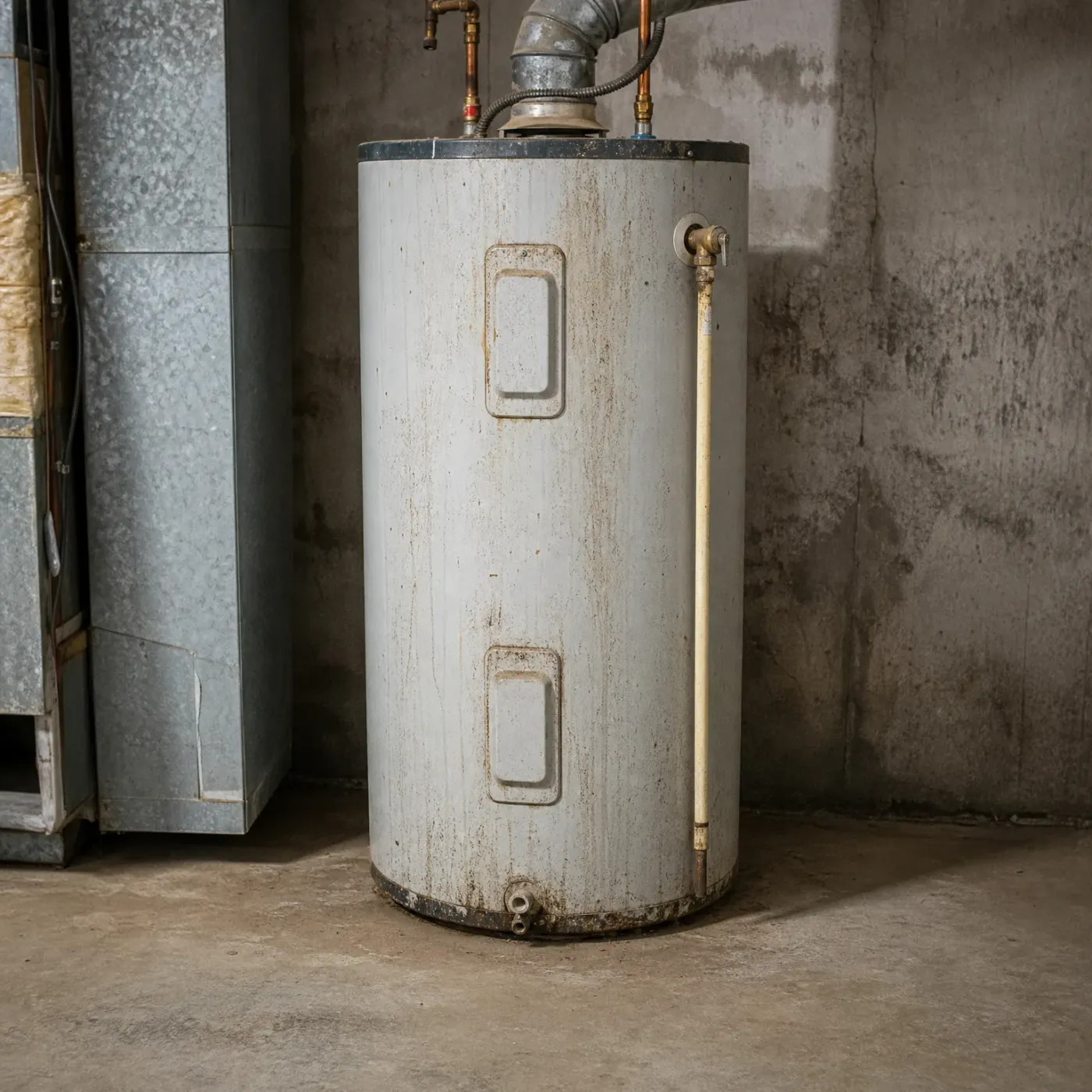
Rust eating through the jacket and fittings on a water heater this old usually means the burner or flue is already compromised too.

How a Gas Water Heater Recovers

  • Cold water enters at the bottom of the tank through a dip tube that routes it to the burner area instead of mixing at the top.
  • The burner fires underneath the tank and the heat travels up through a flue that runs straight through the center of the tank.
  • A thermostat called the gas control valve reads the water temperature and opens or closes the gas supply to match it.
  • Sediment that settles on the bottom of the tank sits between the burner and the water, so the flame has to heat through it first.
  • A dip tube that has cracked or broken lets incoming cold water dump in near the top, cooling the water that was already hot.
  • The anode rod inside the tank slows corrosion but does nothing for recovery, so a slow refill almost always points to the burner, the flue or sediment instead.

Cold water comes into the tank at the bottom through a dip tube, so the coldest water sits right where the burner underneath can reach it first. The burner fires, and the heat climbs through a flue that runs up the middle of the tank like a chimney, warming the water around it as it goes. A gas control valve does the thinking. It reads the water temperature and opens the gas supply when the tank needs heat, then closes it once the thermostat setting is met. That cycle, cold water in, burner on, heat up through the flue, valve shuts off, repeats every time you draw hot water. Sediment changes the math. It settles on the bottom of the tank, right between the burner and the water, so the flame spends part of its time heating a layer of grit before the heat ever reaches the water above it. A cracked or broken dip tube causes a different problem. Instead of routing cold water to the bottom, it lets that water dump in near the top, where it mixes with water that was already hot and pulls the temperature back down. The anode rod gets blamed sometimes, but it only slows corrosion inside the tank. It has no role in recovery time. If your hot water is taking longer to come back, the cause is almost always the burner, the flue or sediment, not the rod.

An old rust-streaked cylindrical water heater with two access panels, copper pipes and a flue at the top, and a discharge pipe along its side, standing on a concrete floor beside galvanized ductwork against a bare concrete wall.
Before you get your water heater repair
A gray cylindrical water heater with copper piping and access panels stands against a concrete basement wall beside ductwork and vertical pipes.
After you get your water heater repair

Hand off the water heater problem

A slow recovery doesn't fix itself, and in a Montana winter that's not something to put off while you figure out who to call. You could start dialing plumbers, waiting on callbacks, explaining the same thing about your gas water heater three or four times, then trying to compare quotes from people you've never met. Or you can send this request once and let a licensed contractor come to you. Most homes in Montana run on gas, which means parts and know-how for this exact kind of unit aren't hard to find once you're actually connected to the right person. That connection is the part that eats your evening if you try to do it yourself. Hand it off instead. The water heater still needs looking at, but finding someone to look at it stops being your problem the moment you send this in.

What the sediment actually does

A gas water heater heats water by firing a burner directly under the tank, and that heat has to pass through the steel before it reaches the water sitting above it. Sediment settles on that bottom surface and sits between the flame and the water, acting like a lid. Instead of heating fast, the burner spends extra time pushing heat through an inch or more of sand and minerals before any of it reaches the tank. The thermostat still reads the water near the top as cool, so the burner keeps firing longer than it should, trying to catch up to a tank that's already working against itself.

Why the flue matters just as much

Heat only moves through the water fast if the flue running up the center of the tank is clear enough to pull hot gas past the tank walls on its way out. A flue partly blocked by rust flakes or scale slows that exhaust down, and the burner ends up fighting its own exit path along with the sediment underneath it. Either problem alone will stretch recovery time. Both together, and a tank that used to catch up in twenty minutes can take twice that, especially once Montana's groundwater is colder going in during winter and the burner has more ground to make up.

A smiling man in a gray long-sleeved shirt stands in a kitchen looking to the side, with open shelves of dishes, a white mug on the counter, a potted plant, and a view through a doorway into a living room.
A smiling bearded man in a green sweater sits at a white marble kitchen island with a mug, potted plant and bowl of fruit, in a bright white interior with open shelving and an arched doorway.
A smiling man with dark curly hair and a beard, wearing a dark green knit sweater, stands at a white marble kitchen counter with a dark blue mug, with open shelving, pendant lights and a houseplant behind him.
A smiling man in a green ribbed sweater stands behind a wooden table holding a ceramic mug of coffee in a kitchen with white subway tile, shelves of potted plants, and a bowl of fruit.
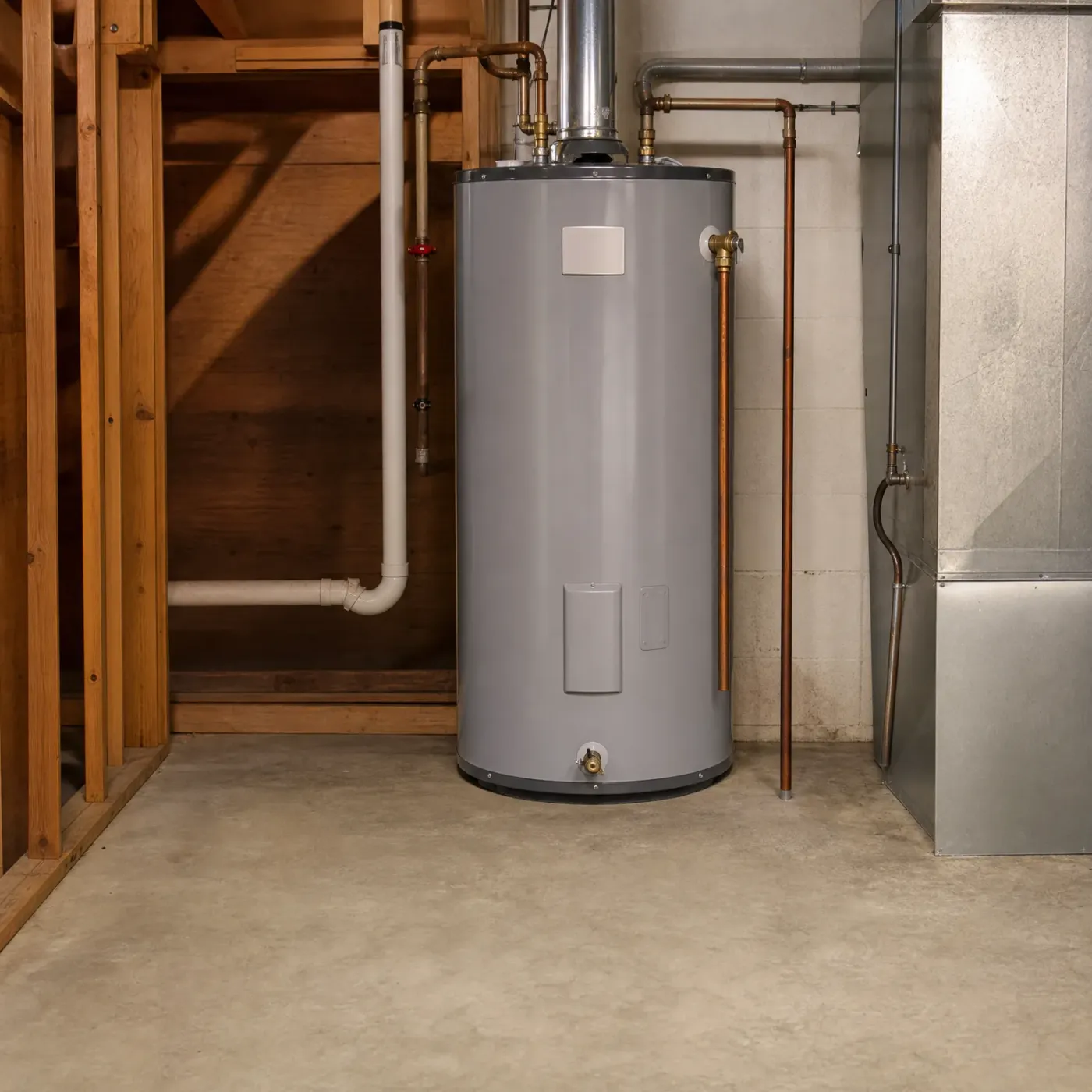
A gray cylindrical water heater stands on a concrete basement floor between an unfinished wood stud wall and a metal furnace duct, with copper and PVC pipes running along the concrete block wall.

Tank in good shape

This is what a water heater looks like when recovery times stay normal. No rust on the jacket, clean connections at the top, and a floor free of water stains. Sediment hasn't had the chance to build a layer between the burner and the water.

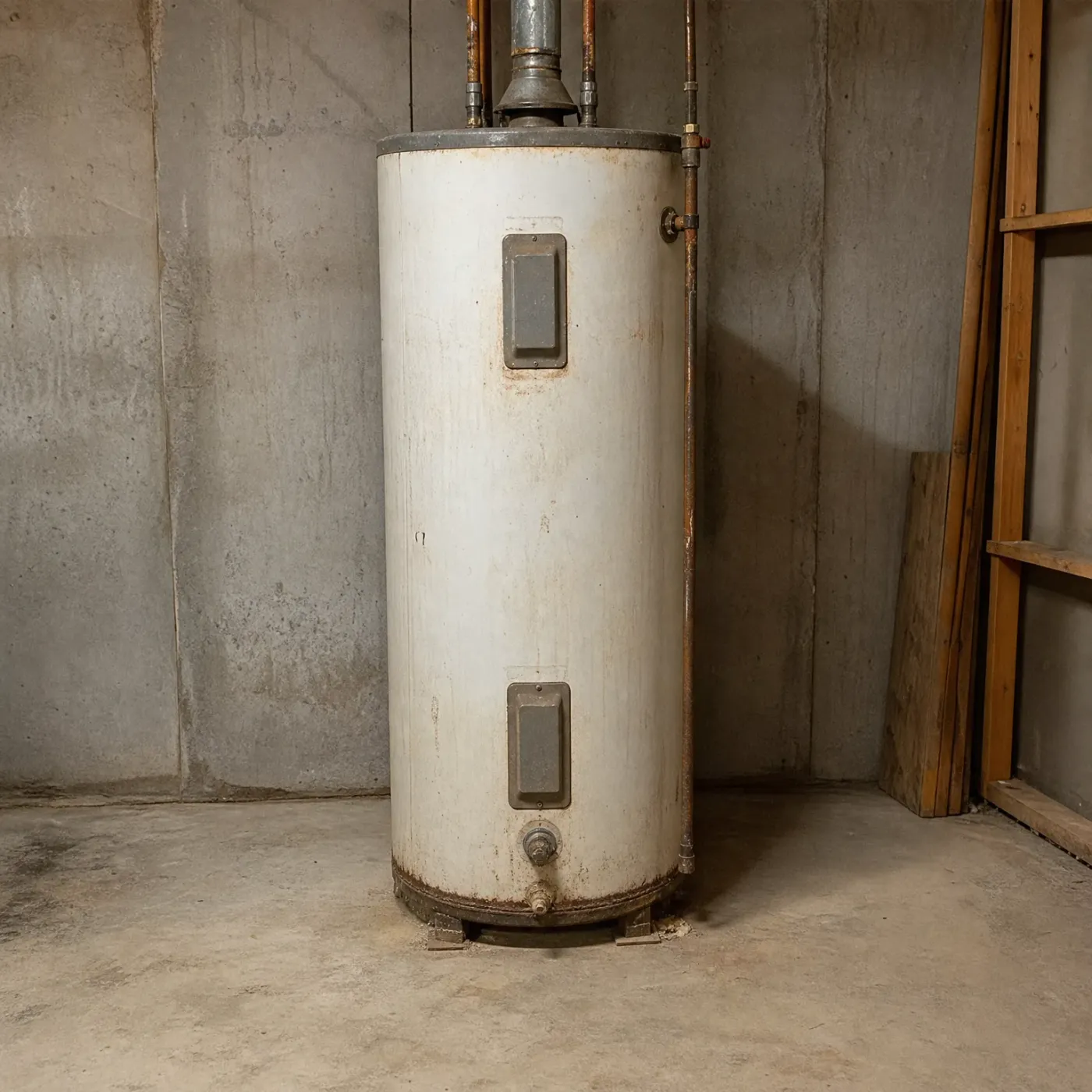
A rusted white cylindrical water heater with two access panels stands in a concrete-walled basement corner, with pipes rising from its top and wooden boards leaning against the wall at right.

Tank past its point

Rust like this on the jacket usually means the tank has been sitting with sediment for years, not months. Two thermostat panels tells you it's electric, not gas, and by this stage the rust is as much a sign of what's happening inside as what you can see outside.

A smiling man with dark curly hair in a navy t-shirt sits on a gray couch indoors, with a large-leafed plant and a window in the background.
A bearded man in a plaid flannel shirt stands in a kitchen looking out a window toward snow-covered shrubs, with a steaming mug on the windowsill and potted plants on a shelf behind him.
  1. Cold water enters the tank and drops to the bottom first.

  2. The burner fires underneath and heats the steel tank floor.

  3. Sediment on the bottom blocks heat from reaching the water.

  4. The burner has to run longer to push heat through that layer.

50.5% of homes statewide heat with gas

With gas the main fuel across the state, your water heater most likely has a burner under the tank rather than an electric element inside it. That burner has to push heat through the tank floor, so once sediment collects there, recovery slows down before you'd notice anything else wrong.

ACS 2020-2024 5-year B25040

A slow recovery almost always comes down to sediment sitting between the burner and the water, blocking heat that used to pass through clean steel. That's fixable. What it isn't is something to leave alone through a Montana winter, when the gap between cold tap and the water you need only gets wider as the tank ages. You don't have to spend an evening calling plumbers, sitting on hold, explaining the same thing about your gas water heater three or four times, then comparing quotes that all sound different for reasons you can't tell apart. Send the form once and that part of the job is off your plate. Someone who works on gas water heaters for a living takes it from there, and you go back to running water that gets hot and stays hot.

A dark wood cabinet with a paneled door and a ceramic pot of green foliage on top stands in a beige-walled room with white baseboard, a window at left, hardwood floor, and a patterned area rug.
A dark wood glass-front cabinet holding folded towels, woven baskets and a ceramic vase stands in a bathroom corner beside a window, with a potted fern and stacked towels on top and a freestanding tub partly visible at left.
A woven basket holding a green cushion and a cream fringed knit throw sits on a wood floor in a room corner beside a window and a dark wooden cabinet.
Corner of a room with a dark wood cabinet topped by a round vase, a linen curtain at a window, white baseboard, oak plank flooring with sunlight patches, and a woven jute rug in the foreground.
A dark wood sideboard against a pale wall holds a shallow stone bowl and a round ceramic vase with leafy branches, with sunlight from a curtained window falling across the wall, wood floor and woven rug.

Send one request and you're done looking

Answer a few questions instead of calling shop after shop.

Send my request

Asking costs nothing, and the choice to hire stays yours.