Montana Hot Water
Profile view of a bearded man wearing a dark baseball cap and a dark gray T-shirt against a plain off-white background.

Why your hot water smells like rotten eggs in Montana

Step 1 of 3: Equipment

Why does my hot water smell like rotten eggs?

You turn on the hot tap and it smells like sulfur, like rotten eggs, maybe only on the hot side. It's not every house in your neighborhood, and it may come and go. You want to know if this is dangerous, what's causing it, and whether it's something a plumber needs to look at or something that just goes away on its own.

A reaction inside the tank is making the smell, not a gas leak

The smell comes from bacteria in the tank reacting with the magnesium anode rod, the rod inside most water heaters that protects the tank from rusting out. That reaction produces hydrogen sulfide gas, which smells like rotten eggs even in small amounts. It shows up more in well water, but it happens on municipal water too, and it's more common in gas water heaters because the tank sits unheated between uses, giving bacteria time to work. It's not dangerous to breathe at these levels, but it does mean something is off with the rod or the water sitting in the tank, and a plumber can tell you whether the fix is replacing the anode rod or flushing and disinfecting the tank itself.

A bathroom corner with a gray tiled walk-in shower with a glass door, a recessed niche, and a dark towel hanging on a rail beneath a window.

You run the shower before work, same as every morning, and it hits you before the steam does. That smell, sulfur, rotten eggs, coming up through the hot water. You step back, let it run a minute, hoping it clears. It doesn't. The towel's still on the rail, the mirror hasn't even started to fog, and you're standing there deciding whether to shower anyway or go down and deal with the water heater first. Outside it's dry, the kind of Montana summer morning that doesn't explain any of this. The cold tap runs fine. It's just the hot side, every time you turn it on.

Rod Swap or Full Disinfection

Anode Rod Swap

  • The magnesium rod in your tank reacts with sulfur bacteria in the water to make the gas, and swapping it for an aluminum or zinc rod usually stops the smell.
  • This works when the smell is only in the hot water and the cold tap runs clean.
  • A licensed plumber can pull the old rod, check how much of it is left, and thread in the replacement through the same fitting.
  • If the tank is old enough that the rod has never been changed, this is often the first thing worth trying before anything bigger.
  • It doesn't fix a tank that's rusting from the inside, so if sediment or rust color shows up too, this alone won't solve it.

Tank Disinfection

  • A chlorine bleach flush kills the sulfur bacteria living in the tank and the pipes feeding it, which the rod swap alone won't reach.
  • This matters if the smell showed up after the house sat unused for a while, since stagnant water lets the bacteria build up fast.
  • A plumber who works on tanks all summer in Montana's dry heat knows how long to let the solution sit before it's safe to flush clean.
  • It has to be done to the whole system, not just the tank, or the bacteria work their way back in from the lines.
  • Done on its own without addressing the rod, the smell can come back within months since the bacteria have the same conditions to grow in again.
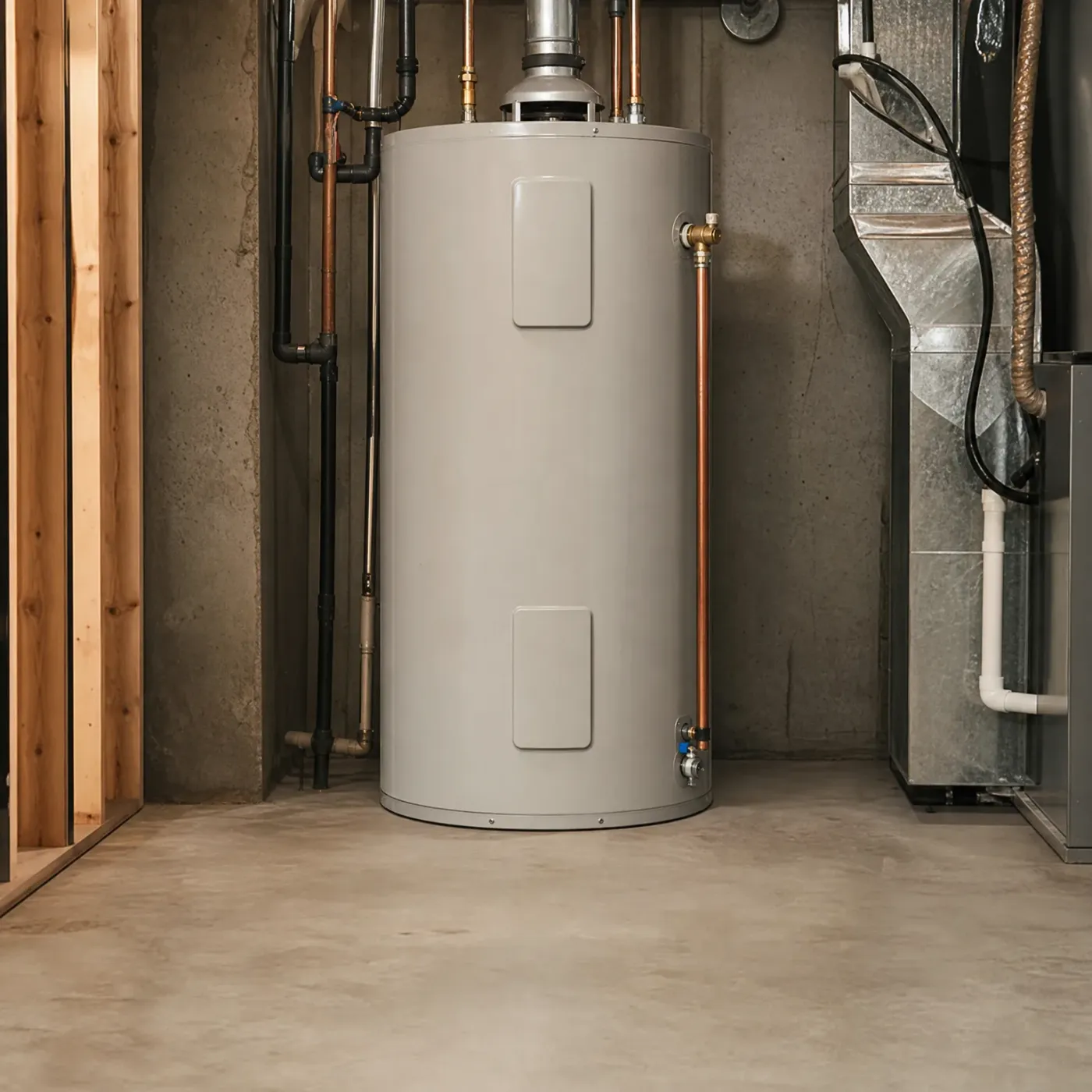
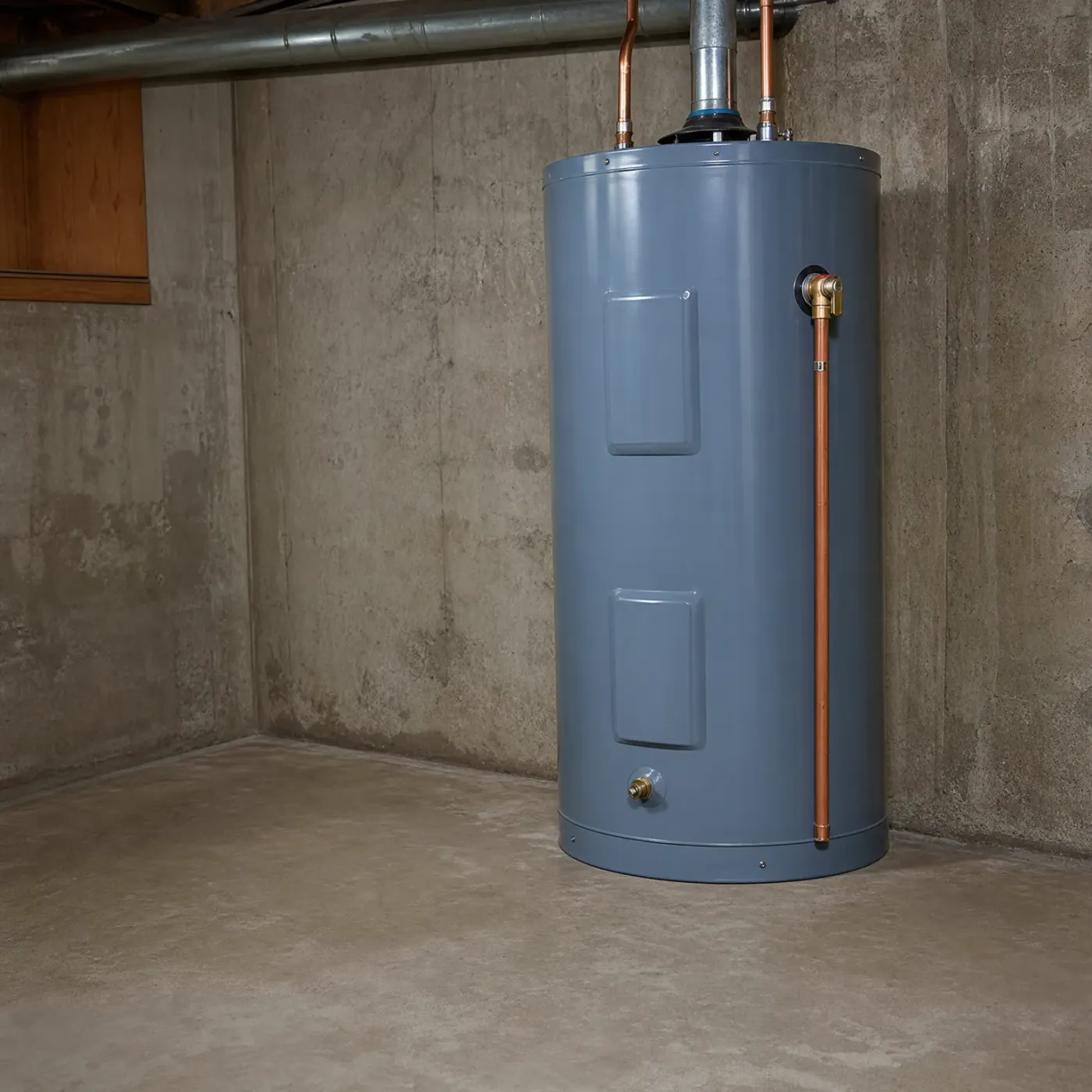
A gray cylindrical water heater standing on a concrete floor in a basement corner, with copper pipes and a metal duct running overhead along bare concrete walls.

Normal operation

This is what a water heater should look like: clean tank, solid connections, no rust on the fittings. Water moving through it stays clear and odor free because the anode rod inside is still doing its job, keeping the tank from corroding instead of the sulfur smell taking over.
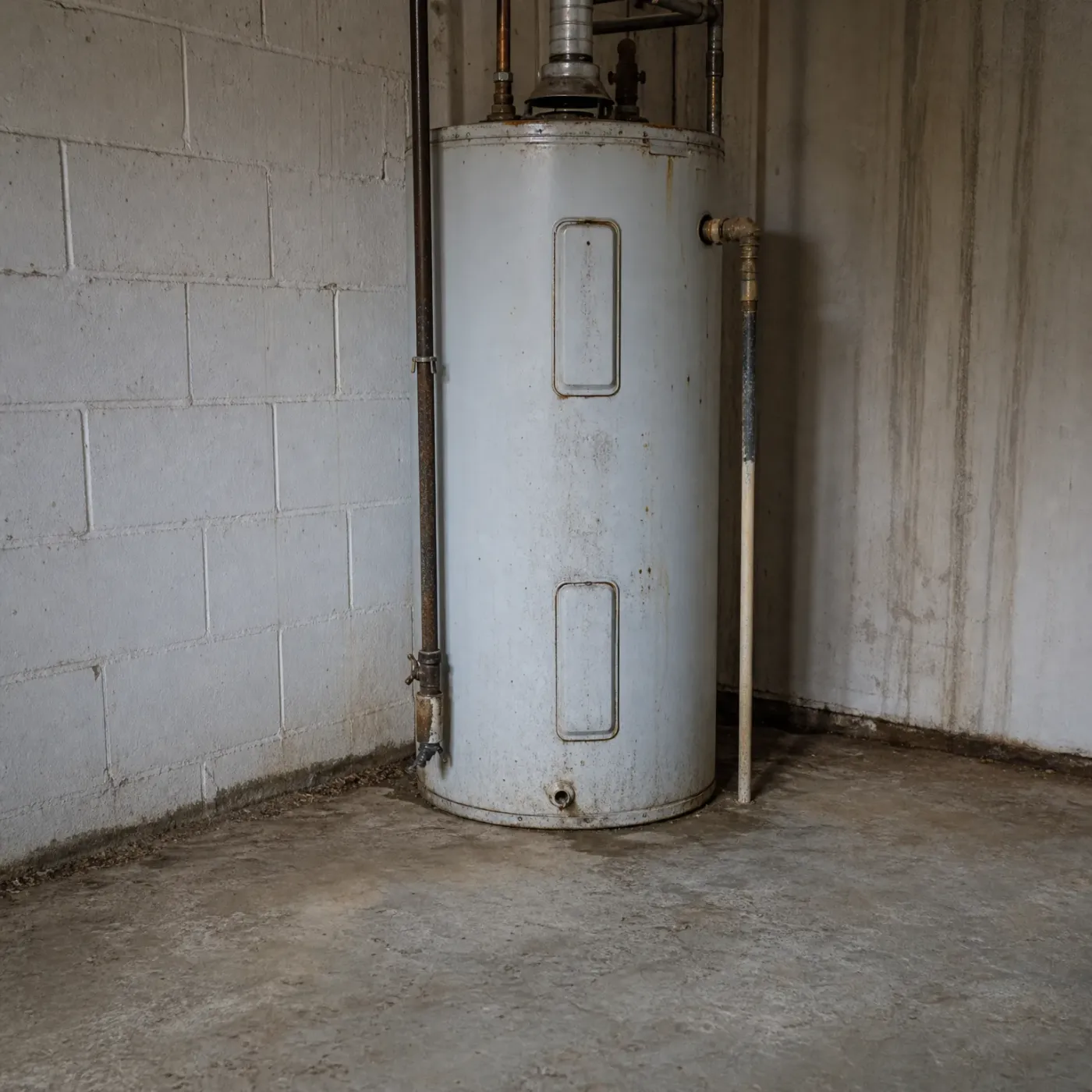

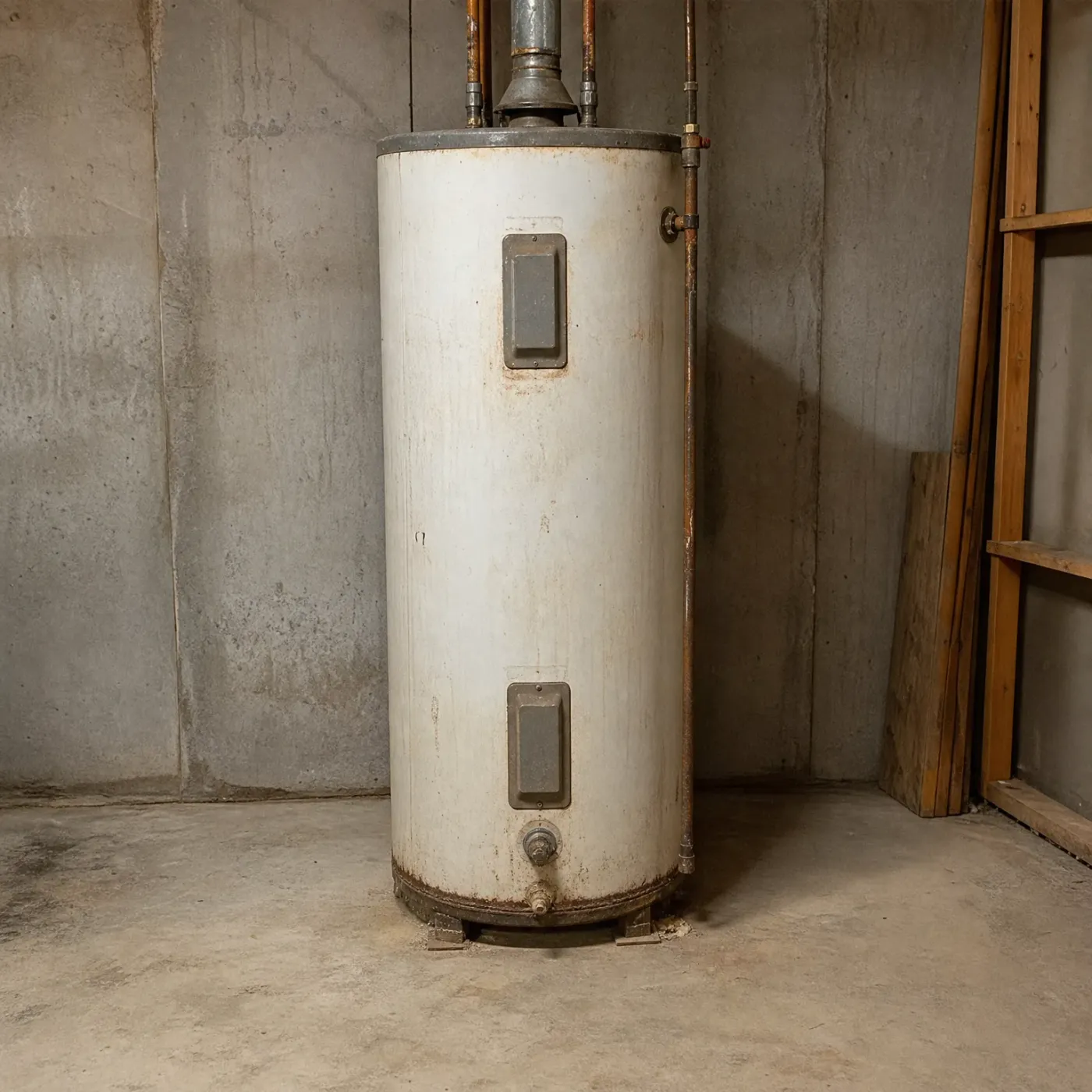
A white cylindrical water heater with rust stains and two access panels stands in a basement corner between a painted concrete block wall and a bare concrete wall, with metal pipes running up and alongside it on a concrete floor.

Rod worn out, tank corroding

Rust like this on the outside often means the anode rod gave out a while ago. Once it's spent, the tank steel itself starts reacting with the water, and that's when sulfur bacteria get the conditions they need. A tank this far gone needs a look before it's just the smell you're dealing with.

A gray-haired man in a dark long-sleeve shirt sits on a gray sofa in a living room, looking toward a sunlit window with sheer curtains.
A gray-haired man in a dark green sweatshirt sits on a sofa in a living room, looking toward a bright window, with a houseplant, lamp, fireplace and framed art behind him.
A gray-haired bearded man in a dark green collared sweater sits on a sofa in a living room with a window, houseplant, floor lamp and bookshelves, looking off to the side.
A gray-haired man in a dark green sweater sits on a sofa in a sunlit living room, looking off to the side, with a framed landscape painting, dining table and shelving behind him.
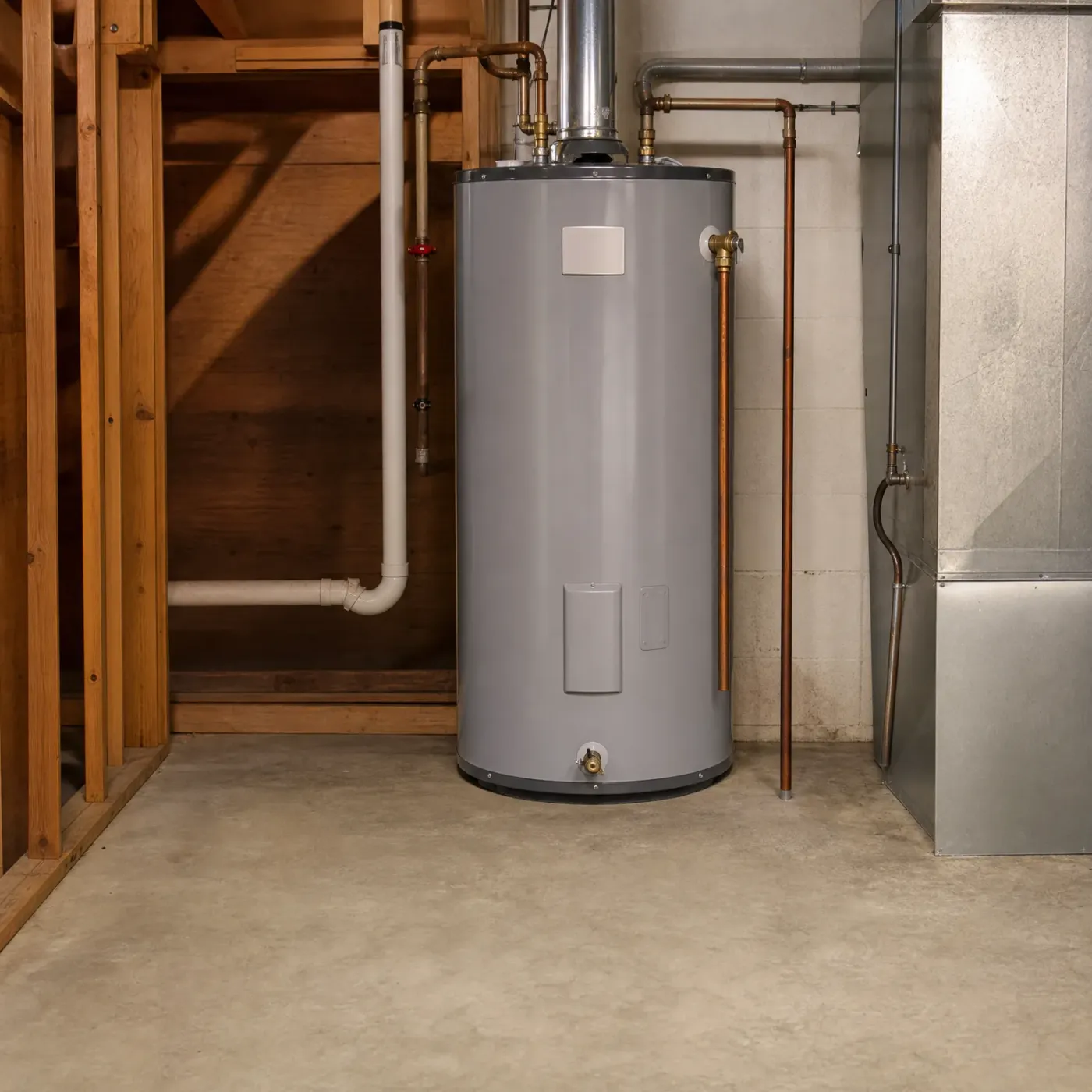
A gray cylindrical water heater with copper piping and access panels stands against a concrete basement wall beside ductwork and vertical pipes.

Working the way it should

This tank is holding up fine. The fittings are clean, the pressure-relief valve is intact, and the connections to the furnace and the rest of the plumbing show no rust or buildup. Water moving through it should run clear with no smell on either tap.

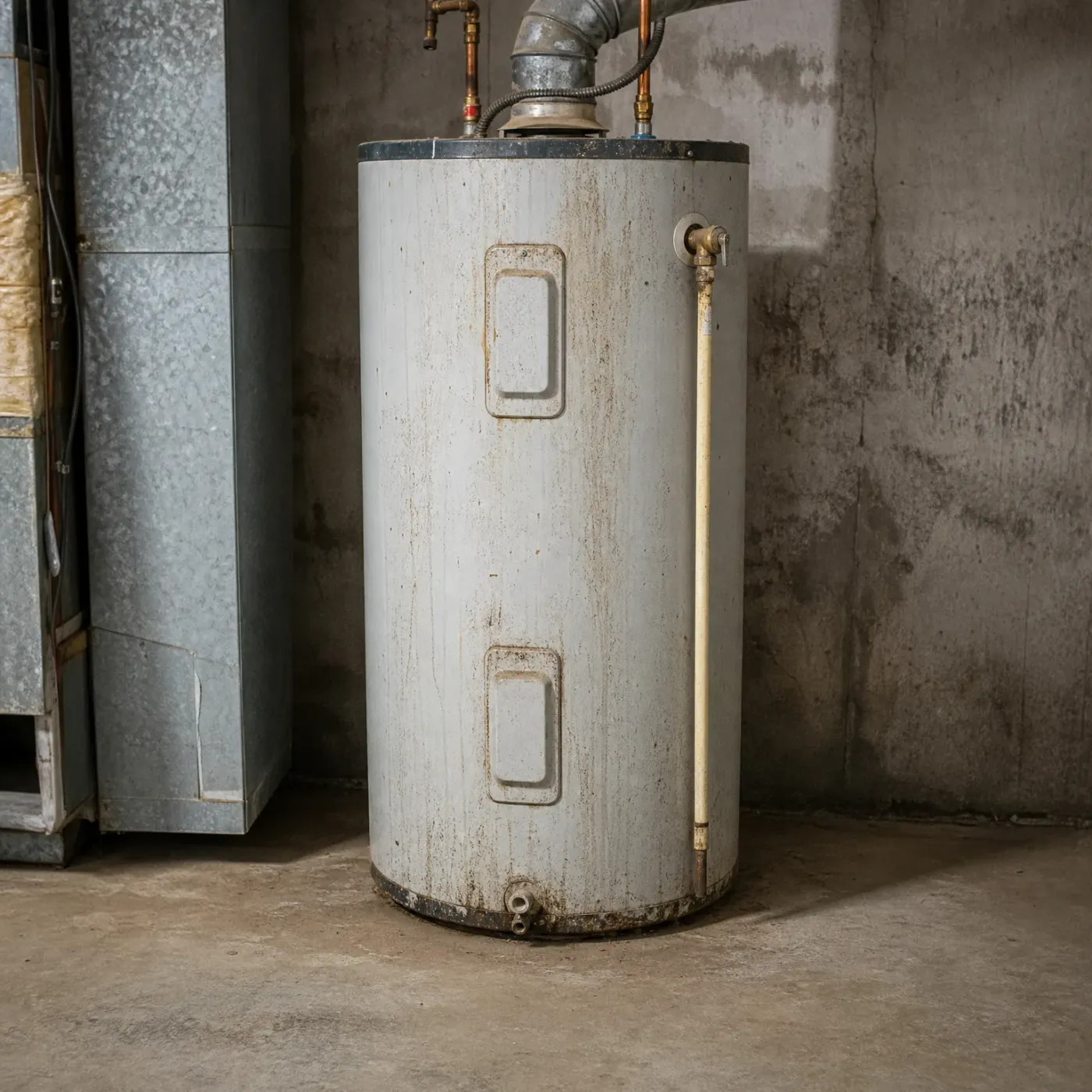
An old rust-streaked cylindrical water heater with two access panels, copper pipes and a flue at the top, and a discharge pipe along its side, standing on a concrete floor beside galvanized ductwork against a bare concrete wall.

Past its working life

Rust has spread across the tank and the access panels on this one. When corrosion gets this far, the anode rod has likely stopped protecting the tank, and sulfur bacteria can take hold. A tank in this shape needs a licensed plumber to look at it, not just a rod swap.

A rusted white cylindrical water heater with two access panels stands in a concrete-walled basement corner, with pipes rising from its top and wooden boards leaning against the wall at right.
Before you get your water heater repair
A gray cylindrical water heater stands on a concrete basement floor between an unfinished wood stud wall and a metal furnace duct, with copper and PVC pipes running along the concrete block wall.
After you get your water heater repair

Skip the calls to every shop

You could spend an evening searching for a plumber who works on water heaters, call a few, explain the sulfur smell each time, then wait on quotes to see who actually knows why a magnesium anode rod does this in Montana well water. Or you could skip that and get matched with one licensed plumber local to you, someone who's pulled this exact rod out of tanks all over the state and knows whether yours needs a new anode or something else going on in the tank. One contractor means one call back, not five different plumbers all trying to win the job before anyone's looked at your water heater. The smell isn't going away on its own, and the longer the bacteria sit in that tank, the more they spread through the rest of the water. Get the right person looking at it instead of guessing at fixes from a forum post.

What's actually making that gas

The smell comes from hydrogen sulfide gas, and it forms inside the tank when sulfate-reducing bacteria feed on the magnesium anode rod. Montana well water tends to carry more of these bacteria and more sulfate than city water does, which is why this shows up so often on private wells here. The reaction needs three things: the bacteria, the magnesium, and warm water sitting still. Your water heater gives it all three. Run the cold tap and it smells fine because that water never touches the rod. Run the hot tap after the tank has sat all night and the gas that built up comes out with the water.

Why it gets worse with time

The anode rod is meant to corrode. That's its job, it sacrifices itself so the steel tank doesn't rust through, and a new rod usually doesn't smell at all. As it wears down over the years, more of its surface area is exposed, which gives the bacteria more magnesium to react with and more gas gets produced per gallon sitting in the tank. A rod that's mostly gone will often smell worse than one that's new, even in the same house on the same well. That's also why the smell can start years into owning a water heater that never had the problem before.

50.5% of homes statewide heat with gas

Just over half the homes in Montana heat with gas, and gas water heaters run the same way: a tank holding water that sits for hours between uses, giving sulfate bacteria time to work on that anode rod. That standing water is where the smell builds.

ACS 2020-2024 5-year B25040

The smell is the anode rod reacting with bacteria in your water, and it's fixable. A plumber can swap the magnesium rod for aluminum or zinc, flush the tank, or shock it with hydrogen peroxide depending on what's actually going on in your tank. None of that tells you on its own which one your water heater needs, and guessing wrong means paying for a fix that doesn't hold. A licensed plumber who works on Montana well water knows which one usually solves it and can check the rest of the tank while they're in there. That's the part worth handing off: not the smell itself, but figuring out which fix is right and doing it once, correctly, instead of working through options on your own.

A middle-aged woman with shoulder-length dark hair, wearing a gray cardigan over a cream top, sits in an upholstered armchair and looks toward a sunlit window, with a shelf holding framed pictures and a plant behind her.
A woman and a child wrapped together in a knitted gray blanket on a couch, with the child's head resting on her shoulder and a lit table lamp and houseplant in the background.

Skip calling around

A plumber local to your area deals with this smell every year, usually from well water heaters that haven't had the anode rod looked at in a while. That's one call, one visit, instead of you ringing around explaining the sulfur smell to a handful of companies and sorting through quotes afterward. The fix might be a new rod, a flush, or a peroxide treatment, depending on what's going on in your tank. Either way, someone who works on this equipment all season can tell you which one and get it done.

Get a licensed local pro

Your request goes to one pro, not a list of companies.

Asking costs nothing, and the choice to hire stays yours.