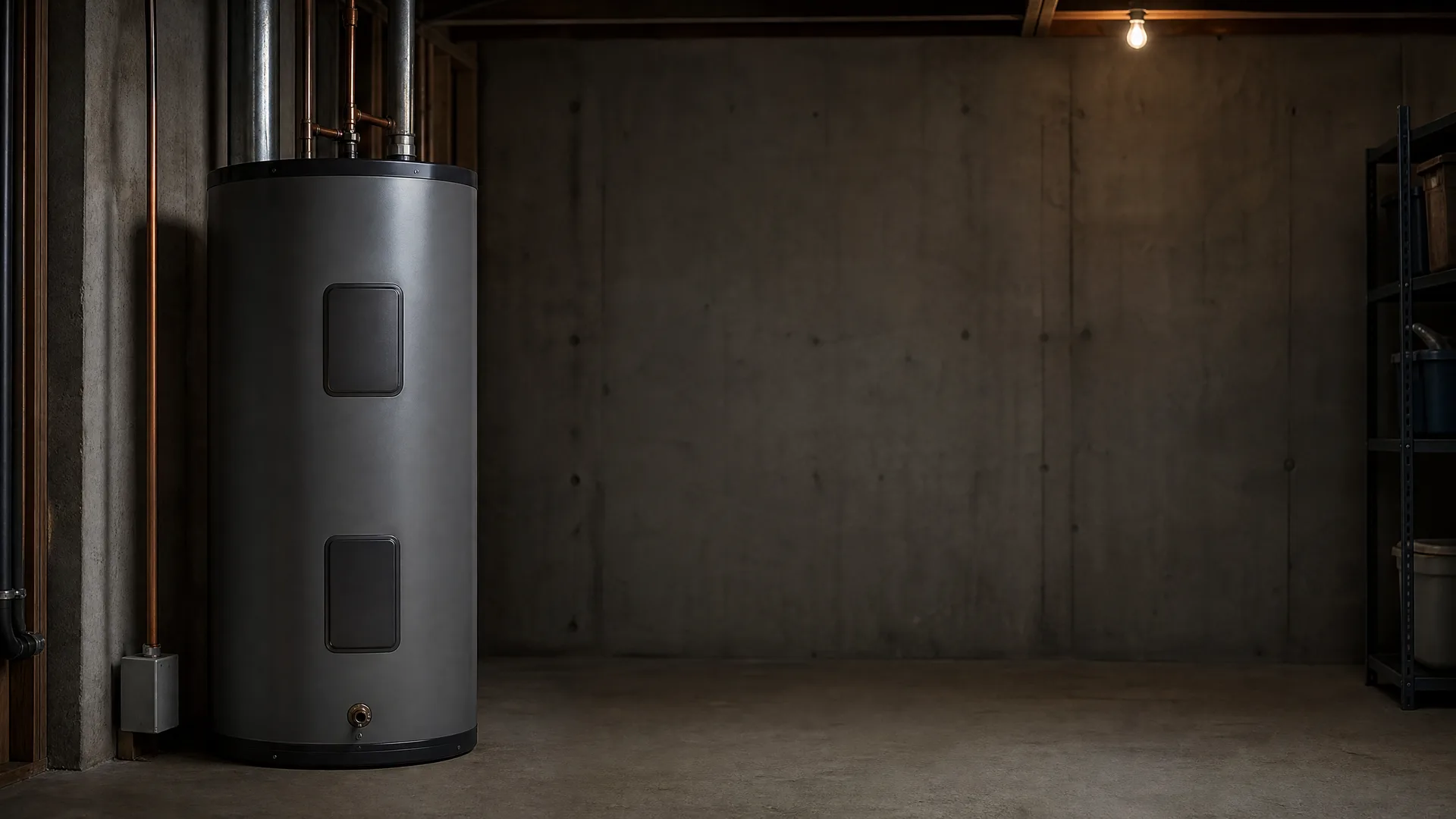

A tall cylindrical water heater with a metal flue pipe and copper plumbing stands against a concrete wall in a dim basement, with a black shelving unit holding plastic storage bins nearby.

Get the right pro for your water heater

Why you run out of hot water fast in Montana

Cold showers by the third person in line usually come down to one thing: the tank can't recover fast enough, or it never had the capacity your house needs. Most gas water heaters in Montana homes have a recovery rate, a tank size, and a burner condition that all factor in. Below, what to check first, and a local contractor who services this equipment can take it from there.

Get a local pro

Running out of hot water fast usually means the tank is smaller than what your house needs now, or something inside it is keeping it from heating a full tank's worth. Sediment builds up on the bottom of the tank over years of use, and it sits between the burner and the water, so the burner has to work longer to do the same job. A failing dip tube lets cold incoming water mix straight into the hot water near the top of the tank, so what comes out of the tap is lukewarm before the tank is anywhere near empty. A burner that's not getting enough gas, or one with a dirty orifice, heats slower than it should, so recovery between showers takes longer than it used to. Any of these can make a tank that used to cover a full morning feel like it's half the size it was. None of it means the tank needs to be replaced. A contractor who checks the burner, the dip tube and the sediment level can tell you which one is actually losing you hot water.

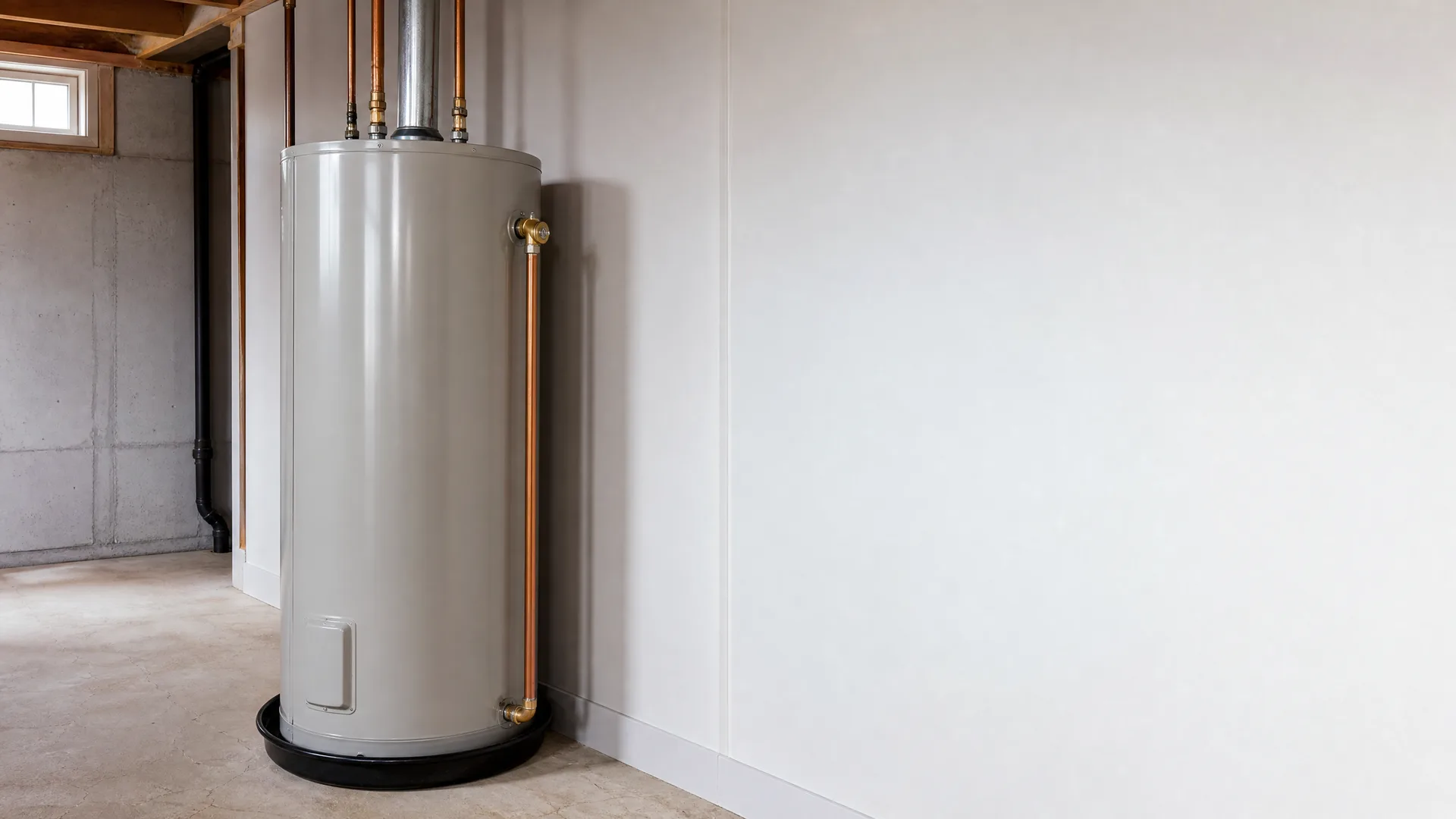
A beige cylindrical water heater with copper pipes and a black drain pan stands in a corner of a basement with white walls, a concrete wall and small window at left, and a concrete floor.

Recovery rate is the real number

A gas water heater's recovery rate is how many gallons it can reheat in an hour once the first tank's worth is gone. A unit with a low recovery rate can have a full tank and still leave the third or fourth shower cold, because it can't heat water as fast as your house is pulling it out. If the tank size hasn't changed but the household has, that gap is where the hot water disappears.

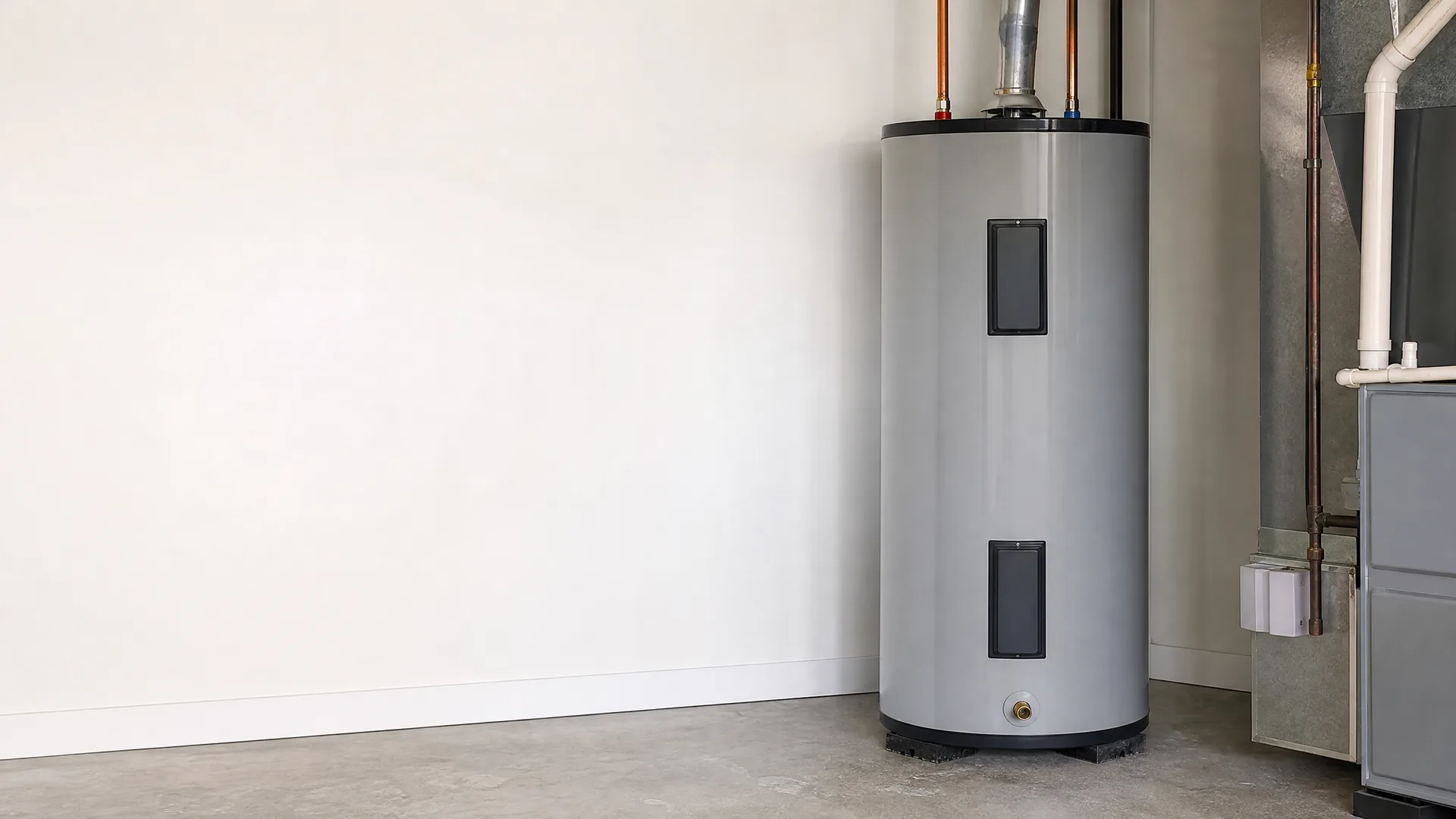
A gray cylindrical water heater with two black access panels stands on a concrete floor against a white wall, with copper pipes and a flue above it and ductwork to the right.

Sediment cuts the burner off from water

Gas burns under the tank, and the heat has to pass through the steel floor into the water above it. A layer of sediment sitting on that floor acts like insulation between the flame and the tank. The burner has to run longer to get the same heat through, and in bad cases the water right above the burner never gets hot at all, even though the thermostat says it should.

Why does my pilot light or burner struggle to keep up in winter?

Montana winters push incoming water temperature down a lot, sometimes into the 30s and 40s by the time it reaches the tank. You've noticed the hot water runs out faster once the cold sets in, even though nothing about the tank or your habits has changed. It feels like the heater is working harder for less.

Colder incoming water takes longer to heat, so the same burner does less

A gas water heater raises incoming water to a set temperature, usually around 120 degrees. In summer that water might come in at 60 degrees. In a Montana winter it can come in near 40, sometimes colder if the supply line runs through an unheated space. That's twice the temperature rise for the same burner to cover, so the tank's recovery rate drops even though the burner itself hasn't changed. The thermostat still calls for the same setpoint, but the burner needs more time to get there. If the burner is already struggling with soot or a weak flame, the colder months are when that shortfall shows up first, because there's less margin left to work with.

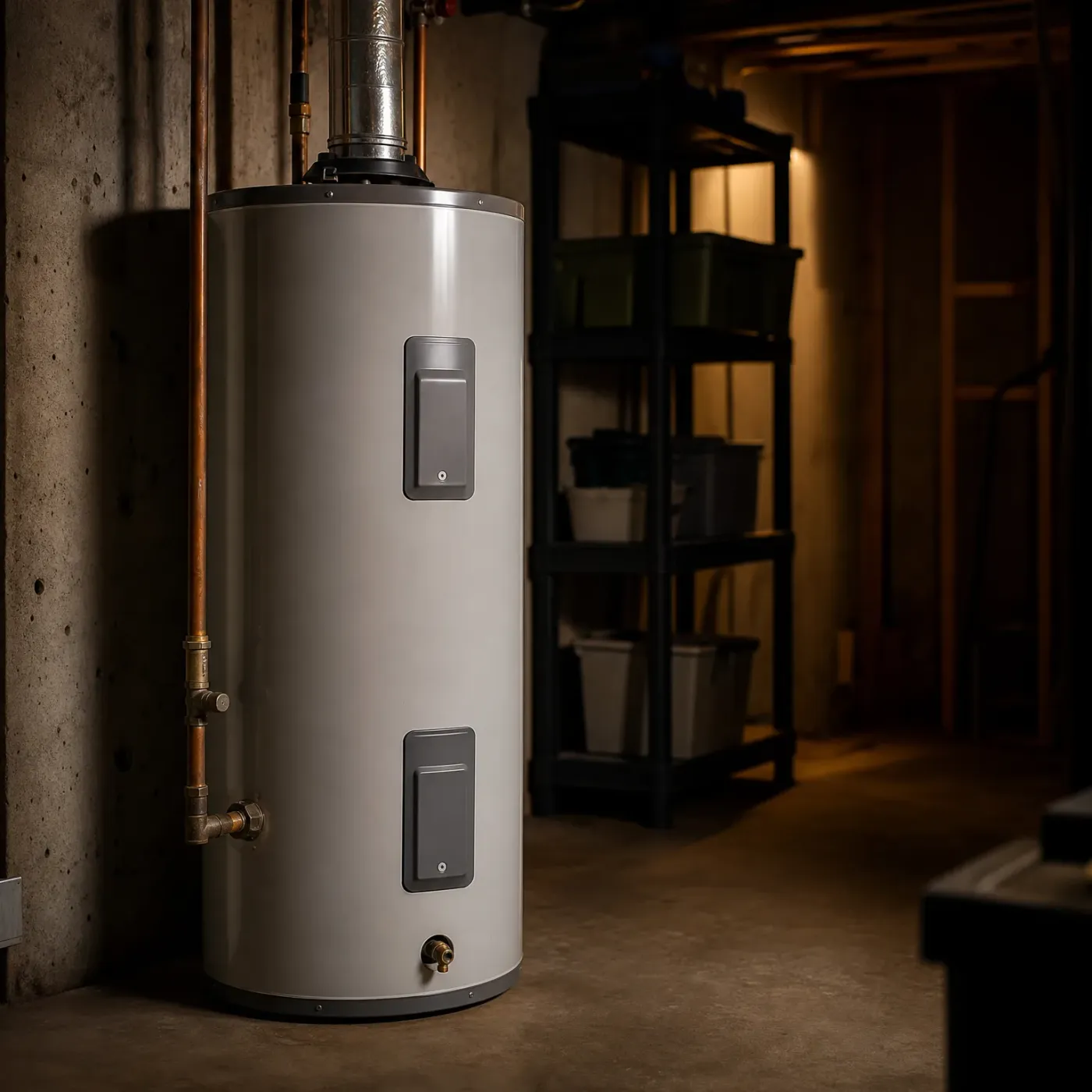
A gray cylindrical water heater standing in a basement corner against a concrete wall, with copper and black pipes, a metal flue, and ductwork nearby, next to wood framing on the right.

The tank recovering on schedule

This is a gas water heater doing its job. The burner fires, the copper lines carry heated water out to the house, and the flue vents the exhaust straight up. Sediment hasn't built up enough to slow the burner down, so the tank keeps pace with the next shower.


A gray cylindrical gas water heater with copper and black pipes stands in the corner of a basement with concrete block walls and a bare concrete floor.

The tank falling behind

Same setup, different outcome. The gas valve and control unit at the base are working harder to hold a burner that's losing ground to sediment or a failing part. By the time the second or third person steps in, the tank hasn't recovered, and the water turns cold.

A woman in a gray turtleneck sweater stands by a window looking outside at snowy ground, with a dimly lit living room containing a sofa, shelves, lamp and a lit candle behind her.
A woman in a cream cable-knit turtleneck sweater stands in a warmly lit living room with a fireplace and shelves behind her, looking out a window toward snow-covered trees and a railed deck.
A woman in a cream knit turtleneck sweater stands by a window looking out at snow, with a lit fireplace, sofa and lamp in the room behind her.
A woman in a gray knit sweater sits by a window looking out at falling snow, with a dimly lit living room containing a sectional sofa, pillows, a lamp and houseplants behind her.

A pro who works on water heaters

A sediment-lined tank or a burner that can't keep pace with Montana groundwater isn't something you diagnose by ear. Someone who works on gas water heaters in Montana all year, through the coldest incoming water temperatures and the hardest-working winter months, can tell from the recovery rate and the burner condition whether you need a repair or a bigger tank. That's a different read than a homeowner gets from a few cold showers. A local contractor who handles this equipment every season has seen which models in this area run short and why, and that's who gets matched to your request, not a handful of companies bidding for the job. You get one contractor who already knows what tends to fail in a gas water heater out here, looking at your actual tank, your actual burner, and telling you what's really going on before the next cold shower makes the decision for you.

What This Looks Like In Your House

  • A family of four running the dishwasher before showers can push a sediment-slowed tank past what it can recover in time.
  • Water heated to a lower setting to save on the gas bill gives you less usable hot water before it runs cold.
  • A burner that can't keep pace with cold winter groundwater leaves the last person in the shower line with nothing.
  • Running the washing machine and a shower back to back is often when the shortfall shows up first.
  • A tank that once lasted through everyone's morning routine starting to fall short by the third or fourth shower is worth checking before it fails outright.
  • Letting a sediment buildup go unaddressed for another winter usually means the burner works harder and the shortfall gets worse, not better.

Running out of hot water fast shows up in the ordinary moments of a day, not in anything dramatic. Someone starts the dishwasher before the morning showers, and by the third or fourth person in, the water's gone cold. The washing machine runs while someone's trying to rinse off, and that's usually when the gap between what the tank can deliver and what the house needs becomes obvious. If the thermostat's been turned down to keep the gas bill lower, you're also just working with less usable hot water to begin with, which makes the tank's actual condition matter even more. In winter, cold groundwater makes a burner that's already behind on recovery fall further behind, so the person at the end of the line gets nothing even though the tank looked full that morning. None of this means the water heater is failing today. It means the margin between what it can do and what your household asks of it has gotten thin. A tank that used to carry everyone through their morning routine without trouble and now comes up short by the third shower is telling you something worth looking into now, while it's a repair. Left alone through another Montana winter, a sediment-slowed tank or a weak burner doesn't correct itself. The burner works harder to make up the difference, the shortfall shows up sooner in the day, and the equipment is doing more than it should have to just to get your house through a normal morning.

50.5% of homes statewide heat with gas

More than half the homes in Montana heat with gas, and yours is likely one of them. That means a burner doing the heating, not an electric element, so when it runs out of hot water fast, the burner or what's built up around it is usually why.

ACS 2020-2024 5-year B25040

A bearded man in a blue and brown plaid flannel shirt stands indoors looking out a window at snow-covered trees, with a ceramic mug on the windowsill.
A man in a blue T-shirt sits on a light gray sofa, laughing while looking at an open laptop in the foreground, with a framed picture, lamp and potted plant behind him.
A man in a dark blue shirt stands in an open front doorway of a stucco and wood-clad house, facing a blond woman seen from behind in the foreground on a stone walkway.

It comes down to recovery, not luck

Running out of hot water fast means the burner isn't reheating the tank as quickly as your house uses it, whether that's sediment holding back the burner, a recovery rate too low for your household, or incoming water so cold in the winter months that the burner can't keep pace. Once you know which one it is, the fix is usually straightforward.

A gas water heater is still a mechanical thing with parts that wear and build up over years, and someone who works on these units across Montana all winter has likely already seen your exact version of this problem. Requesting a repair connects you with one licensed contractor local to your area, not a handful of companies competing for the job, and that contractor will reach out to look at your tank directly rather than guess from a description over the phone.

Interior corner of a living room with a beige upholstered sofa and dark cushion in the foreground, a ceramic vase of leafy branches on a dark side table by a curtained window, a framed picture on the wall, and a wood-surround fireplace at right.
A gray cylindrical water heater with copper pipes stands against a concrete wall in a dim basement, with a bare hanging light bulb and a metal shelving unit at right.

Get your water heater to the right pro

Only one pro gets your request, so you hear from one company.

Step 1 of 3: Equipment