What size water heater a Montana home needs

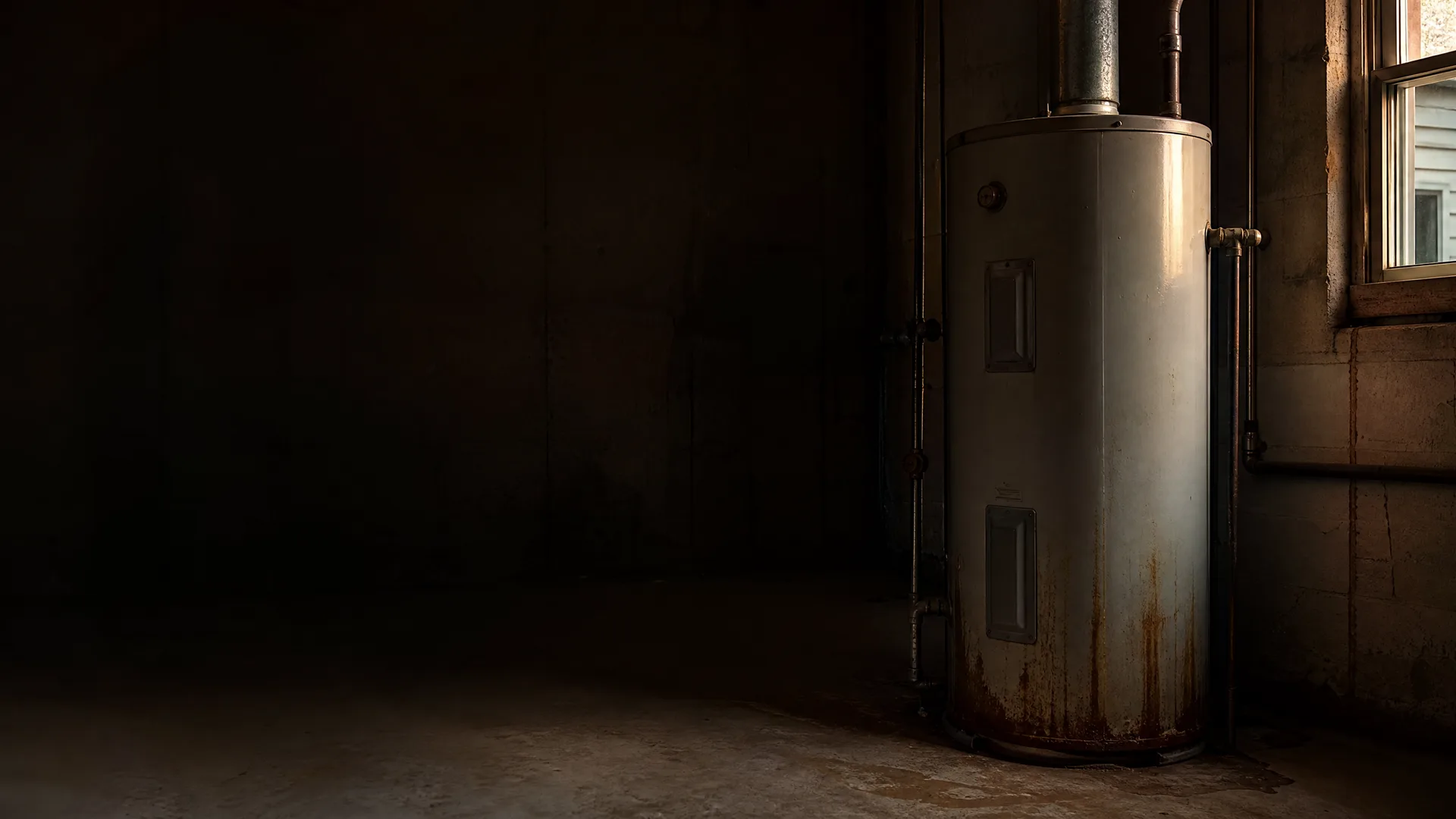
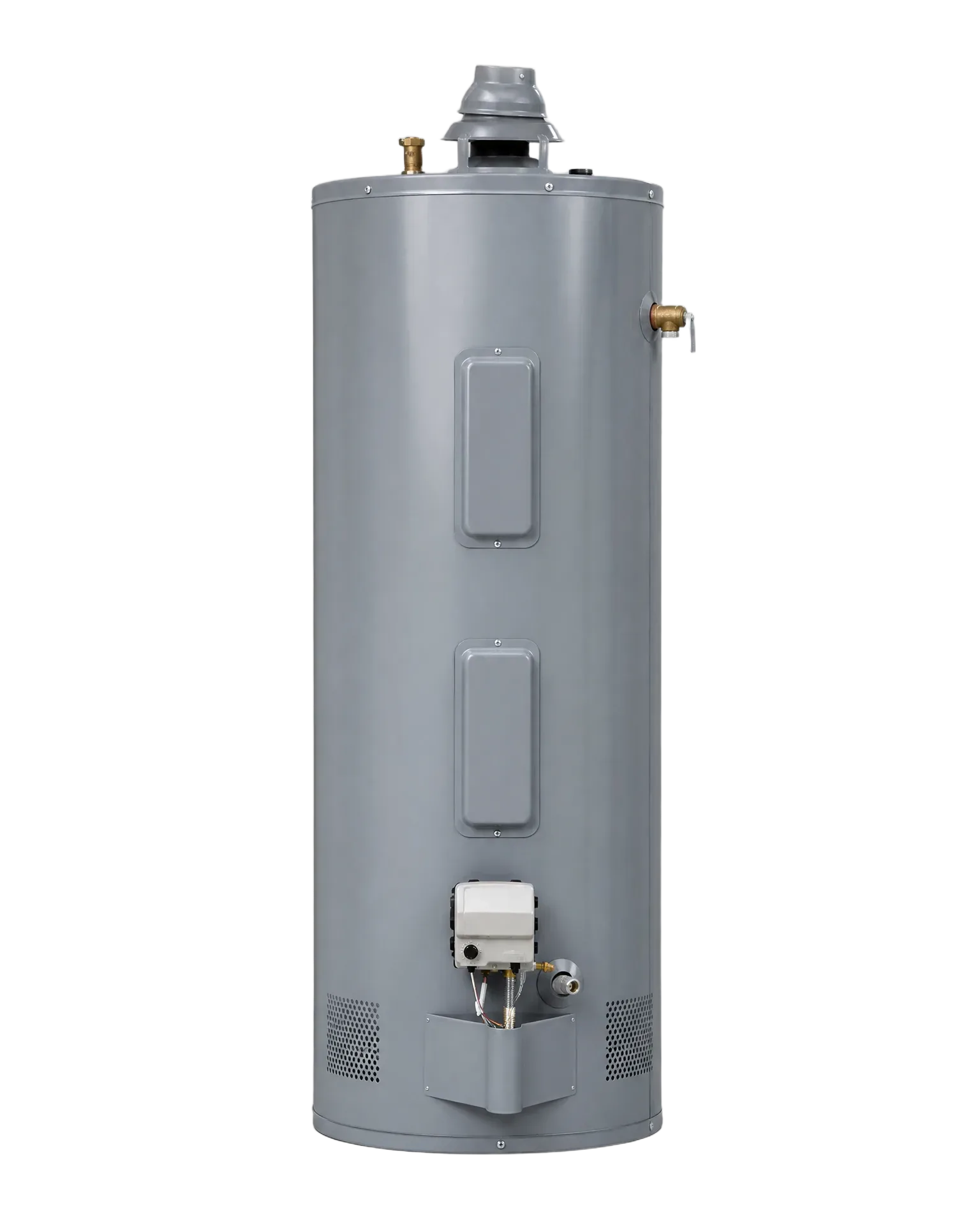
A gray cylindrical gas water heater with a top flue hood, brass fittings, two access panels, a control valve and burner cover, photographed against a plain gray background.
Match me with a pro

What size water heater do I need for my house?

You want a number before you buy, but the right size depends on how many people live in your house and how they use hot water. A tank that's too small means cold showers when the second person gets in line. One that's too big costs more to run than it needs to, especially with gas rates and how often you're heating water in a Montana winter.

Most Montana homes with 3 to 4 people need a 50 gallon gas tank

A household of 3 to 4 people running a shower, a dishwasher, and a load of laundry in the same stretch of morning needs a 50 gallon gas tank to keep up. Smaller households, 1 to 2 people, can usually get by with 40 gallons. Larger households, 5 or more, often need 50 to 75 gallons or a tankless unit sized for the home. Gas recovers faster than electric, so a gas tank doesn't need to be as large to deliver the same hot water over an hour. Since most homes here heat with gas, that recovery speed matters more than tank size alone. The right number also depends on your incoming water temperature, which runs colder in winter and slows recovery no matter what size tank you have.

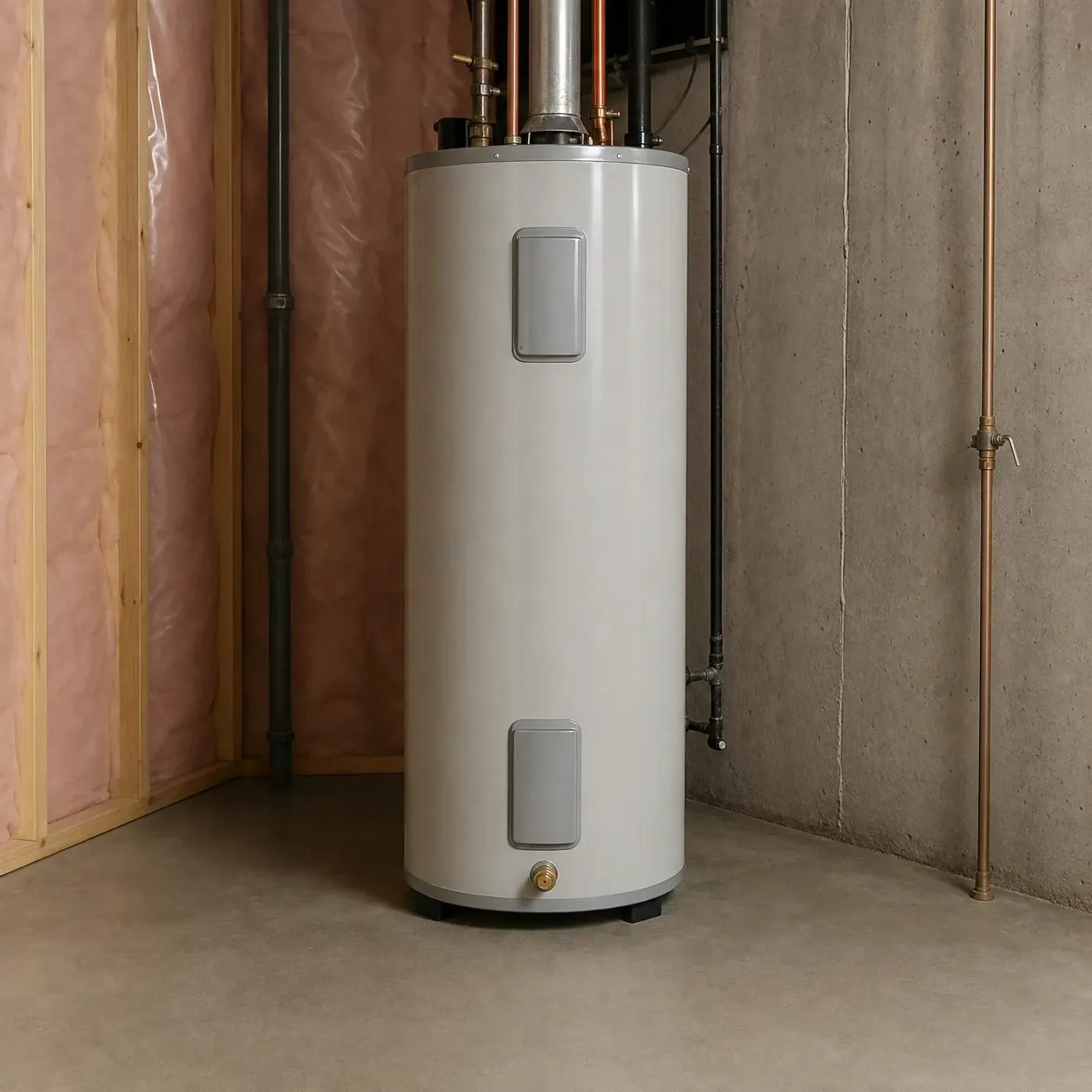
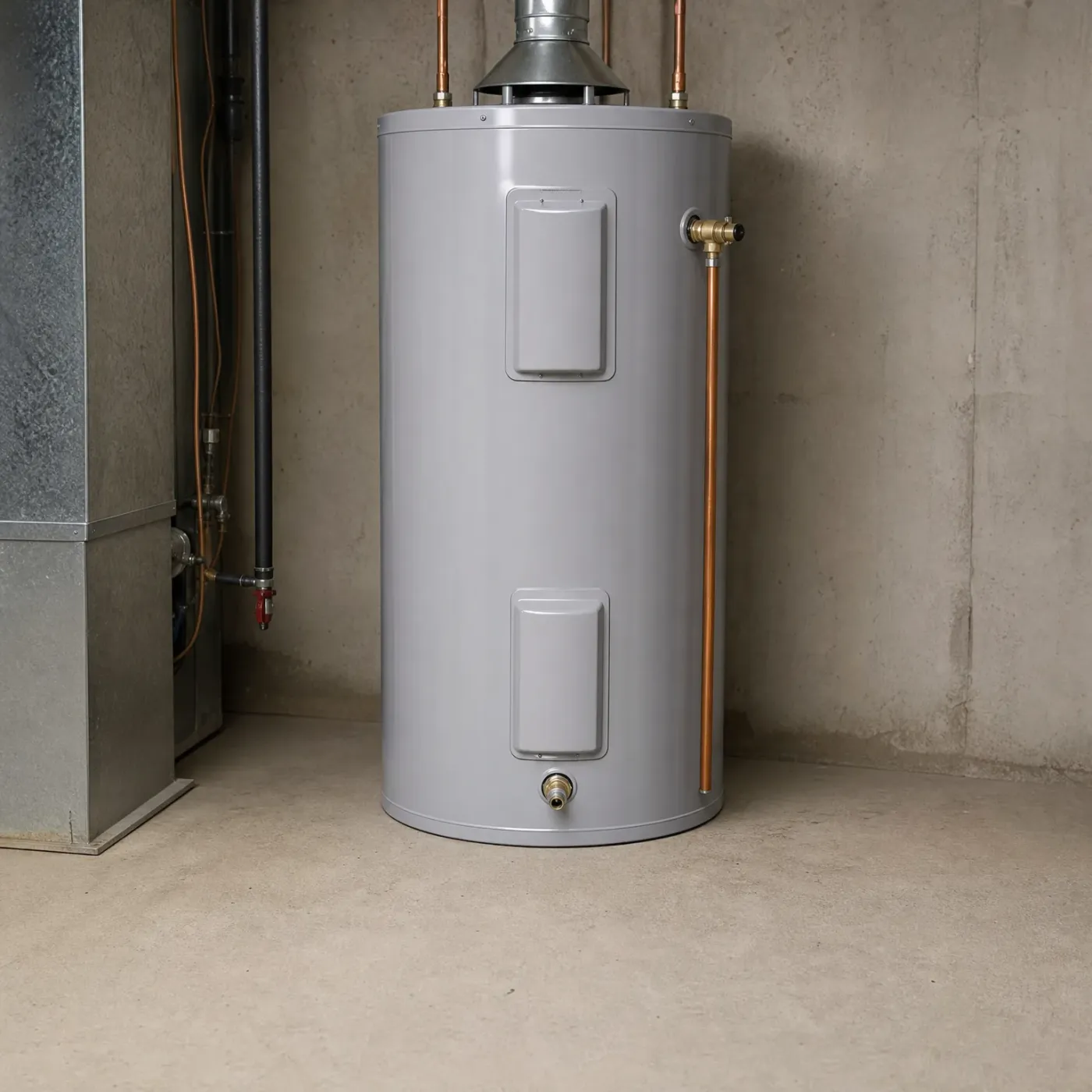
A gray cylindrical water heater with copper piping and a flue stands on a concrete floor in a basement corner beside ductwork and metal equipment.

Right size, working fine

This tank is keeping up. Two access panels, a drain valve at the base, and a relief valve venting through copper on the side, all doing their job quietly. No rust, no leaks, no one running out of hot water halfway through a shower. A gas unit sized to your household just runs in the background.
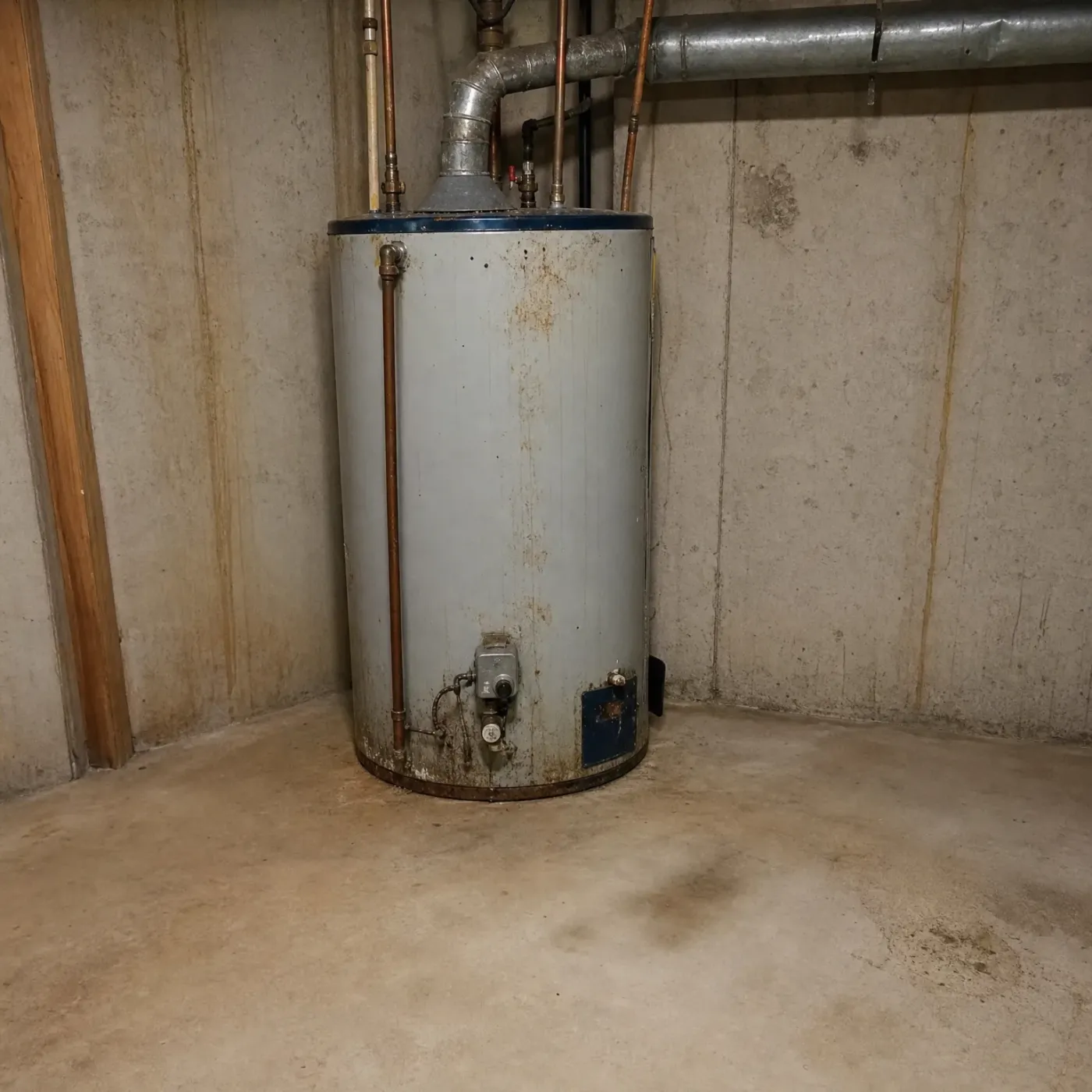

An aging gas water heater with rust streaks stands in the corner of a concrete-walled basement, with copper pipes and a metal flue duct running overhead.

Undersized and failing

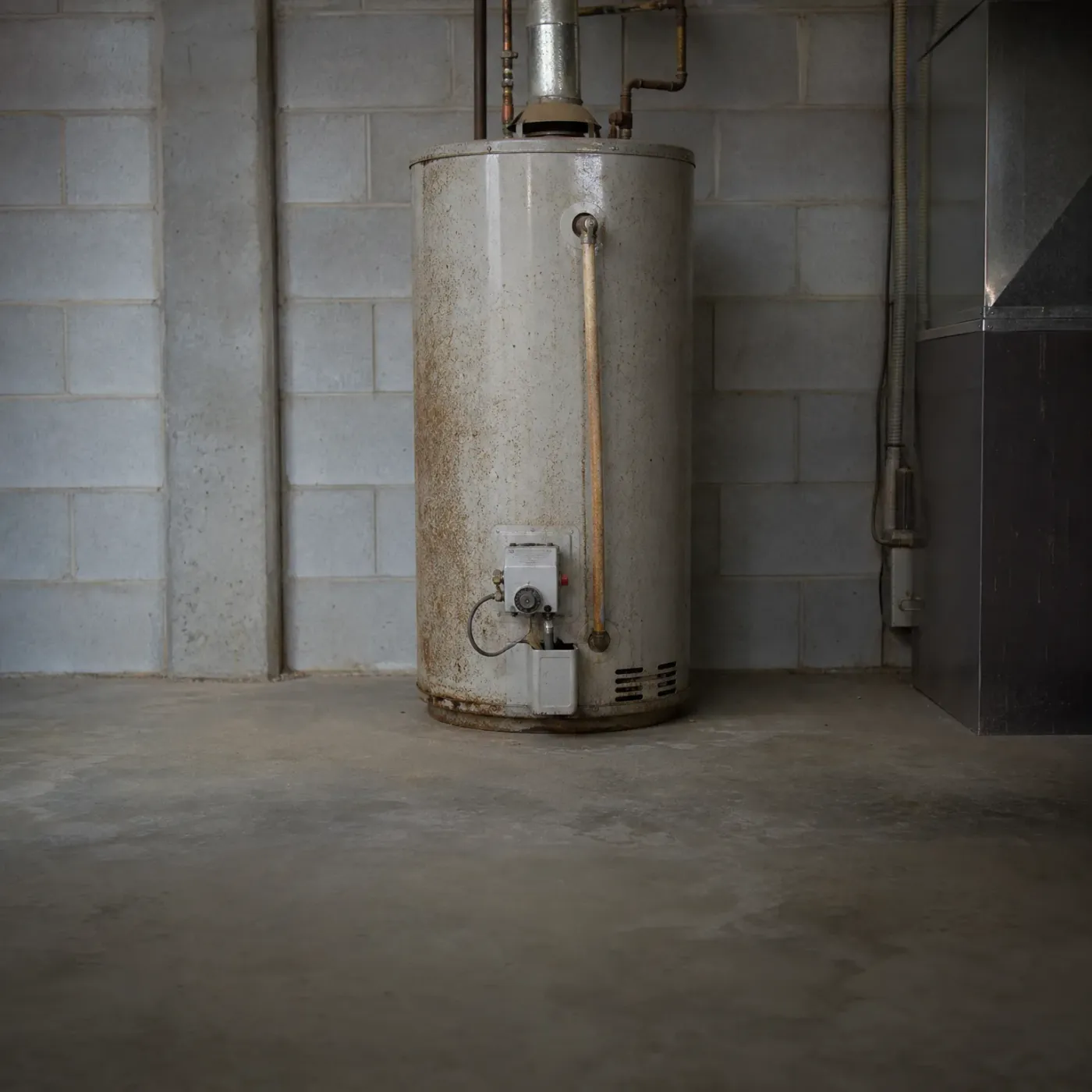
Rust down the tank body and staining on the floor around it. That's a water heater that's been working too hard for too long, often a sign it was never sized right for the house. Galvanized flue pipe like this one is common on older units nearing the end of what they can do.

A man seen from behind raises his hand to wave at a woman standing in the open front doorway of a single-story house with gray shingle siding, white columns and a gabled porch entry.

What the wrong size actually does in your house

If your tank is too small, you'll know it. Someone showers after the dishwasher runs, or after the second kid, and the water turns cold halfway through. You start scheduling showers around the tank instead of the other way around. If it's too big, you're paying gas year round to keep thirty or forty extra gallons hot that nobody uses, which matters more here than it would somewhere with cheaper gas and cheaper power going the other direction.

A Montana household that's grown since the tank went in, or a basement getting finished into a bathroom nobody planned for, changes the math. So does a tank that's original to the house and was sized for whoever lived there before you. Getting the size right for your house now, not the house as it was, is the kind of thing worth having someone local look at directly. A contractor who installs these across Montana homes every week can walk your place and tell you in minutes what gallons-per-hour chart can't.

A living room corner with a beige upholstered armchair holding navy and striped cushions, a small round wooden side table with a carved bowl and a potted green plant, a framed landscape picture on a pale wall, built-in shelving, and a curtained window.
A rusting cylindrical water heater with connected pipes stands against a dim concrete basement wall near a window.

You go down to the utility room after dinner to grab something off the shelf, and the overhead bulb catches it: rust streaking down the side of the tank, pooling faint and orange where the base meets the floor. The house has gone quiet, dishes done, everyone upstairs. You crouch down and touch the streak and it's dry, old, not fresh, but it's there and it wasn't there last time you looked. Outside it's still warm, the kind of dry Montana evening that doesn't hint at what winter does to a tank like this. You stand there a minute, thinking about who you'd even call, and whether this one's still got a season left in it.

Get your water heater to the right pro

Sizing a water heater for a Montana home means weighing a few things at once: tank gallons, recovery rate, how your gas line and vent are set up, whether the spot it sits in now even fits a bigger tank. Get one part wrong and you've got the same problem you started with, just in a new unit. A licensed installer local to Montana who sets these systems every week has seen what usually trips people up here, from undersized gas lines to vent runs that won't take a taller tank, and sizes around it instead of guessing. You'd be matched with one contractor who handles this kind of install regularly, not a handful of companies competing for the job. If you're already dealing with cold showers or a tank that's rusting out, getting the sizing right the first time means you're not back here again next year asking the same question.

Gas water heaters recover fast, so a 40 or 50 gallon tank in a gas-heated Montana home often covers more people than the same size would on electric. Recovery rate matters as much as tank size.

A 50 gallon gas tank can recover close to 40 gallons an hour, which is why two homes with the same size tank can run very differently for the people living in them.

A rusted gas water heater with a flue pipe stands against a concrete block wall on a bare concrete floor, next to a dark metal duct or furnace cabinet at right.
Before you get your water heater installation
A white cylindrical water heater with two access panels and a brass drain valve stands on a concrete floor in a basement corner, beside a pink-insulated stud wall and a concrete wall with copper and black pipes.
After you get your water heater installation

Sizing it for the house you have now

If the people in your house now are the people it was sized for, and nobody's run short on hot water, a straight swap to the same size makes sense. Same gallons, same recovery rate, maybe a newer model with better insulation around the tank. It's a simpler install, often done in a day, and there's less to work out with the gas line and vent since nothing about the setup is changing. This is the right call when the tank itself failed or is just old, not when the hot water was already running thin before it quit.

Sizing it for the house you're growing into

If your household's grown, or you've added a soaking tub or a second bathroom since the last water heater went in, matching the old size just repeats the shortage with new equipment. This is where it's worth going up a size, or asking a contractor to check whether your gas line and vent can support a tank with a higher recovery rate. It may mean a bigger footprint where it sits now. Worth it if cold showers have already become a pattern in your house, not a one-off.

A gray-haired bearded man in a dark coat and scarf dusted with snow stands smiling in a dimly lit entryway with a white front door, a side table with a lit lamp, an oval mirror, and a patterned rug.
An older bearded man in a dark snow-dusted coat and gray scarf stands just inside a dimly lit home entry, with a framed picture, lit table lamp, and an adjoining room with a fireplace behind him, and snow visible through the open door.
A gray-haired, bearded man in a dark snow-dusted coat stands smiling in a dimly lit entry hall with a staircase, a lit table lamp, a framed picture, and a living room visible through a doorway.
An older man with gray hair and a beard, wearing a dark jacket dusted with snow, stands smiling in a dimly lit hallway with lamps and a living room visible behind him.

Tank size alone

Gallons tell you how much hot water is sitting there waiting. They don't tell you how fast the tank can make more once that runs out.

Get a licensed local pro

Tank size with recovery rate

A gas tank that recovers fast can back a household that would run a slower electric tank dry, even at the same gallon count.

Get a licensed local pro

50.5% of homes statewide heat with gas

Just over half the homes in Montana heat with gas, and yours is likely one of them. That's worth knowing when you size a replacement, because a gas water heater recovers faster than electric, so you don't have to size the tank as large to keep up with your house.

ACS 2020-2024 5-year B25040

The number comes down to how many people use hot water in your house and how fast your tank can recover once it's drawn down, and for most gas water heaters in Montana that means something in the 40 to 50 gallon range, sized around how your household actually runs, not just how many people live there. If what you have now keeps up, matching it on replacement is the right call. If it's been falling short, that's worth fixing with the new one rather than living with it another winter. Either way, the gas line, the vent, and the spot the tank sits in all have a say in what size actually fits, which is why this isn't really a number you pick off a chart. A licensed local plumber who installs these in Montana homes every week can look at your setup and tell you, specifically, what size gets it right.

A woman wrapped in a thick beige fleece blanket sits on a sofa with an open book on her lap, beside a lit table lamp, with a frost-covered window behind her.
A gray-haired woman in a cream knit sweater stands in a dimly lit kitchen at night, looking to her right, with a round loaf of bread in the foreground and a dark window and potted plant behind her.

Water Heater Installation

Matched to your water heater job

The pro who reaches out is licensed in Montana.

A black-framed smartphone standing upright against a plain white background, its screen filled with solid green.
Step 1 of 3: Equipment