One request ends the search for a water heater installer.
Cold water in January is not a problem that waits. If your tank is leaking, or it's just not keeping up anymore, you need someone who can look at it soon, not someone you have to chase down first.
Montana winters are hard on a water heater. Most homes here run on gas, and a gas tank or tankless unit works harder when the ground and the incoming water are cold for months at a stretch. Whether a tank or a tankless setup makes sense for your house depends on things specific to your home, your gas line, your hot water use, and that's worth a straight answer from someone who installs both.
That's where a local contractor matters more than people expect. Someone who works on water heaters in Montana every winter has seen which tanks fail early in this climate and which tankless units hold up to the well water or hard water common in different parts of the state. That kind of knowledge doesn't come from a brochure. It comes from doing the work here, season after season.
Send the request and the search becomes someone else's job. You get matched with one licensed contractor local to you, not a handful of companies competing for your callback. No sorting through quotes from people who don't know your water, your gas setup, or your house.
Once that request is in, you can stop thinking about it. The contractor on the other end already knows Montana winters, already knows gas systems, and already knows the difference between a tank and a tankless unit that will actually hold up here. That's one less thing sitting on your list.
Fill out the form below and let the right contractor take it from here.
Should I get a tank or tankless water heater in Montana?
You've got a water heater to replace and you keep seeing tankless ones advertised as the upgrade. Before you decide, it helps to know how the two actually compare for a Montana home, where winter puts real demand on a water heater and most houses already run on gas.
A gas tank water heater is the simpler choice for most Montana homes
A tankless unit heats water on demand instead of storing it, which sounds like an easy upgrade. But Montana's groundwater runs cold, especially in winter, and a tankless unit has to work harder to raise that water to temperature. That can mean a smaller unit than advertised can't keep up when two showers and a dishwasher run at once. A gas tank water heater holds a reserve of hot water, so it doesn't need to work as hard against cold incoming water in January. Since most homes here already have a gas line for heat, running a gas tank unit is usually straightforward. Tankless still makes sense for some homes, but it has to be sized for Montana's cold water, not a catalog number.
1
A tankless unit measures incoming water temperature before it fires.
2
Cold groundwater in winter forces the burner to work harder.
3
Gas burners modulate to hit your set temperature on demand.
4
A tank keeps a full reserve hot and ready at all times.
Tank or Tankless for Your Home
Tank
A tank holds forty to fifty gallons hot and ready, so a full house of showers back to back won't run you cold.
Cold groundwater in a Montana winter means the burner has more work to do just to hold that reserve at temperature.
If the power goes out, a gas tank with a standing pilot keeps making hot water since it never needed the power to begin with.
Installation is usually straightforward if the new tank matches the size and vent setup of the one it replaces.
A tank has more moving parts sitting in water for years, so the anode rod and the tank itself are what eventually wear through.
Most homes here already have the gas line and venting sized for a tank, which matters if you're not planning to change anything else.
Tankless
A tankless unit heats water only when you open a tap, so it's not holding a reserve hot all day waiting to be used.
Montana's cold incoming water means the unit has to raise the temperature further before it hits your shower or faucet.
You get hot water as long as you're running a tap, which matters most if your household tends to stack showers and laundry back to back.
Switching from a tank usually means new venting and gas line sizing, since a tankless unit draws more gas at once to fire that fast.
There's no tank to corrode or leak, since the water only passes through on its way out.
Installation takes more planning than a straight swap, so it matters who's done the gas and venting work for one of these before.
Groundwater entering your home in a Montana winter can sit near 40 degrees, sometimes colder. A tankless unit has to raise that water on the spot, every time a tap opens.
A tank does that work ahead of time and holds the result, so the burner's winter workload shows up on the gas bill, not in how hot the shower runs.
If you keep the tank
You'll notice it most in January, when the shower takes a few seconds longer to turn hot because the incoming water is so cold to start. The tank itself sits in a closet or basement holding its reserve, so if it's near the end of its life, a leak shows up as water on the floor rather than a sudden cold shower mid-use. Gas is the main cost here, and a tank's burner runs more through a Montana winter than it does in July, since it's fighting colder groundwater just to hold temperature.
If you switch to tankless
You give up that stored reserve, so hot water never runs out, but winter is exactly when the unit works hardest, since it's heating 40 degree groundwater on demand instead of topping off water that's already warm. Installing one usually means upsizing the gas line and venting to match what the unit needs to fire at full output. Done right, by someone who's installed these in Montana homes and sized the line for your winter groundwater, it keeps up. Done wrong, you'll notice it as lukewarm water on the coldest mornings.
Before you get your water heater installationAfter you get your water heater installation
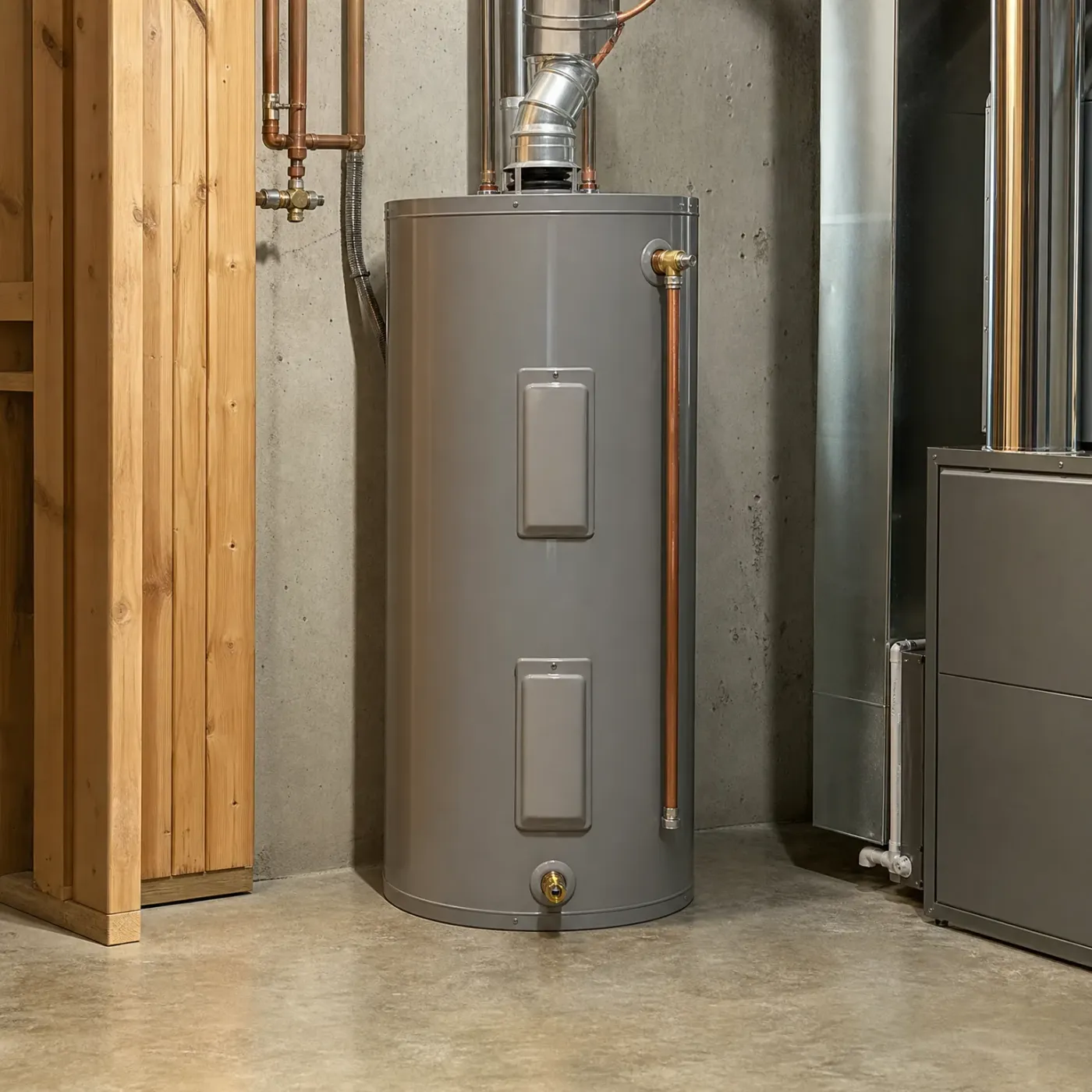
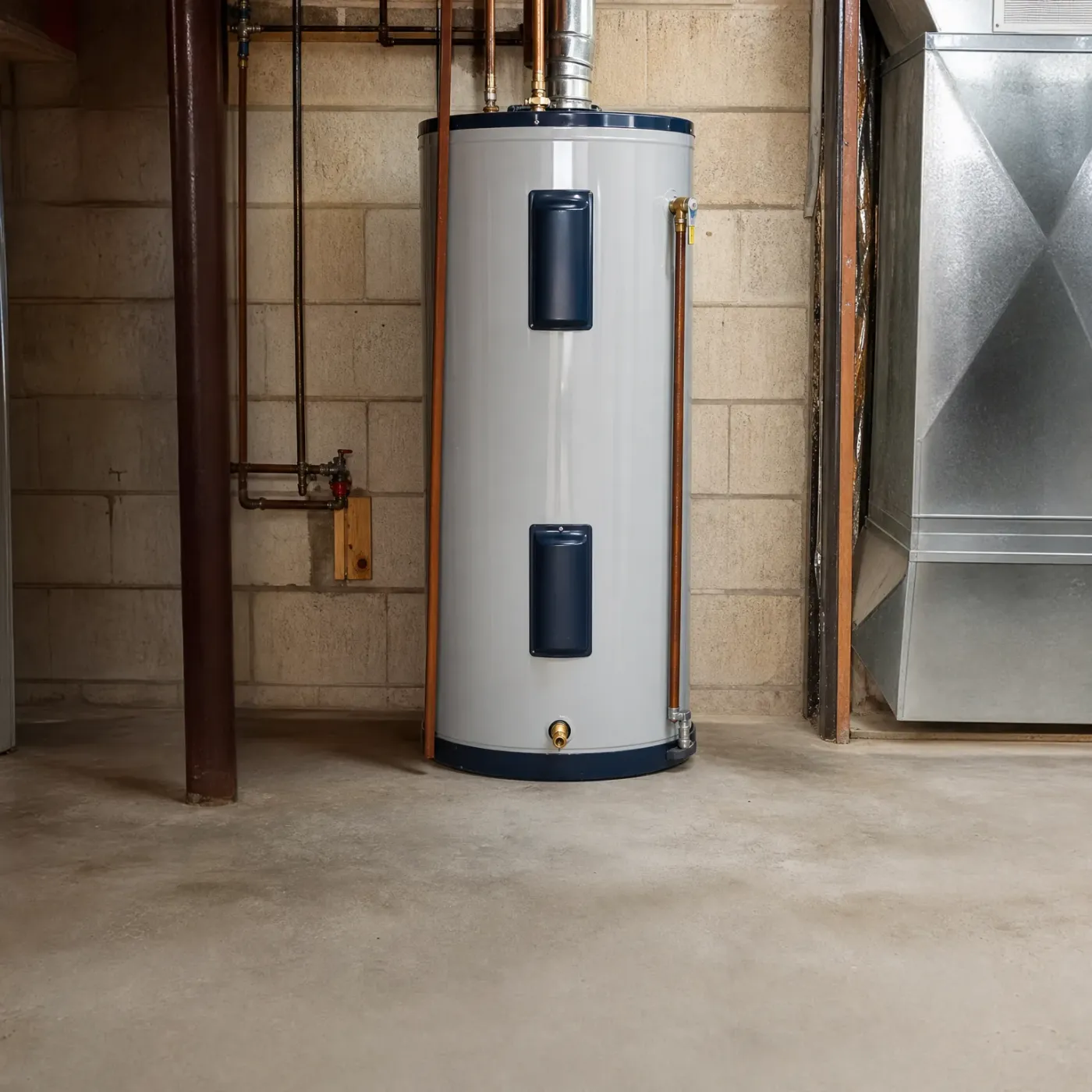
Water heater holding steady
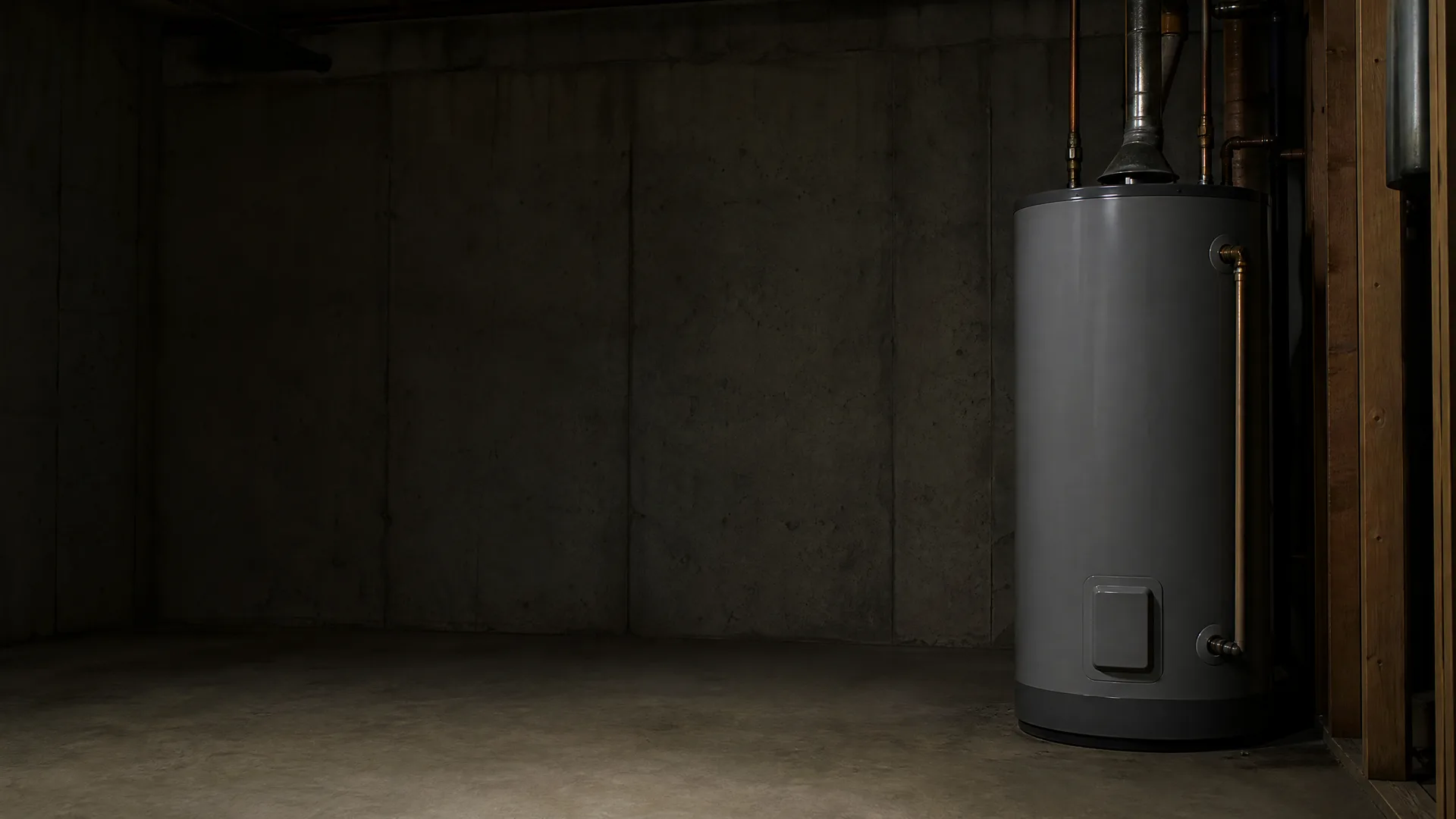
This is a tank doing its job. Hot water sits ready, the copper lines run clean to the fixtures, and the exhaust duct vents the burner the way it should. Nothing here is straining to keep up with a cold January morning.
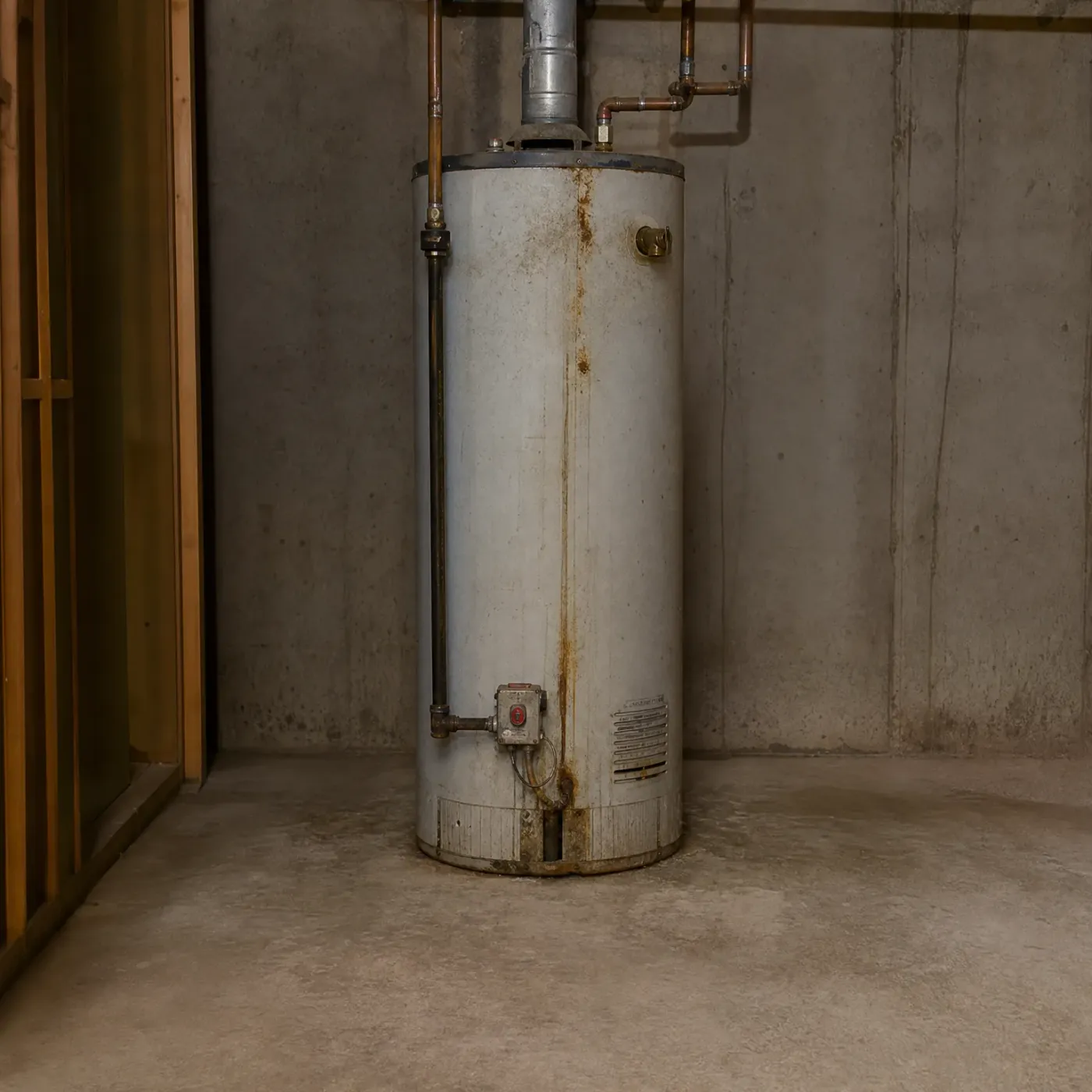
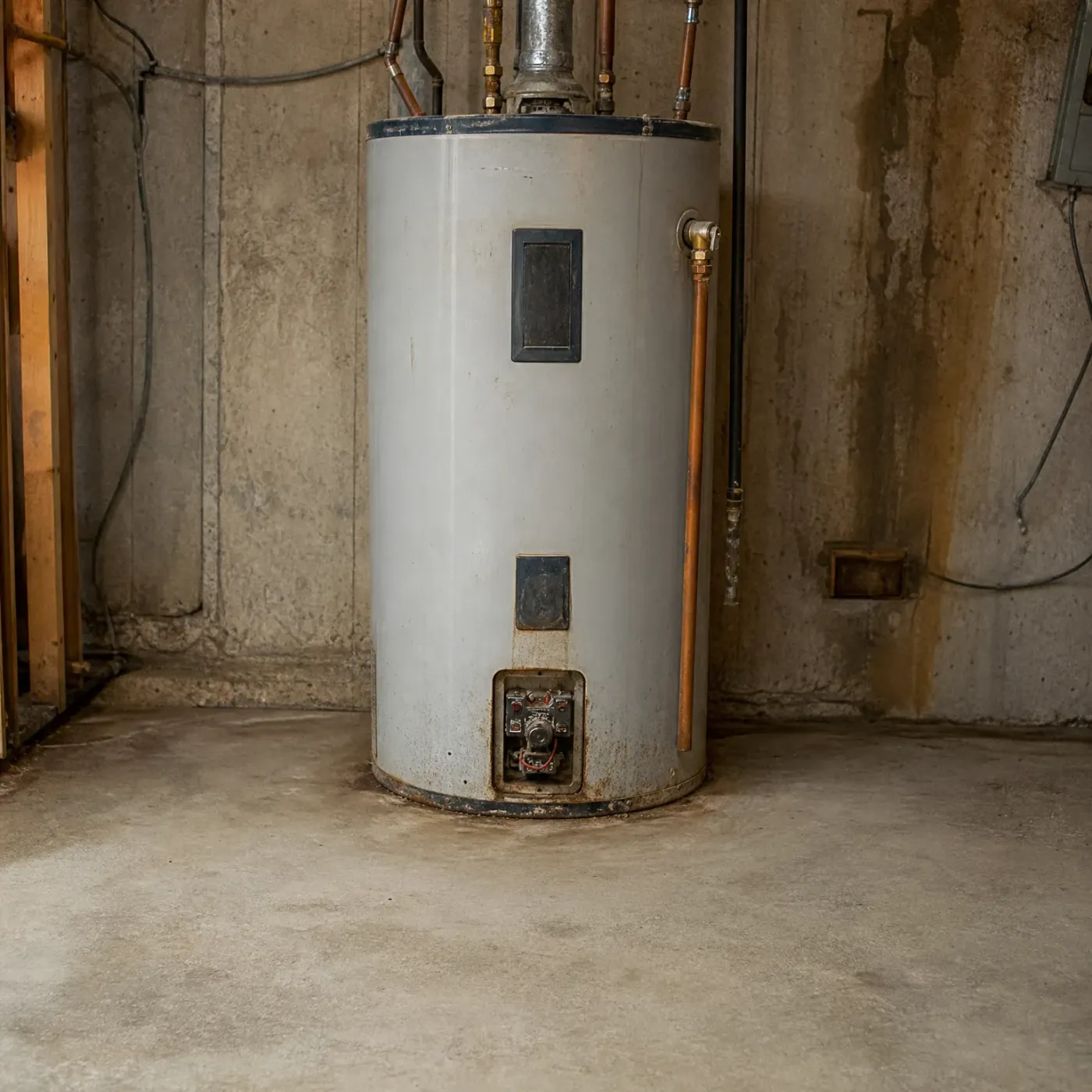
Water heater past its time
Rust on the jacket and wear around the access panels mean the tank is on borrowed time. Corrosion like this doesn't reverse itself, and a unit in this shape in a Montana winter is a matter of when it fails, not if.
50.5% of homes statewide heat with gas
Gas heats more homes in Montana than anything else, and it's almost certainly what's feeding your water heater too. That matters here because a gas tank or tankless unit can put out more hot water than an electric one when groundwater is coldest.
ACS 2020-2024 5-year B25040
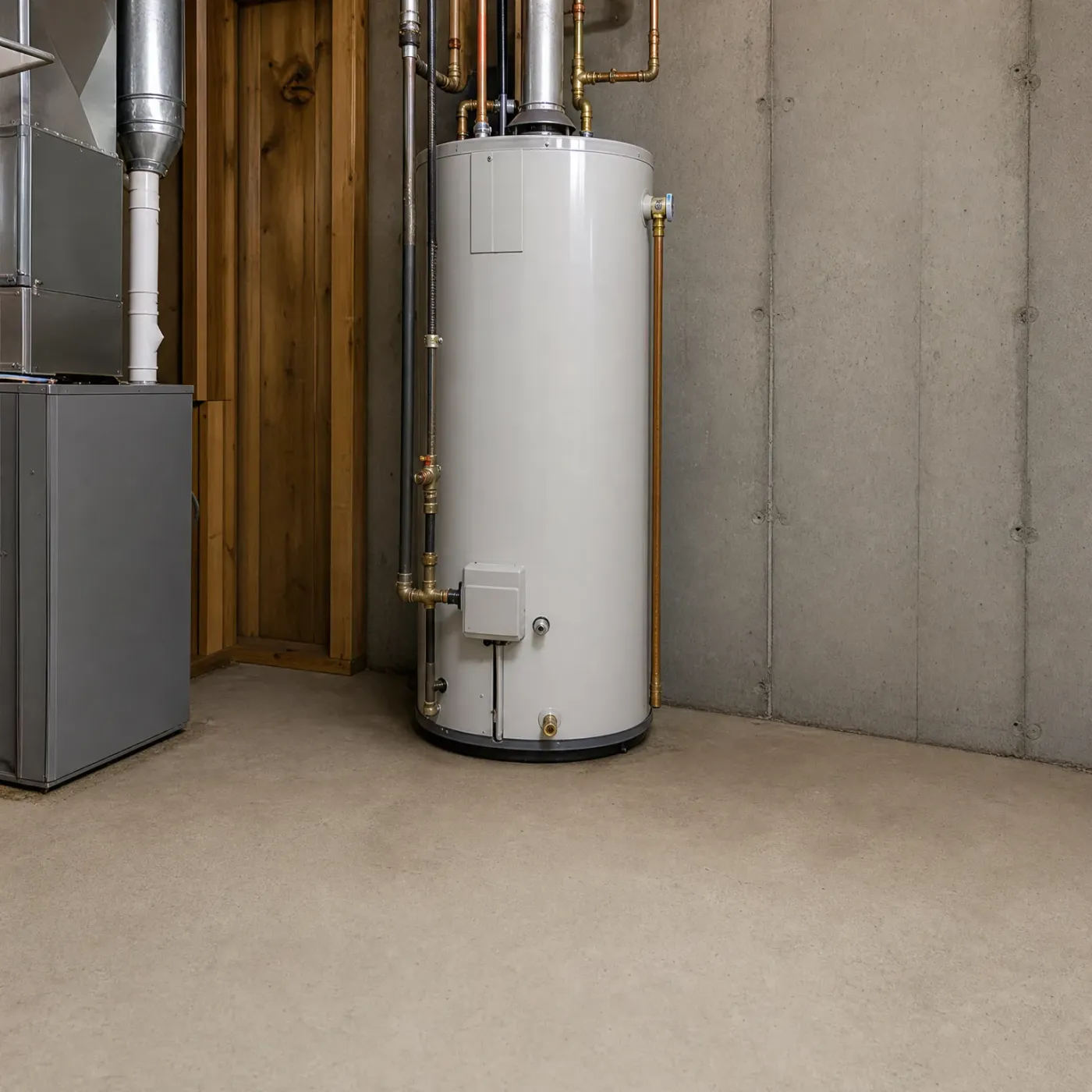
Doing its job
The tank sits next to the furnace, copper and gas lines run clean to the ceiling, and nothing is straining. This is what a water heater looks like when it's keeping up with a Montana winter without any help.
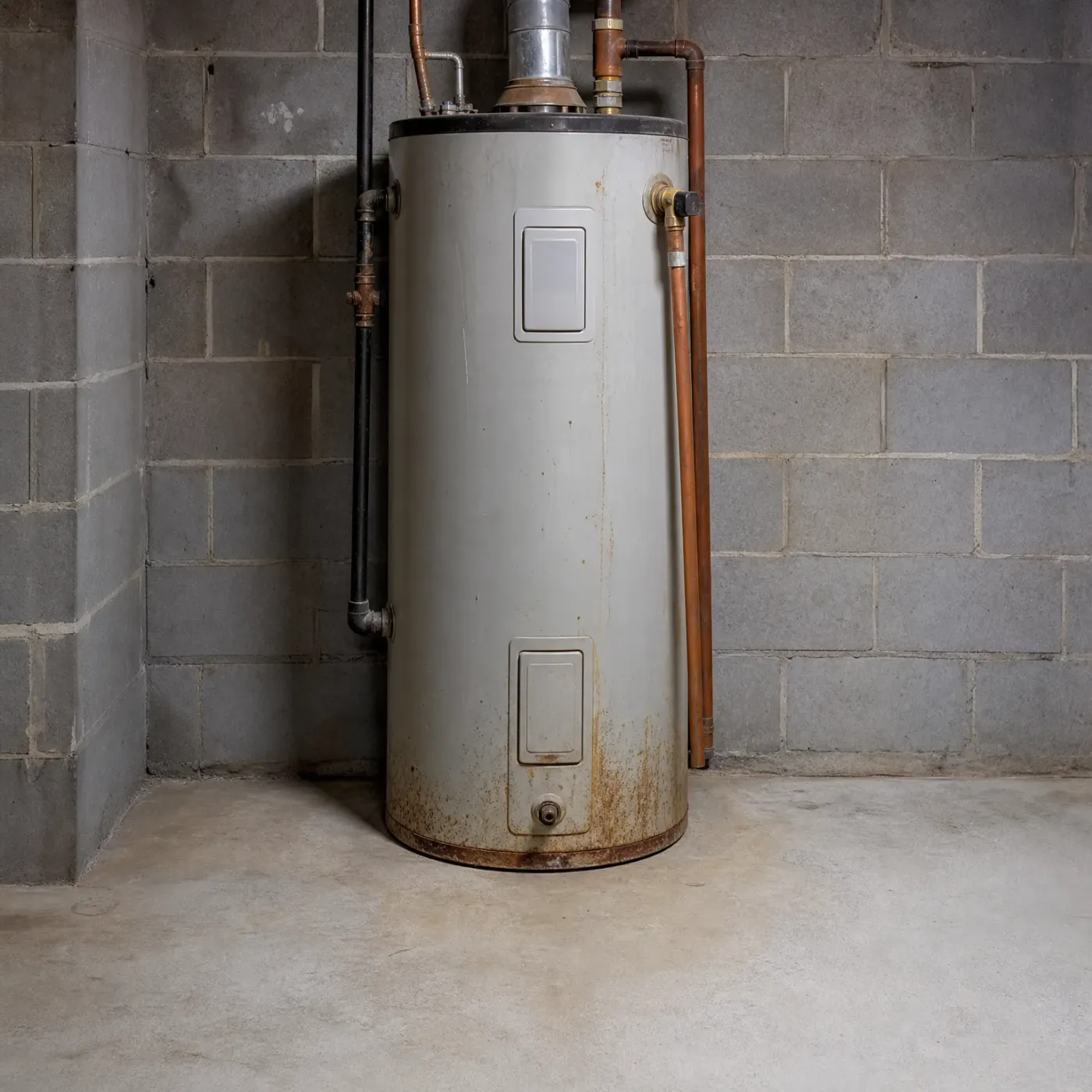
On its way out
Rust along the base and seams like this means the tank is failing, not slowing down. Once it starts leaking at the bottom, it won't stop, and it's not a repair. That's a replacement, and the sooner someone qualified looks at it, the better.
A tank is the steadier choice for a Montana home, and a tankless unit only makes sense if you've confirmed it can keep up with how cold your groundwater gets here. Either way, the install is what decides whether it actually performs through a Montana winter, the gas lines, the venting, the sizing all have to be done right the first time. A local installer who works on these units every winter has already seen what fails when any of that gets rushed, and that's the kind of install worth having. You'll be matched with one licensed contractor local to Montana, not a handful competing for your call, so the person who shows up already knows what your winters ask of this equipment.
Let someone else find the pro
Your request goes to one pro, not a list of companies.