A water heater that needs replacing usually tells you before it fails outright. Rusty or metallic-tasting water, especially out of the hot tap, means corrosion inside the tank itself, and once that starts the tank won't be patched. Water pooling underneath it means the tank has a crack somewhere you can't see, and that only gets worse. A popping or rumbling sound when it heats up means sediment has built up on the bottom and is hardening there, which makes the unit work harder to heat the same amount of water. Most gas water heaters here in Montana last somewhere around 8 to 12 years, and if yours is in that range and showing any of this, it's worth having it looked at rather than waiting for it to fail in the middle of winter, when you'll want hot water most.
Why does your hot water look or smell off lately
Look at the water itself before anything else. If it runs rusty or brown out of the hot tap but clear from cold, that is the tank corroding from the inside, not the pipes. A metallic smell or taste means the same thing. Check around the base of the unit for water on the floor or rust creeping down the outside of the tank. Listen for a rumbling or popping sound when it heats, that is sediment hardened at the bottom working against the burner. Gas water heaters in Montana run through a lot of cold tap water much of the year, and a tank that has to fight sediment and corrosion to keep up is one that can fail without warning, leaving a house without hot water until someone gets a new one in.
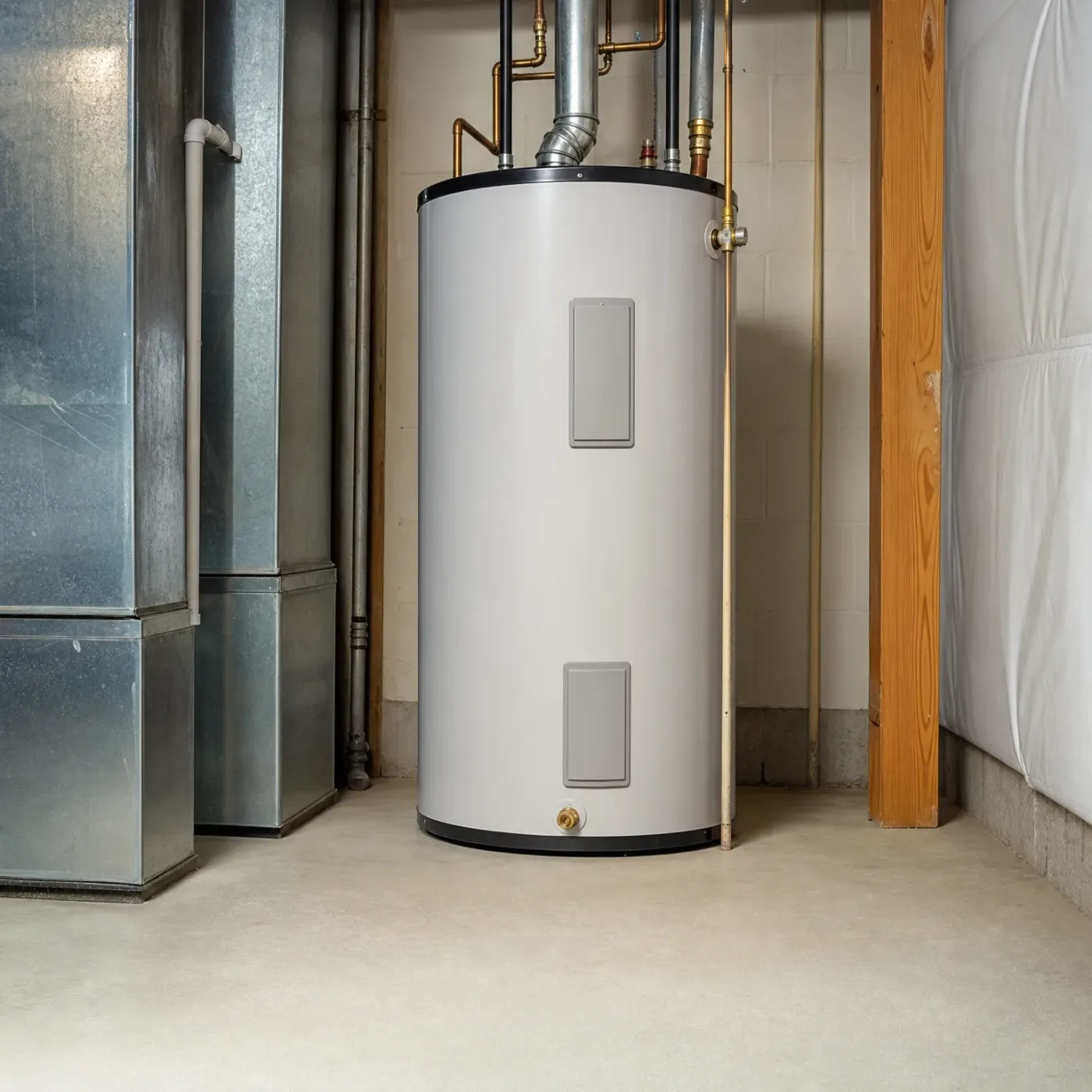
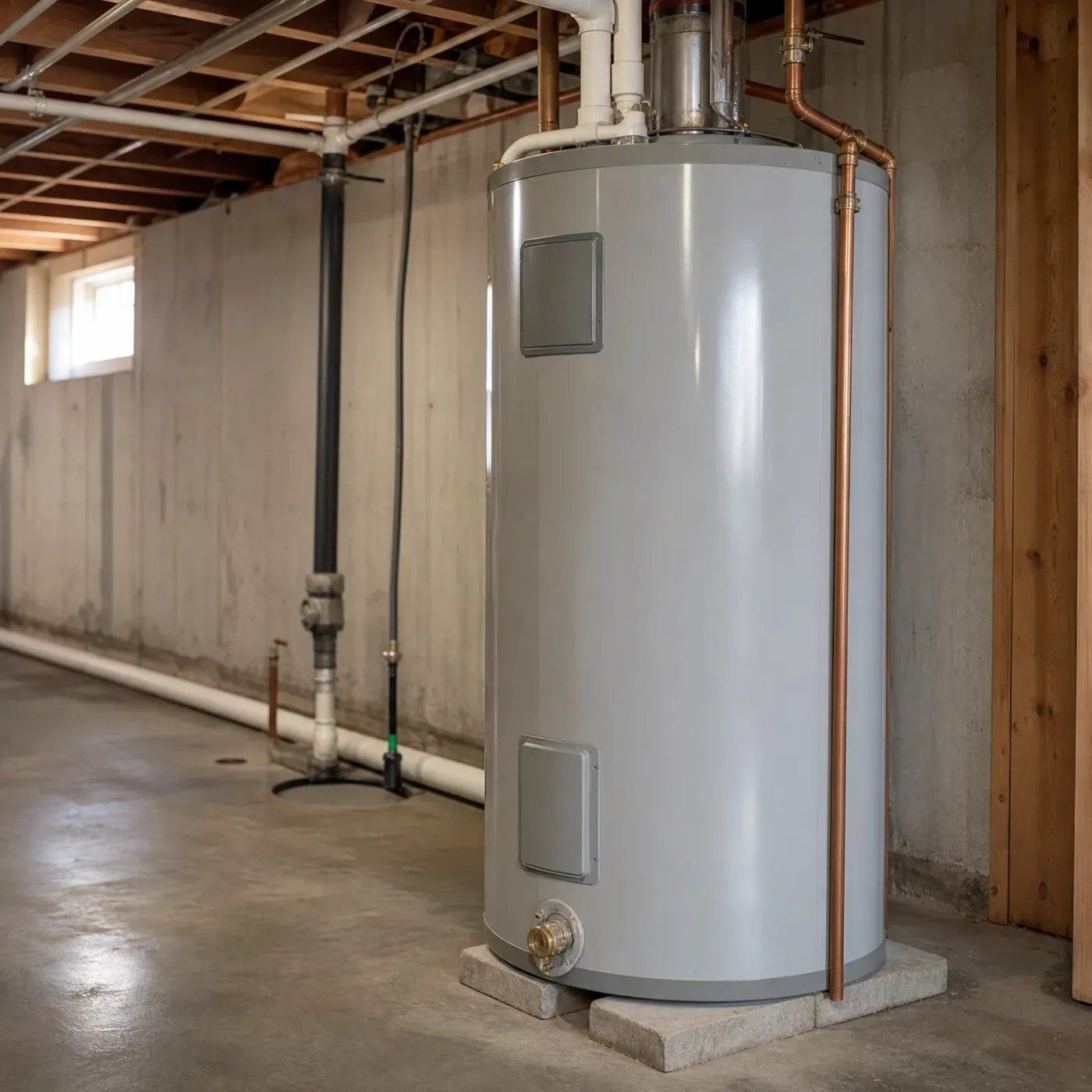
A water heater holding steady like this has no rust at the fittings and no water pooling at the base.
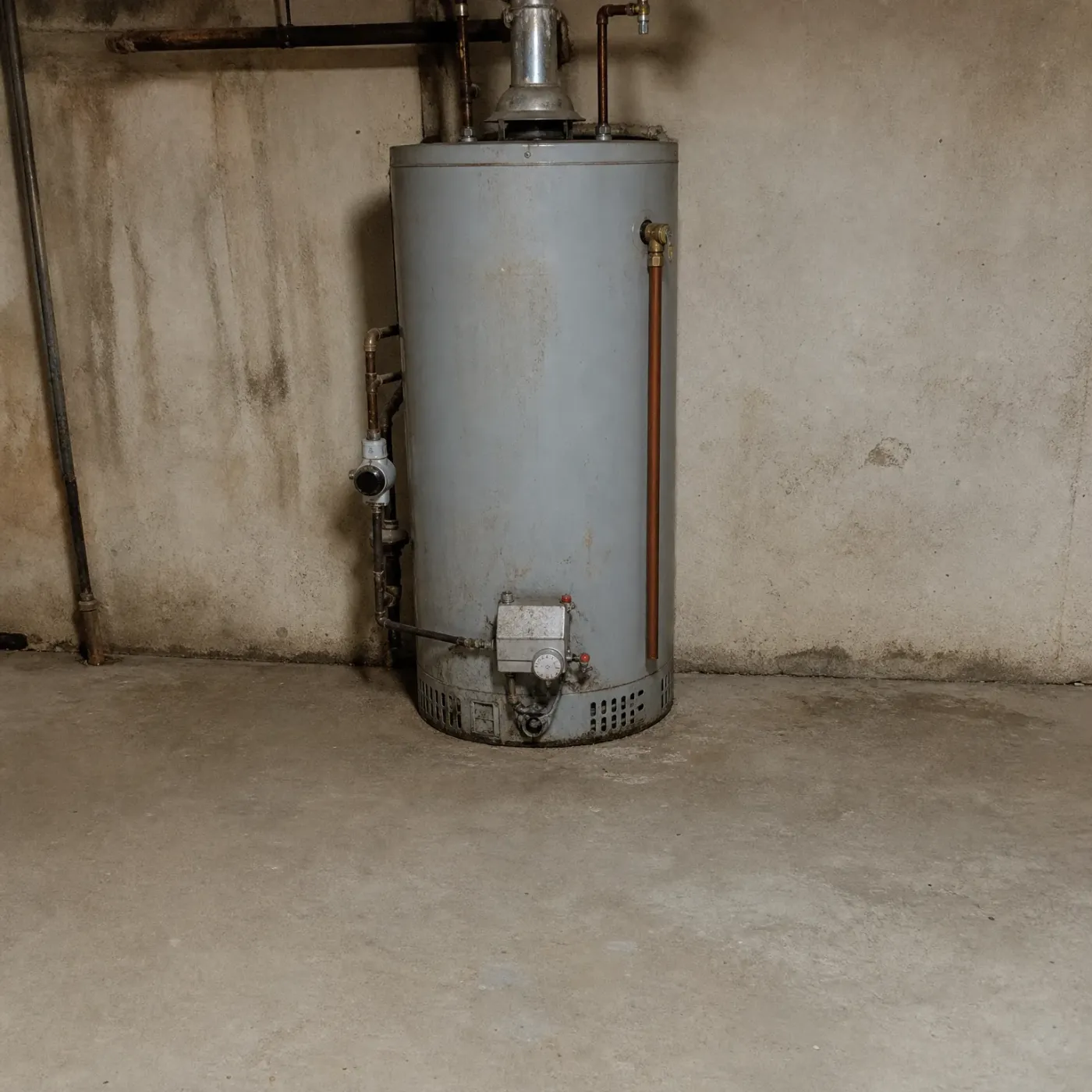
Years of rust and mineral buildup like this mean the tank is failing from the inside, not just the outside.
Every gas water heater runs on the same basic setup. A burner underneath heats the tank, lit by either an igniter or a standing pilot, and the flame needs to hit it evenly to work right. Inside the tank, a sacrificial anode rod is built to corrode first so the steel tank doesn't have to. That rod wears down over years, and once it's gone, rust starts eating the tank itself. Meanwhile, minerals in the water settle to the bottom as sediment. That layer makes the burner work through more material to heat the water above it, which slows down how fast hot water reaches the tap. Water trapped under that sediment can pop or rumble as it heats, and the sound usually gets worse over time, not better. A relief valve on the side is there to let pressure escape if it builds too high, so some dripping from its pipe means the valve is doing what it's supposed to. None of this is a flaw. It's what happens to a steel tank that's been heating water for years.
What's happening inside the tank
Gas water heaters light the burner through an igniter or a standing pilot, and a cracked or sooted burner tray means uneven heat and a tank working harder than it should.
The anode rod inside the tank corrodes on purpose, drawing rust away from the steel, and once it's used up the tank itself starts rusting instead.
Sediment settles at the bottom of the tank and the burner has to heat through it, which is why an older tank can take longer to deliver hot water.
A popping or rumbling sound during heating comes from water trapped under that sediment layer, and it gets louder as the layer builds.
The pressure relief valve is built to release water if pressure inside the tank climbs too high, so water dripping from its discharge pipe is the valve doing its job, not a defect to ignore.
A tank's inner lining is glass or enamel over steel, and once that lining cracks, the steel underneath has nothing left protecting it.
Before you get your water heater installationAfter you get your water heater installation
A water heater pro near you
Send the form and the search for an installer is over.
A local pro who knows water heaters gets your details and gets in touch.
It costs nothing to send, and you don't have to hire anyone.
Repair or Replace Your Water Heater
Repair
The tank itself holds water without rust at the seams or pooling underneath, so the damage is limited to one part.
A thermocouple, igniter, or heating element can be swapped out and the tank keeps going for years after.
The water runs clear and tastes normal, which means the corrosion hasn't reached the inside of the tank yet.
A contractor can flush sediment from the bottom of the tank and restore most of the recovery time you lost.
The anode rod still has material left on it, so it's still pulling rust away from the steel instead of the steel rusting on its own.
Replace
Rust-colored water from the hot tap and clear water from the cold tap means the tank is corroding from the inside out.
Water pooling at the base of the tank usually means a crack in the steel, and steel doesn't seal itself back up.
A tank that's lost its anode rod to corrosion has nothing left protecting the steel, so rust moves fast after that.
Gas pressure or a failing thermostat can be adjusted, but a tank that can't hold its water pressure is done.
If the burner tray is cracked or heavily sooted, the tank has been working harder for longer than it should have.
Montana's cheap power and mostly gas heat don't change what a corroded tank needs, which is a new one.
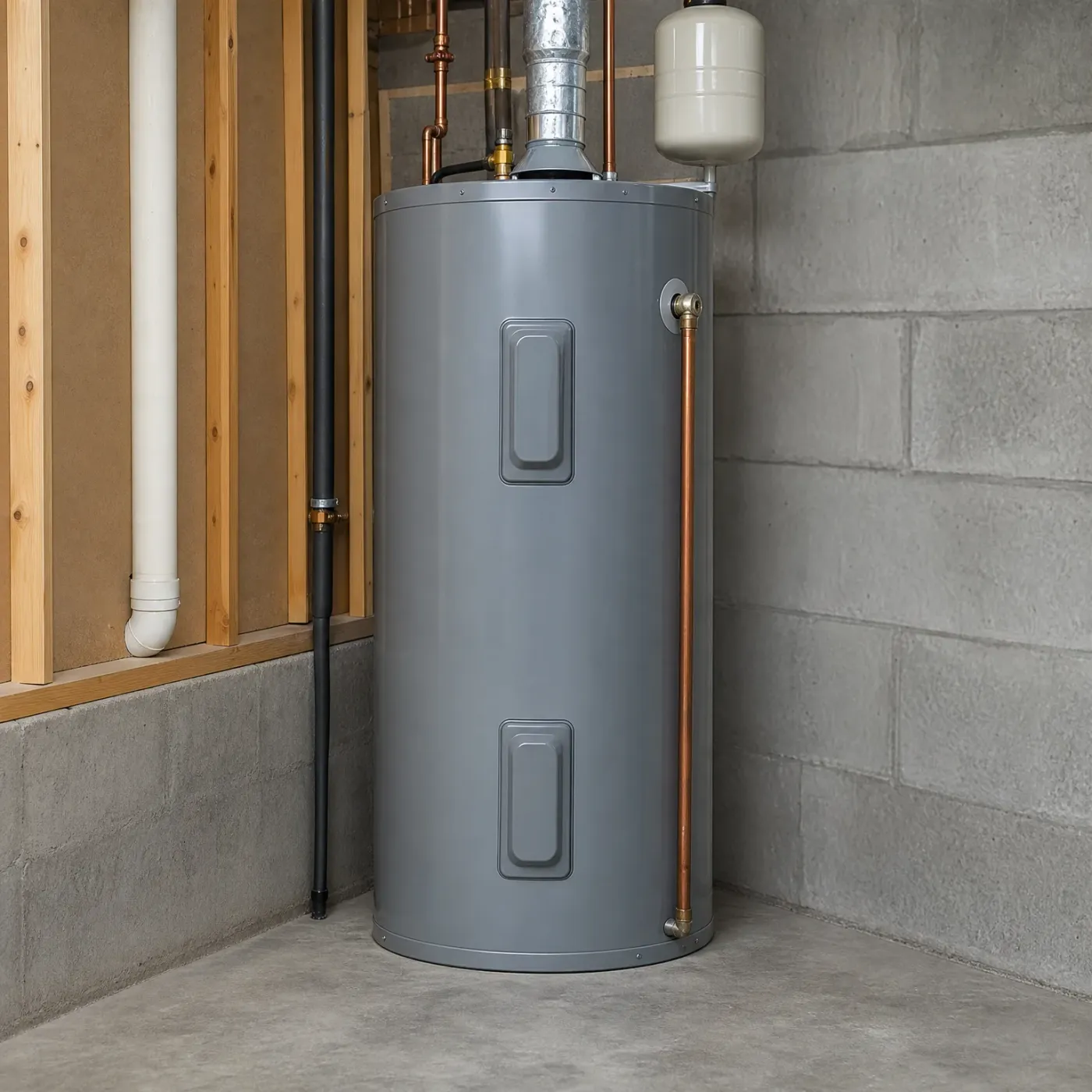
Working the way it should
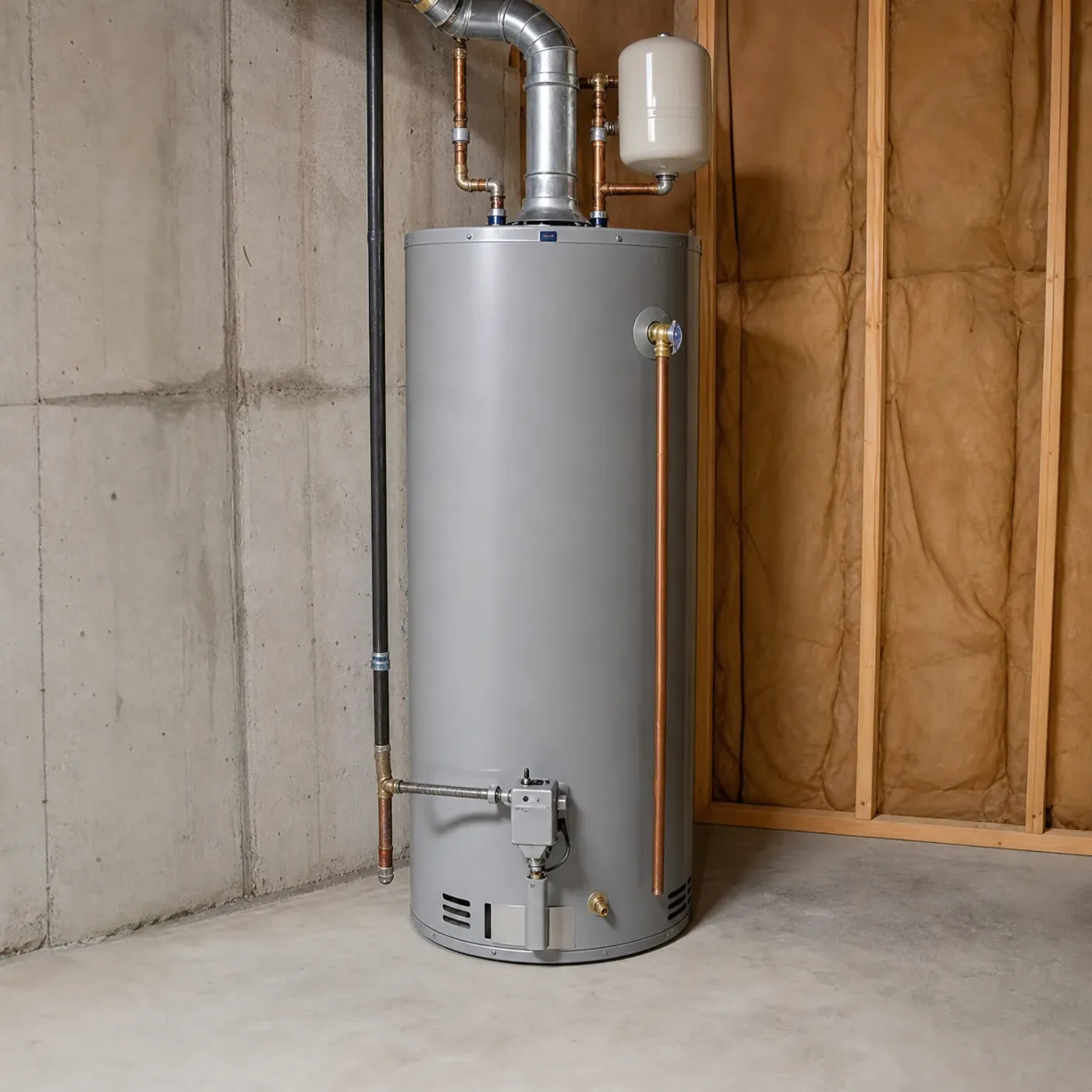
A water heater like this holds its connections tight. The flue vent draws clean, the expansion tank handles pressure changes, and the fittings show no rust. Hot water comes out clear, and the tank sits dry underneath. Nothing here is asking for attention yet.
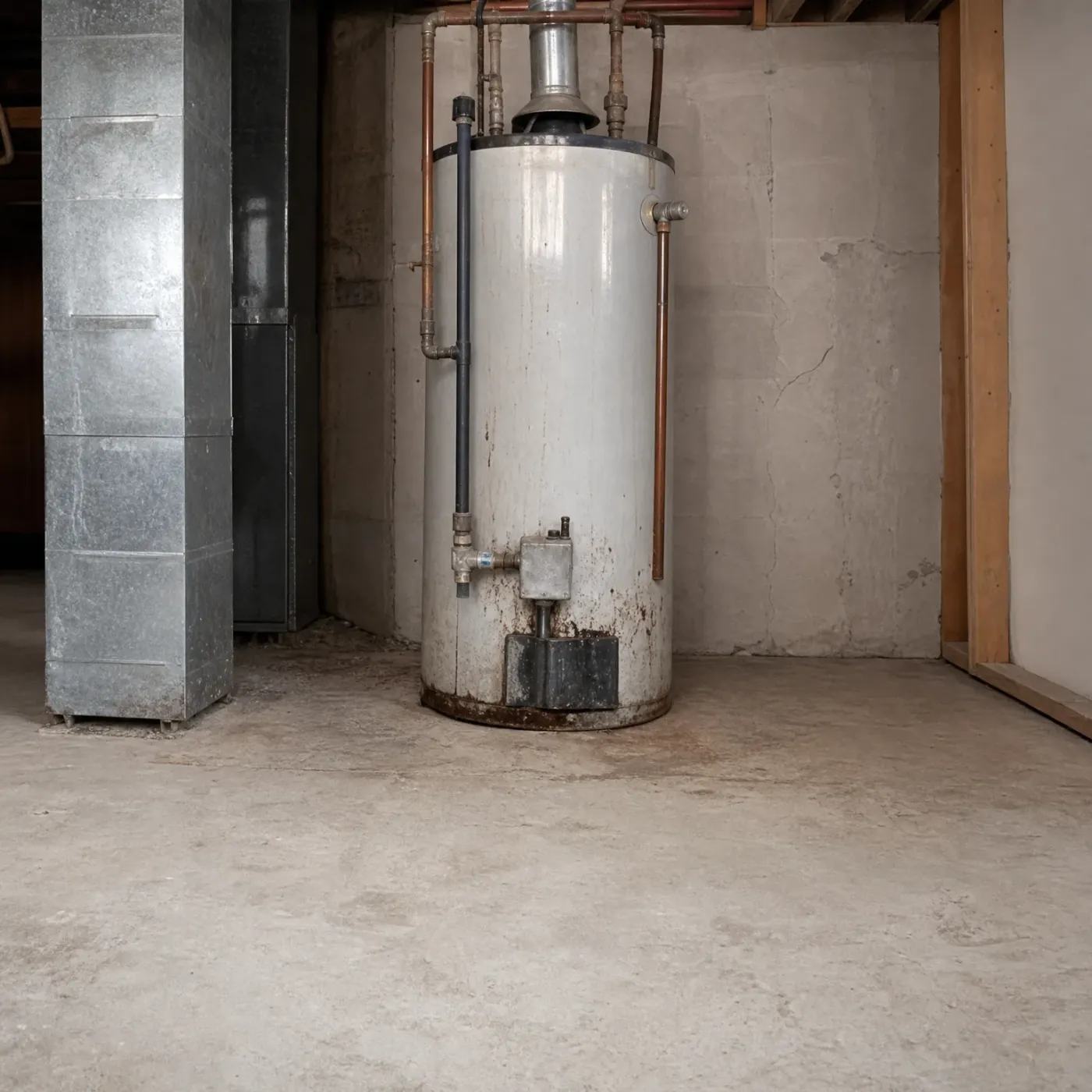
Running on borrowed time
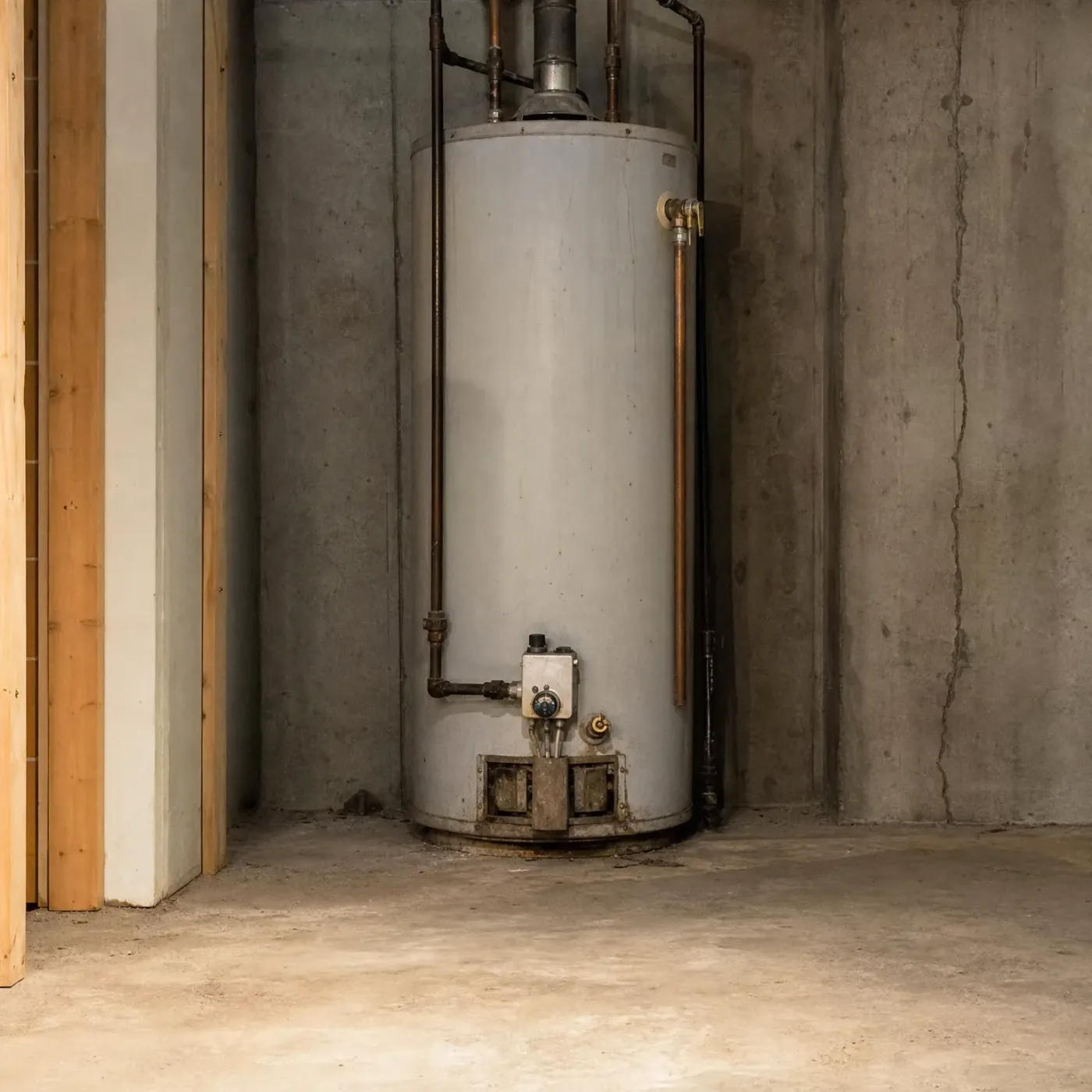
This tank has outlasted its welcome. The gas control valve and the pipes running up from it show years of wear, and an unfinished basement floor like this will show water the moment the tank starts to leak. Once a tank gets to this point, parts aren't the fix. The tank is.
50.5% of homes statewide heat with gas
Most houses in Montana run on gas for hot water, since gas heats more homes here than anything else. That means your water heater likely lights with a burner and igniter or standing pilot, not an element, so watch for soot or a burner flame that looks uneven.
ACS 2020-2024 5-year B25040
You already know more than you did
Rust in the water, a tank that sweats at the base, a pilot or igniter that won't hold. Any one of those is a water heater telling you it's done patching itself. A repair can still make sense if the tank itself is sound. Once the tank is the problem, nothing you swap into it changes that.
Montana winters put a real load on a gas water heater, and a tank that's been struggling quietly for a while tends to show it first in the cold months, when the incoming water is coldest and the burner runs longest to catch up. If what you're seeing matches what's in this page, the next step is getting someone out to look at it in person. A contractor who takes on Montana installs can tell you, specific to your tank, your gas line, and your house, whether it's worth repairing or time to replace it. Send the details once and that part stops being something you have to figure out alone.
Water Heater Installation
A local pro for your water heater installation
Step 1 of 3: Equipment
Describe your water heater job, and a local pro who handles it gets in touch.
Say what's going on with your water heater, and a pro who works on them reaches out.
Send it once and finding someone is no longer on you.
Send the form and stop researching installers for the new water heater.
Skip collecting and comparing quotes for the new water heater.
Skip the round of in-home estimates for a new water heater.
One installer gets your project, so there's no bidding war over it.
Only one pro gets your request, so you hear from one company.