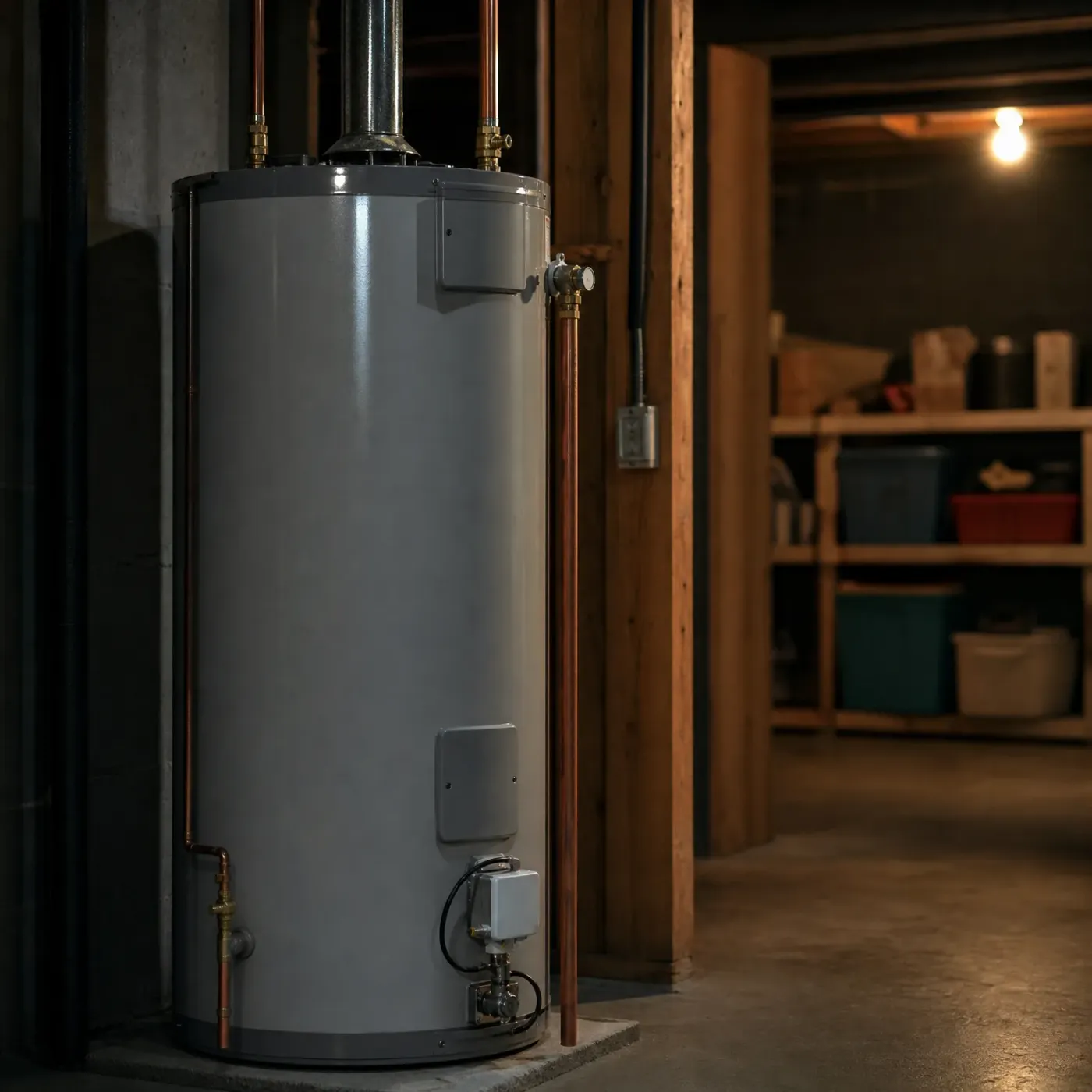




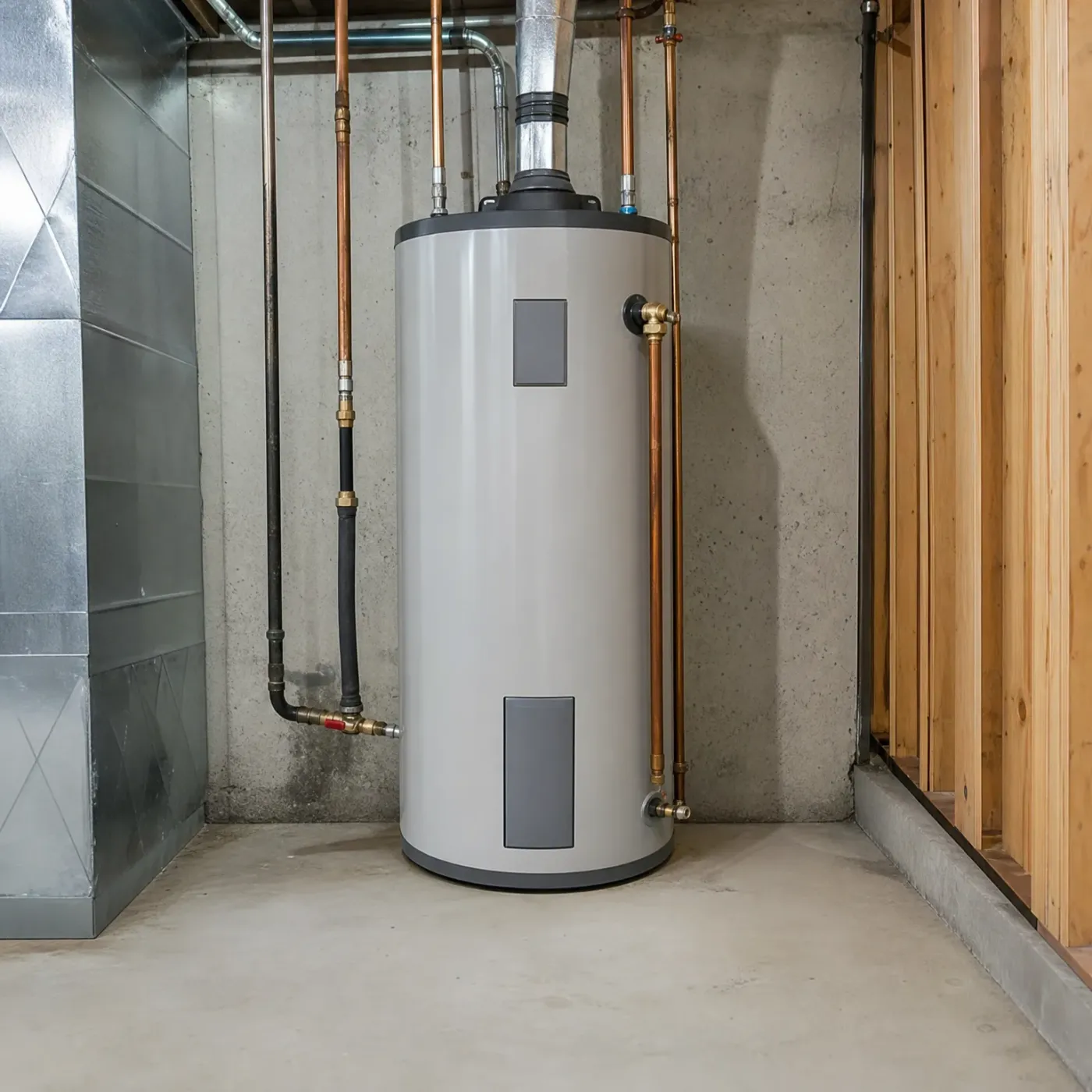
A large gray cylindrical water heater with copper pipes and a metal flue stands on a concrete pad in a dim basement, with wood framing and shelves of storage bins lit by a bare bulb behind it.

A local pro for your water heater maintenance

How often to flush a water heater in Montana

Montana water is hard on a tank, and sediment builds up at the bottom whether you notice or not. This page gets into how often to flush yours, what hard water does if you skip it, and how that changes if your water heater came with the house. Skip the search-and-compare work. Answer a few questions and a contractor who handles this gets in touch.

Get matched

Once a year is the rule for most homes in Montana, and twice a year if your water comes from a well instead of a city system. Flushing means draining the tank to clear out the sediment that settles at the bottom, and Montana's hard water builds that sediment up faster than soft water does. With a gas water heater, that layer sits between the burner and the water, so the burner has to work harder to heat the same amount of water, and the tank itself wears from the inside. If your water heater came with the house, flush it now and check what you find. A rush of rust colored water or a thick layer of grit means it may have gone years without one, and that changes when the next flush should happen too.

  1. Shut off the gas or power to the water heater first.

  2. Connect a hose to the drain valve near the tank's base.

  3. Let the water run out until it flows clear.

  4. Open the cold water inlet to stir up remaining sediment.

Is your water heater telling you something right now

Stand near the tank when it's heating and listen for a low rumble or popping sound. That's sediment hardening at the bottom and trapping water underneath it, which has to boil through before the rest heats up. You might notice hot water running out faster than it used to, or taking longer to show up at the tap. Check the drain valve too. If what comes out looks cloudy or carries grit, that's been building for a while. Left alone, that layer makes the tank work harder to heat the same amount of water, and it wears at the bottom of the tank itself over time.

A woman with long gray hair wrapped in a checked blanket sits on a sofa by a window with yellow autumn foliage outside, with a lamp, framed picture and plant in the background.
An older woman in a cream knit sweater sits on a sofa by a window, looking out at sunlit trees with yellow and orange autumn leaves, with a bookshelf and lamp behind her.
A woman with gray shoulder-length hair in a dark knit sweater sits on a cushioned seat by a window, looking out at yellow autumn foliage, with a living room, armchair, houseplant and framed picture behind her.
An older woman with gray hair in a bun, wearing a cream knit sweater, sits on a sofa with a gray blanket and looks out a large window toward yellow-green autumn trees, with a lit table lamp and dark armchair behind her.

City Water or Well Water

City water

  • Flush the tank once a year, usually at the start of summer or whenever it fits your schedule best.
  • City water in Montana carries some mineral content, but nowhere near what a well delivers straight from the ground.
  • A yearly flush keeps sediment from building past the point where the drain valve itself gets clogged with it.
  • If the gas or power to the tank has never been shut off for this before, start on a yearly plan and watch for the rumbling sound that means you waited too long.
  • Homes on a municipal system still see sediment collect at the bottom, just slower than a well would produce it.

Well water

  • Flush twice a year, once in spring and once in fall, so sediment never sits long enough to harden.
  • Well water in Montana tends to carry more dissolved minerals, and every gallon through the tank leaves some behind.
  • Skipping a flush on well water lets sediment pack down harder and take longer to break up when you finally run the hose.
  • A tank fed by a well works harder to heat through a thickening layer at the bottom, which shows up as a longer wait for hot water.
  • If your water heater came with the house and you're on a well, treat it as overdue and start the twice-a-year routine now.
A gray cylindrical water heater standing in a basement corner against a concrete wall, with copper and black pipes, a metal flue, and ductwork nearby, next to wood framing on the right.

On schedule

This is what a flushed tank looks like, copper lines, a steady gas feed, no strain on the valve at the base. Heat moves straight into the water instead of fighting through sediment first. A tank kept on schedule like this runs quieter and holds its rated capacity for years.
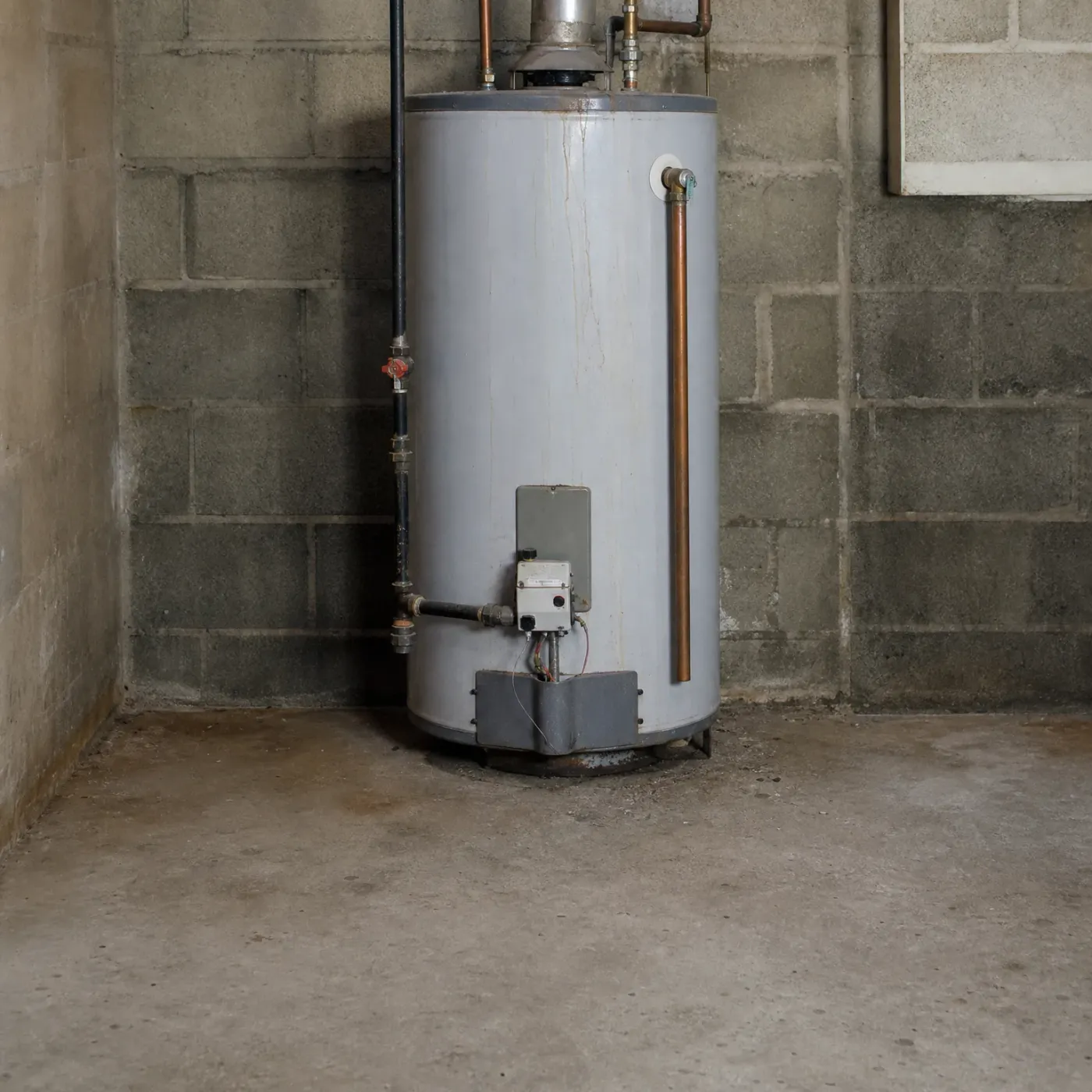

A gray cylindrical gas water heater with copper and black pipes stands in the corner of a basement with concrete block walls and a bare concrete floor.

Falling behind

Sediment has been sitting at the bottom of this one for a while. The gas valve and controls at its base are working harder to push heat through a layer that shouldn't be there. Left alone, that layer hardens, the tank holds less hot water, and the bottom is where the metal gives out first.

A woman in a cream knit sweater sits in an armchair with her eyes closed and a slight smile, beside an open window showing orange autumn foliage, with a mug, books and a lit candle on a small side table.
An older man with gray hair and a beard leans back on a beige sofa with his eyes closed, in a sunlit room with potted plants, a wicker chair and large windows behind him.

Get the right pro for your water heater

Explain the job once and skip repeating it on every call.

No charge to send it. You decide if you hire them.

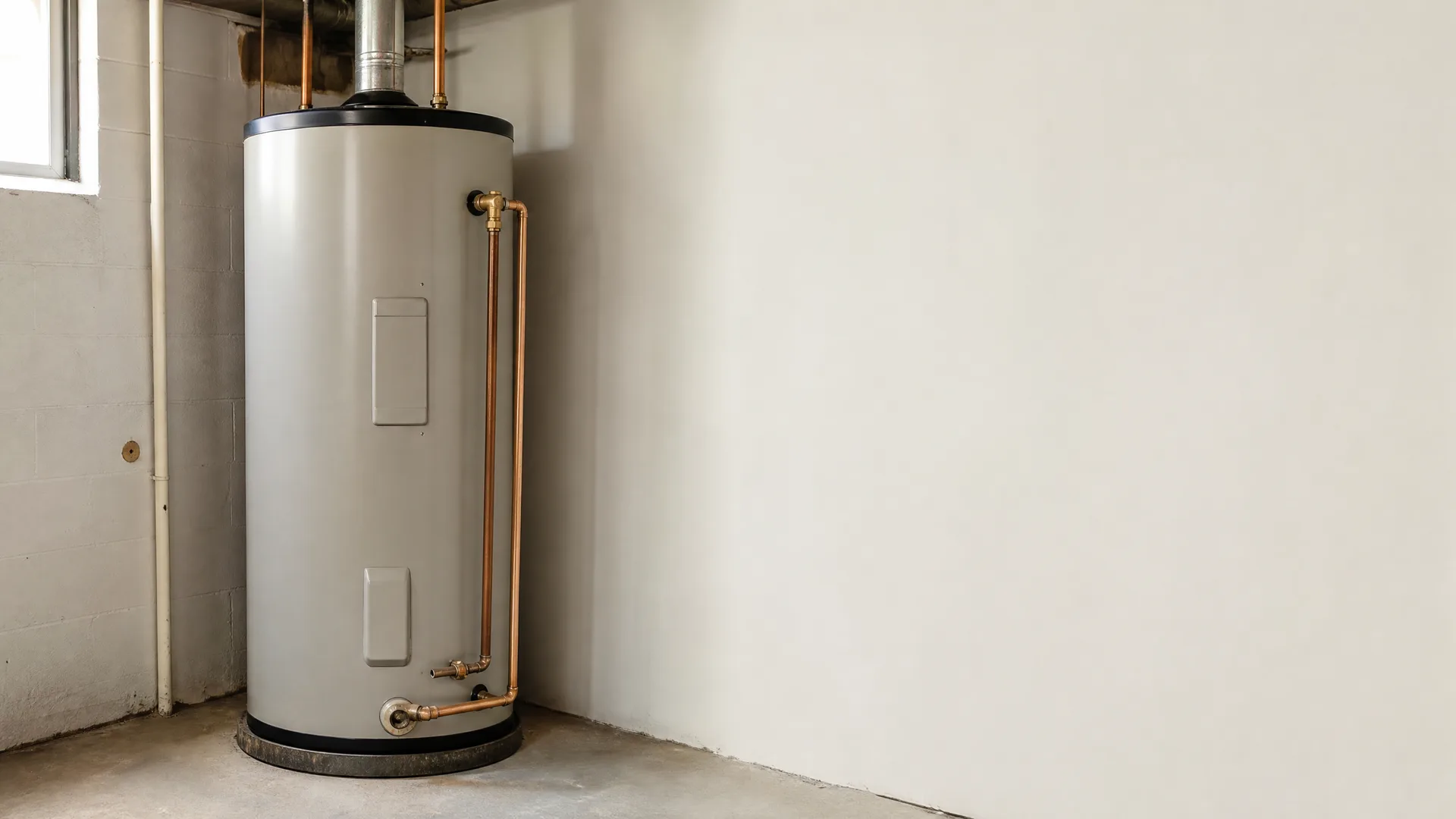
A tall gray cylindrical water heater with copper piping and a flue stands in the corner of an empty basement room with concrete block and painted walls.

Gas tanks show it at the bottom

A gas water heater heats from a burner underneath the tank, so sediment sits right where the heat hits first. That layer acts like a blanket between the flame and the water, and the steel has to carry more heat for longer to get the same result. Most homes in Montana run gas, which means most of you have this exact layer sitting between the burner and a full tank of water.

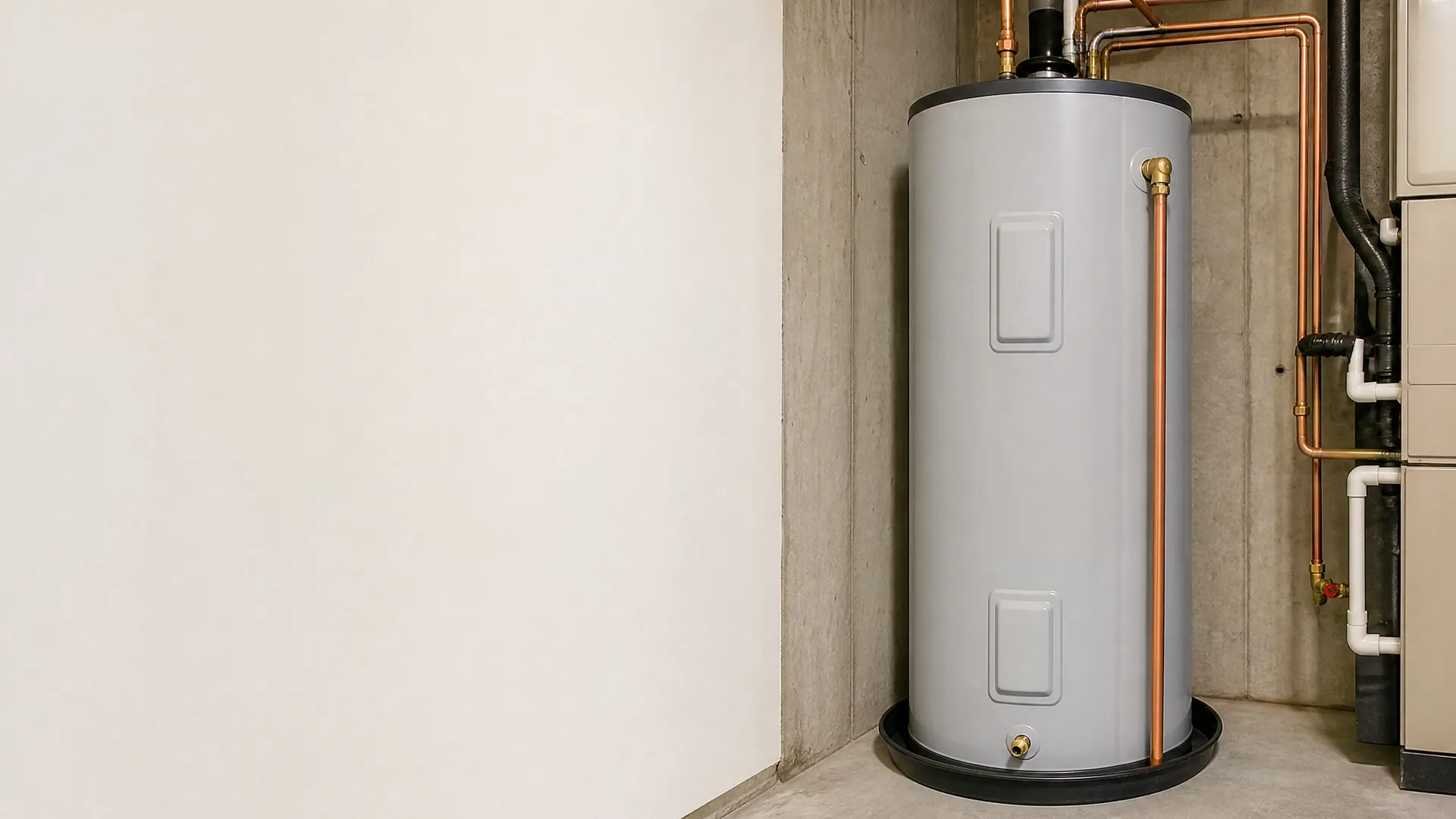
A gray cylindrical water heater stands in a drain pan against a concrete wall, with copper and white pipes running along the wall to the right and a plain light wall on the left.

The drain valve tells on itself

Open the drain valve on a tank that has gone a year or two without flushing and you will likely see cloudy or gray water before it runs clear, sometimes with grit in it. That's the sediment leaving the tank, not something wrong with your water supply. A tank flushed on schedule drains clear almost right away, because there is nothing built up to clear out.

50.5% of homes statewide heat with gas

Most homes in Montana heat water with gas, same as yours probably does. Gas tanks heat from underneath, so sediment sits right where the burner hits hardest, and that layer has to burn through before your water does. Skipping a flush makes the burner work longer to get the same hot water.

ACS 2020-2024 5-year B25040

Where that leaves your tank

  • Once a year clears sediment before it hardens; twice a year if your water comes from a well.
  • A gas tank that rumbles or pops while heating is already carrying a sediment layer at the bottom.
  • Skipping flushes makes the burner run longer to push heat through that layer, which wears the tank faster.
  • The schedule holds whether the tank came with the house or was put in later, since sediment builds either way.
  • A flush is a straightforward job but it means shutting off gas or power, draining the tank, and refilling it correctly.
  • Finding someone who handles this kind of maintenance usually means calling around and explaining the same thing more than once.

Montana's hard water settles into the bottom of your tank whether or not you ever think about it. Once a year keeps that layer from hardening into something the burner has to fight through, and twice a year is the safer bet if you're on a well. The rumble or popping sound some gas tanks make while heating is sediment already doing its damage, trapping water underneath and forcing the burner to run longer than it should. That extra work doesn't just cost more on the gas bill, it shortens how long the tank lasts, whether it came with the house or was installed last year. None of that changes based on how the tank got there. What changes is how much strain it's carrying right now, and that depends on when it was last flushed.

The job itself is simple to describe and still takes doing it right: gas or power off, hose connected, tank drained until the water runs clear, then refilled before anything gets turned back on. Most homeowners don't want to be the one doing that, and finding someone who will means the usual runthrough, searching for a contractor, calling a few, explaining the same tank and the same sediment problem each time, then sitting with quotes that don't quite match up. That part isn't the flush itself, it's everything that happens before anyone shows up with a hose.

At dusk, a dark board-and-batten house with a standing-seam metal roof and lit entry walkway of stone pavers, with two large outdoor heat pump units on a stone-walled pad at right and trees and hills in the background.

Water Heater Maintenance

A pro who works on water heaters

Step 1 of 3: Equipment
  • A brown leather and wood armchair with a cream knit throw sits in a corner beside a woven basket holding a dark cushion, under a framed mountain photograph, with a wood-trimmed window showing yellow and green foliage.
    • A local pro who knows water heaters gets your details and gets in touch.
    • A local pro who services water heaters gets in touch about the tune-up.
  • A dark wood dresser against a pale wall holds a ceramic vase of eucalyptus branches, a stack of books with a wooden bowl, and a woven basket, with a framed landscape painting above and a woven basket holding a knit blanket on the floor beside a window.
    • Once you send the form, finding a pro is off your list.
    • After you send the request, you're done searching.
  • A window seat with beige linen and brown textured cushions, a chunky knit blanket, and an open book, beside a window showing blurred yellow autumn foliage.
    • One form replaces the calls you'd make to find a water heater pro.
    • Skip calling around to set up a water heater tune-up.
  • A cream upholstered armchair with a rust-colored pillow and knit fringed throw sits beside a window with a ceramic vase of orange-leafed branches on the sill, overlooking autumn trees and leaf-covered ground.
    • Your request stays with one local pro.
    • A licensed local pro takes the request for your water heater tune-up.