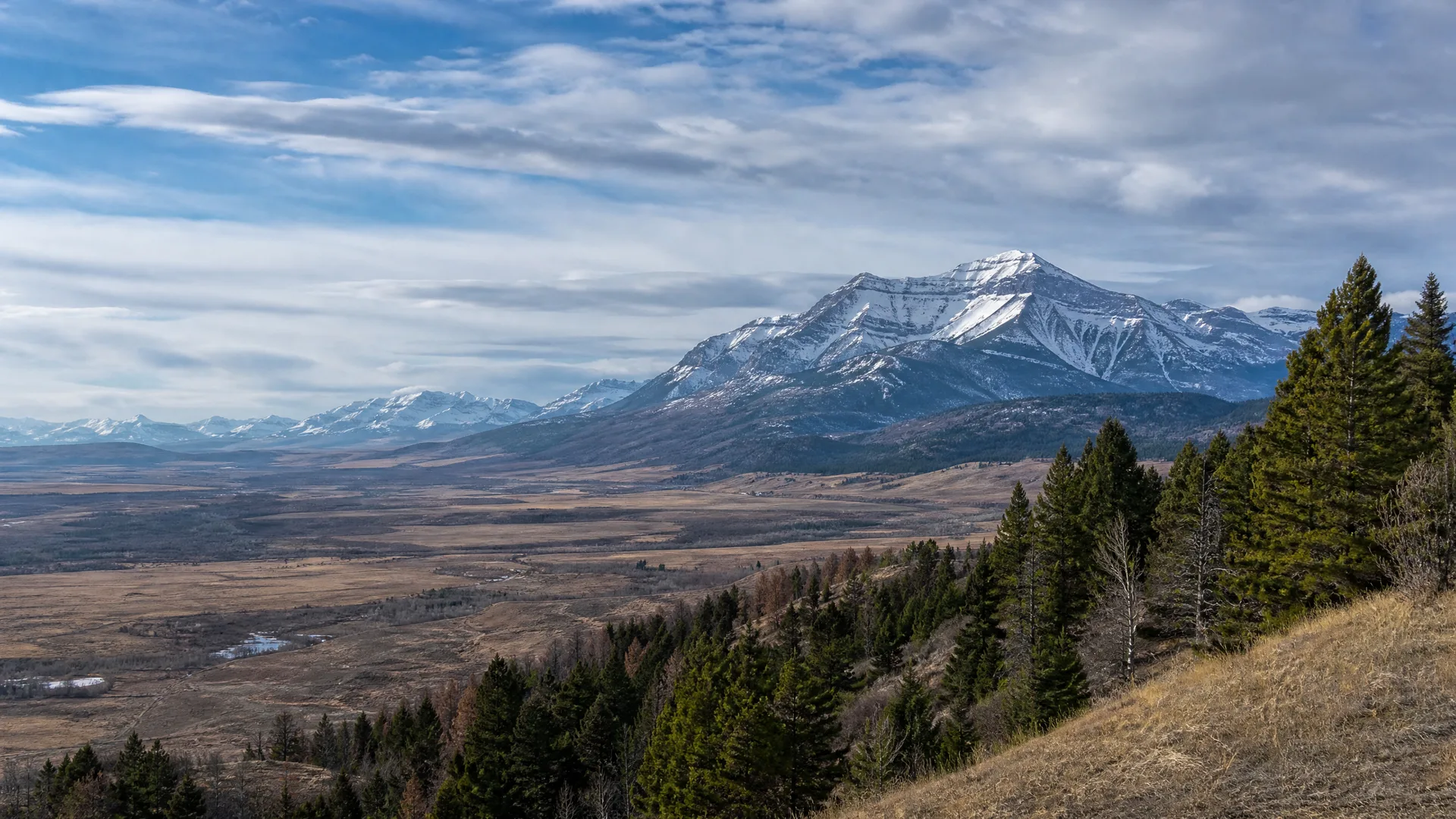
Running on electric
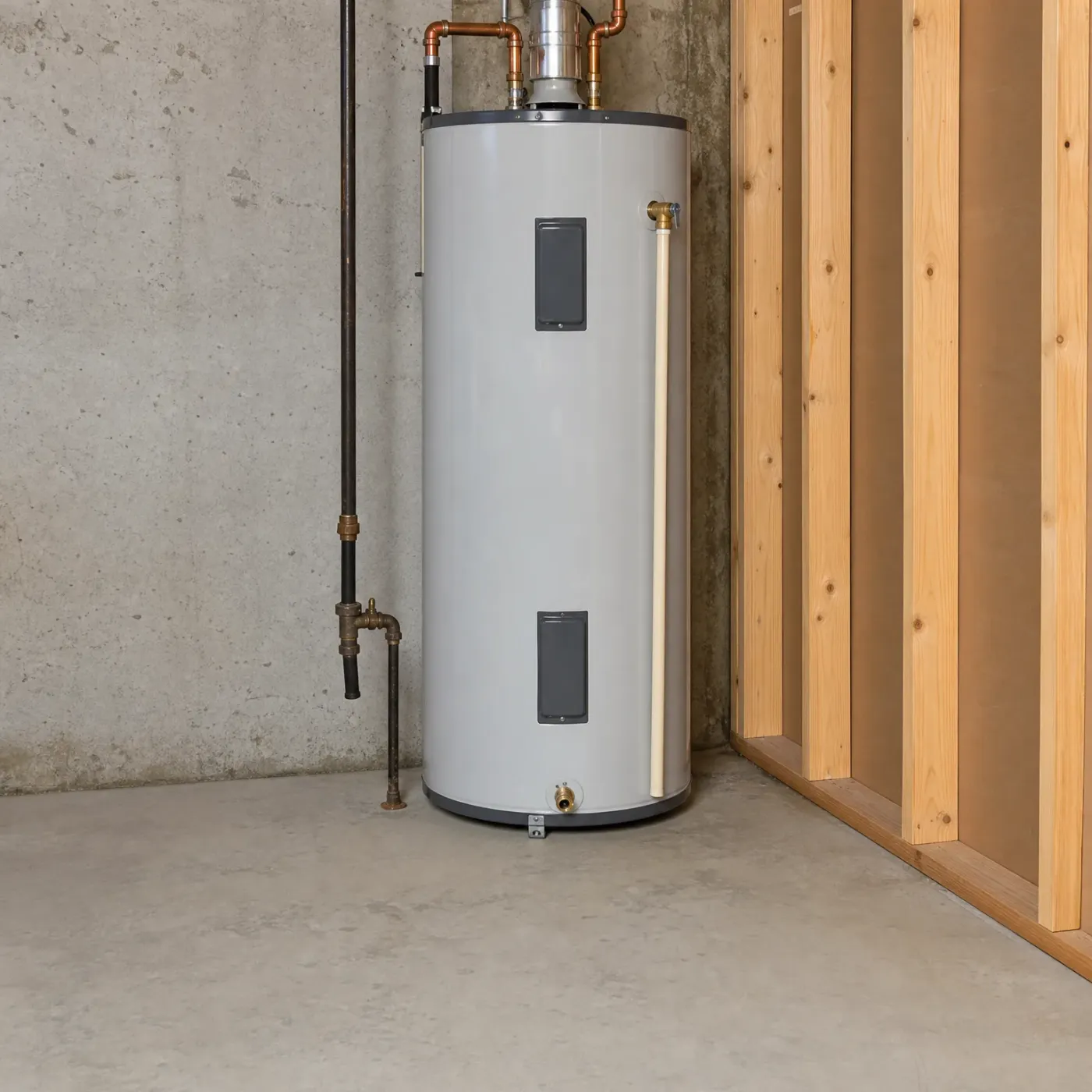
This tank runs on electric, set apart from the furnace and ductwork beside it. No gas line reaches it, and none needs to. Power here is cheap, so the monthly cost is easier to carry than it would be elsewhere.

Gas is the better fit for most homes in Montana. Most homes here already heat with gas, so the line is run to the house, and a gas water heater costs less to run month to month than an electric one. Gas units also recover faster, which matters more here than in warmer states, since incoming water is colder and takes more energy to bring up to temperature. An electric water heater still makes sense if your home has no gas line, since power here is cheap enough that running one isn't a financial burden. If you're replacing a unit that's already gas or already electric, matching what you have is usually simplest, since switching fuel types means changing the venting or the wiring, not just the tank. What matters most is picking the right size and setup for your household now, not just what was installed before.
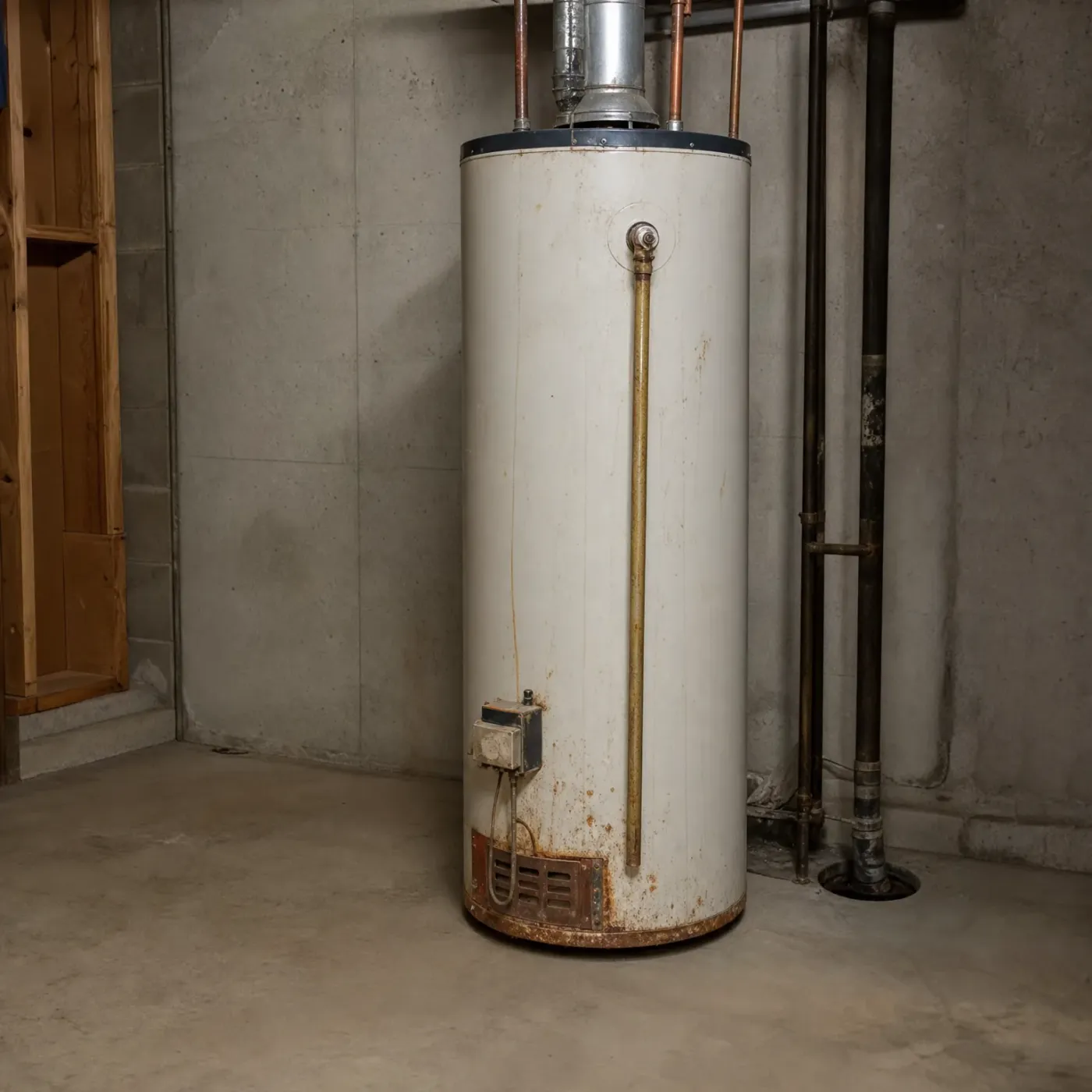
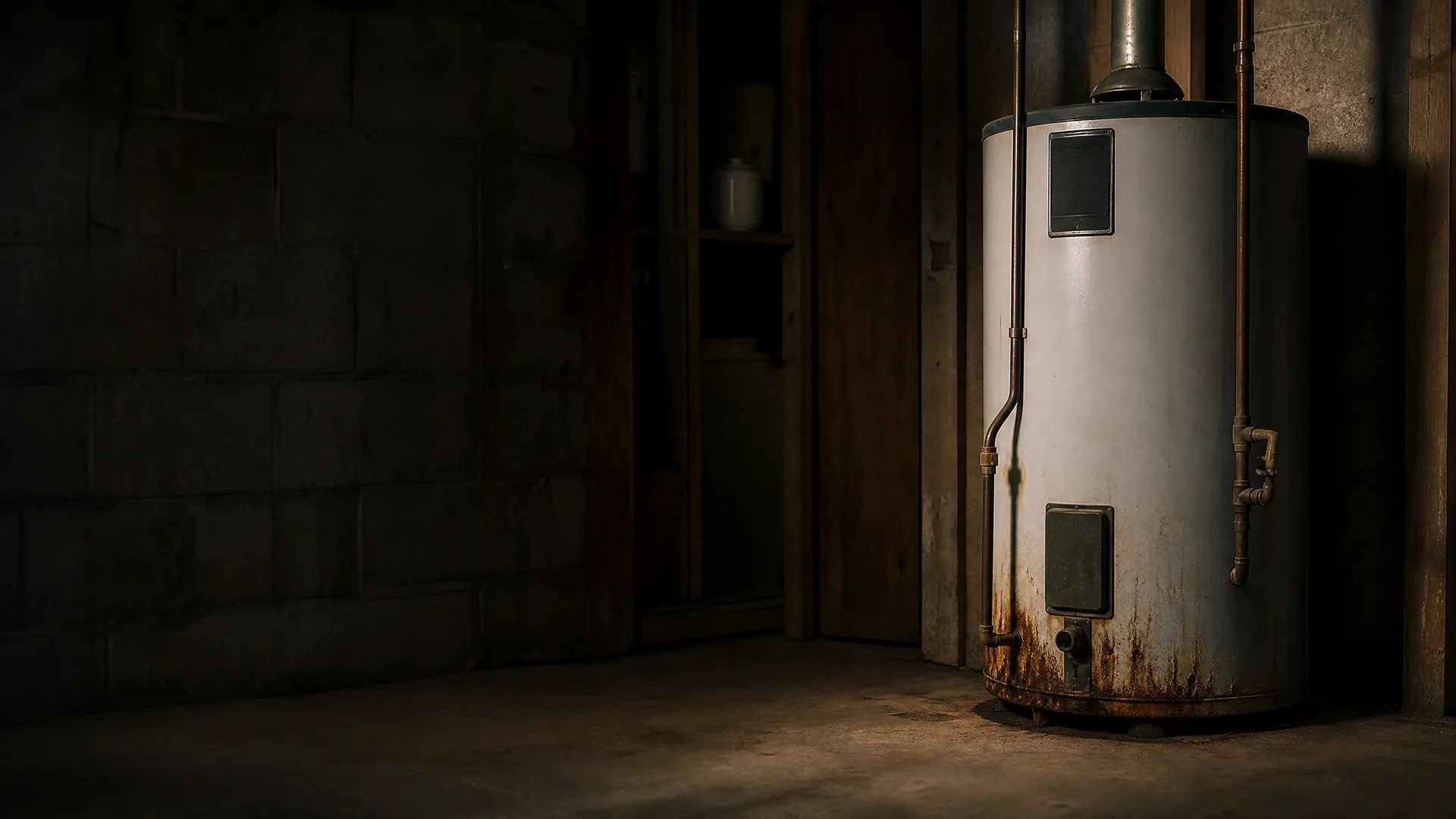
You go down to the utility room after dinner to grab something from the freezer, and the cold hits your feet first. The tank is quiet, the pilot light is out, and when you crouch down to check it you see the rust streaks running down the side onto the concrete floor, a dried ring where water has been seeping out for a while. Outside it is still warm, the dry Montana evening settling in, but down here the floor is damp near the base. You flip the switch and nothing lights. Tomorrow there will be no hot water for dishes, for showers, for anyone in the house getting ready in the morning. You stand there a minute looking at the rust before you go back upstairs.
If your tank runs out of hot water partway through a shower, or the water takes longer to heat up than it used to, the tank is losing ground. Look at the bottom of the tank for rust streaks or a damp ring on the floor around the base. Listen for a rumbling or popping sound when it's heating, that's sediment built up on the bottom. A pilot light that won't stay lit, or a breaker that keeps tripping if yours is electric, means the unit is on its way out. Left alone, a tank like this can leak or fail outright, and in a Montana winter a house without hot water is more than an inconvenience.
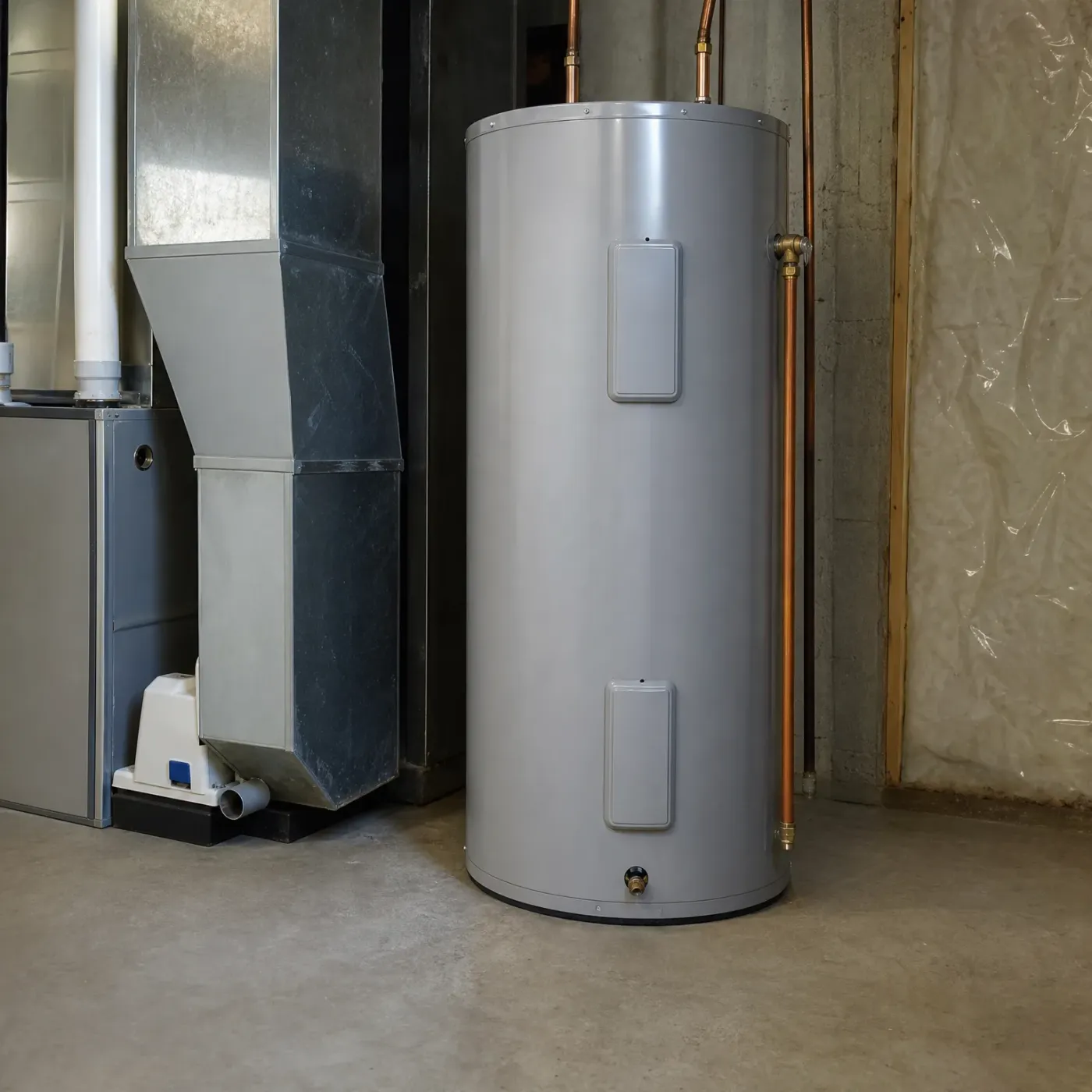
This tank runs on electric, set apart from the furnace and ductwork beside it. No gas line reaches it, and none needs to. Power here is cheap, so the monthly cost is easier to carry than it would be elsewhere.
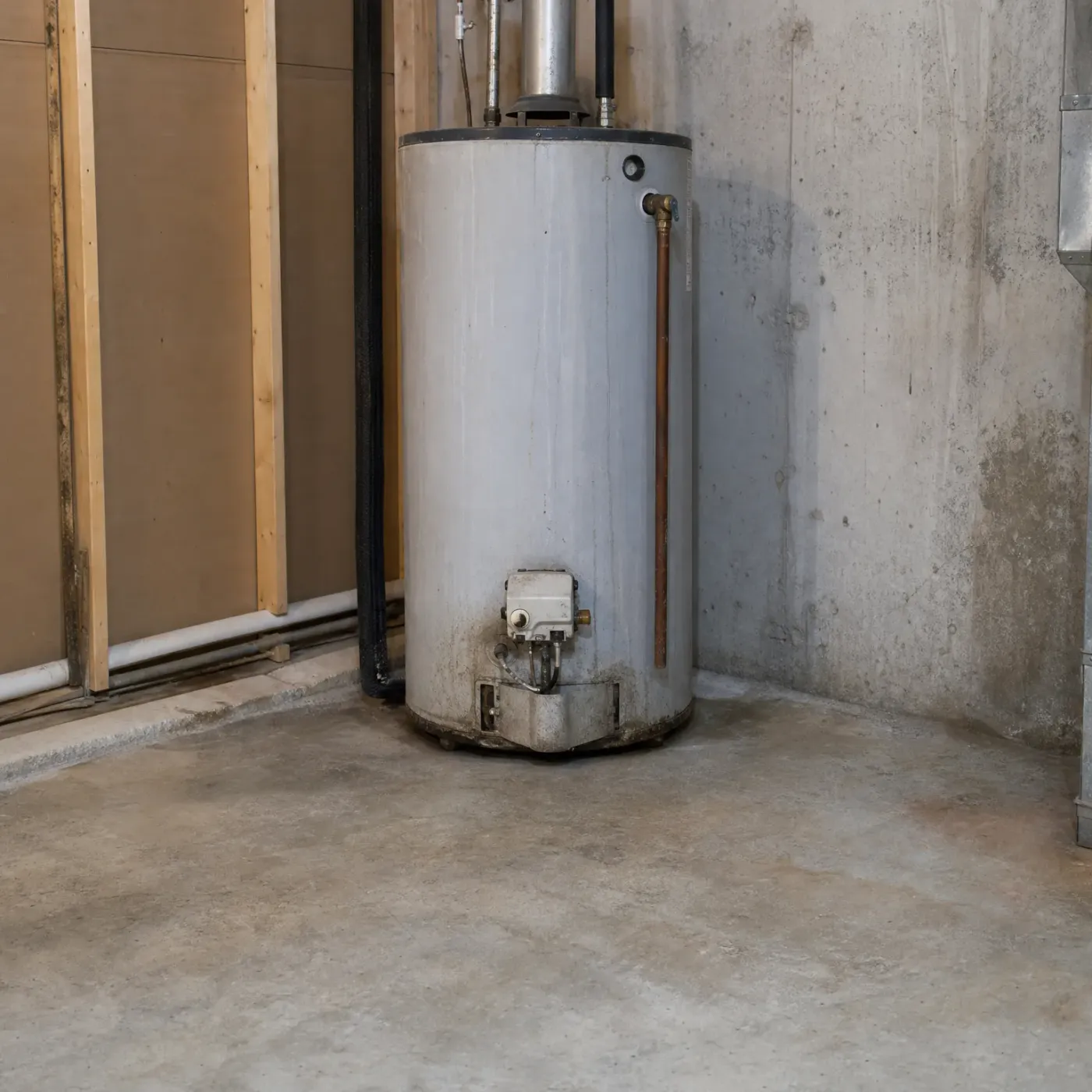
The flue pipe overhead tells you this one runs on gas. Rust has worked down the side and collected at the base, and the burner assembly underneath is caked with grime. A tank in this shape is close to leaking, if it hasn't already.

A gas water heater burns fuel under the tank, and the burner cycles on and off to hold the water at the temperature you set. When the burner lights, the heat passes through a flue that runs up the center of the tank, so the whole tank of water warms, not just the bottom. That flue is also why a gas unit recovers faster than an electric one. Once you've drawn down the hot water, the burner can bring a full tank back up to temperature well before an electric unit with the same capacity would.
The parts that matter most over time are the thermocouple, which shuts off the gas if the pilot goes out, and the anode rod, which corrodes on purpose so the tank itself doesn't. A contractor checking a gas water heater for installation will also look at the venting and the gas line sizing, since both have to match the unit going in. If you're ready to have one installed, you can be matched with a contractor who handles that sizing and venting work for your home specifically, and they'll reach out to you directly instead of you having to call around and describe your setup to several people first.

Cold water enters the tank through the dip tube at the bottom.
The thermostat checks the water temperature against your setting.
The gas valve opens and the burner lights beneath the tank.
The burner cycles off once the water reaches set temperature.




Describe the project once instead of to every installer.
Asking costs nothing, and the choice to hire stays yours.
A gas water heater needs a flue or vent pipe running from the tank to the outside, carrying away the exhaust from the burner. That pipe has to run somewhere, usually up through the roof or out a side wall, and the house has to have a path for it. If your home already has a gas water heater, that path is already built and a new gas unit can usually use it. An electric water heater skips this. It has no flue, no exhaust, and nothing to vent outside, since there's no flame underneath it making heat. That's part of why electric units can sit in spots a gas tank can't, like a tight closet with no outside wall nearby.
An electric water heater stops heating the moment the power drops, and it stays cold until the power comes back on, at which point it starts up again on its own with no relighting needed. A gas water heater with a standing pilot keeps that small flame burning through an outage since it runs on gas, not electricity, so the tank keeps making hot water even with the lights off. Some newer gas units use an electronic igniter instead of a standing pilot, and those do need power to light the burner, so check which kind yours is if this matters to you. Montana winters bring outages, and that difference can matter more here than it would somewhere milder.


Half the homes around you already heat water with gas, so the line very likely runs to your water heater too. If yours does, swapping in a new gas unit is usually a straight install rather than a job that opens up new plumbing.
ACS 2020-2024 5-year B25040
Most homes around you already have a gas line run to the water heater, and that one fact settles it for most people. Gas costs less to run month to month, it recovers faster, and that faster recovery counts for more here than in a place where the incoming water never gets that cold. If your house already has the line, a new gas unit is usually a straight swap. If it doesn't, electric isn't a consolation prize. Power here is cheap enough that an electric tank carries the load without straining the bill, and it skips the flue entirely, which matters if your house has no good way to route one to the outside. The tank itself will tell you when it's time. Rust streaks down the side, a damp ring on the concrete, water that runs cold halfway through a shower. Those are the signs, not the age of the house or what the neighbors have. Once you know which fuel fits your house, the harder part is usually finding someone to size the unit right and run the install cleanly, calling around, explaining the same rust streaks and cold showers to three different contractors, then sitting with quotes that are hard to compare because they're not even for the same unit. Matching you with a contractor who already knows gas and electric installs in Montana skips that part. You get the fuel decision settled here, and the install handled by someone who's done it before.





Describe your water heater job once, to one pro.
No fee to send it, and nothing to sign.